Showing posts with label Anne Boleyn.. Show all posts

Wednesday, 6 May 2015

'My Lovely Blog' Blog Hop


I’ve been invited by friend and fellow author Louise Turner to join the ‘my lovely blog’ series - which asks writers to answer a few questions about themselves under the six headings below.  You can check out Louise’s own excellent blog here. http://www.louiseturner.co.uk/louises-blog/

Me loving my cousin Sue
First memory

I remember being in my big pram in the hall waiting to go out with my mum. It is a very vague collage of scents and tastes and sounds. If I close my eyes I can see the light shining through the net curtains, taste the rusk I had for breakfast, hear my mother singing in the kitchen, and my big sisters cooing and fussing over me. They don’t do that now – lol.


Books


There were lots of books in our house when I was small. I remember a colour picture book of King Arthur and the Knights of the Round Table, and another picture book about Toys who came to life in the cupboard and had adventures – the pictures were fabulous, really vivid and detailed. This was combined with Winnie the Pooh, then Enid Blyton, Robert Louis Stephenson as I got a bit older. As a teenager I began to read historical fiction which has been my favourite genre ever since. When I began to write seriously it was the obvious genre choice for me. The author I most admire now is Hilary Mantel; I love the way you are in the room with her characters, part of their lives, the reader comes to understand them so much better. I also love the classics, going back to Chaucer because of the sense of the past they provide. Chaucer was the source for my Joanie Toogood when I wrote The Winchester Goose.
  
 Libraries or bookshops?

Bookshop in Much Wenlock UK
Both please. I use a library for research, my home is stuffed with books, mostly non-fiction but a good deal of fiction too. When I was a teenager I was in the library every weekend (I know, geeky). We need to save our libraries; it is short sighted to close them down. Books inform and shape people; education is the way forward and libraries are a source of free education accessible to everyone.  
I buy a lot of books, my shelves are bulging. I do use Amazon for convenience but still like to get lost in a book shop and can never help buying something. Bookshops are lovely. I love how they smell, how quiet they are. There is nothing like a bookshop for making you lose track of time. I hate shopping but bookshops are something else. Readers need them, writers need them, people who have yet to discover the joy of a good book need them, our children need them and booksellers need them – keep them open. Open more.

Learning

I was the first in my family to go to university but I didn’t go until I was forty.  I loved school but in the seventies working class girls were not encouraged to enter further education. We were pushed into becoming typists or shop assistance. Neither of those things were for me (although the touch typing comes in very handy.) I was married at eighteen and a mother by the time I was twenty. I have four lovely children and three step-children. I enjoyed bringing them up but when the youngest became more independent I was a little bit lost. With a friend’s encouragement I enrolled at the University of Wales and my life changed completely. I stayed there for six years, taking a BA in English and Creative Writing and an MA in Medieval Studies. It was a fabulous part of my life.


Writing

Tretower Court, Powys
It is something I’ve always done. Those infant school ‘news’ stories evolved into short stories, poems, romances. When I went to university my Creative Writing lecturer (playwright Dic Edwards) encouraged me to do more with it. It was hard going at first. I wrote a couple of novels that will forever remain in my bottom drawer and then Peaceweaver was published in 2009. Since then I’ve written seven and am now working on my eighth.
If I don’t do any writing for a while I get very cranky. I like to hide myself away, imagine myself in one of the lovely castles/manor houses that we've visited and the story just flows from that. The Tudor world is a comfortable place for me, far nicer than a modern shopping centre on a Saturday afternoon.

 What's your passion?

Me at Raglan Castle last year
Lots of things. History, writing, my husband John and our family, my garden, my new-born grandson, walking, castles, the environment, nature, animals, trees ...even my daft little dog. Sometimes I combine all those things like when we go to Raglan Tudor Weekend (May 24th -25th this year). I also like crafts, painting, photography, sewing and working with wool but, apart from my vast and lovely family, writing comes top. There is nothing like sitting down in the morning with a blank page and coming away at lunch time with the bones of a good story. I get to experience every medieval danger imaginable without actually coming to any harm – hopefully my readers do too. Writing historical fiction is, for me, escapism and I am so fortunate to earn a living indulging in my passion.

Now, I 'd better get back to it. Margaret Beaufort awaits!
  
Thanks for inviting me, Louise!  In my turn, I pass the baton on to two more historical novelists:  Sheila Dalton and Wendy Steele.

Judith Arnopp is the author of seven historical fiction novels, four set in the Tudor period and three in the Anglo-Saxon/early Medieval. She is currently working on the life of Margaret Beaufort. All are available in paperback and on kindle. Click here for more information.


 Illustrations

Winnie the Pooh cover -  "WhenWeWereVeryYoung" by Source. Licensed under Fair use via Wikipedia - http://en.wikipedia.org/wiki/File:WhenWeWereVeryYoung.JPG#/media/File:WhenWeWereVeryYoung.JPG
Bookshop: "Bookshop in Much Wenlock" by MichaelMaggs - Own work. Licensed under CC BY-SA 3.0 via Wikimedia Commons - http://commons.wikimedia.org/wiki/File:Bookshop_in_Much_Wenlock.jpg#/media/File:Bookshop_in_Much_Wenlock.jpg
All other photographs copyright Judith Arnopp

Tuesday, 24 February 2015

Questions and Answers on A Song of Sixpence


Judith Arnopp
As you might have heard my next Tudor novel A Song of Sixpence is due to be released very soon and the Kindle version is available for pre-order now. myBook.to/asongofsixpence   

It is my seventh novel and there seems to be more interest in this one, I have had lots of messages and emails asking about it. This could be the subject matter, or perhaps my other books are now being more widely read and I have earned myself some honest-to-goodness ‘fans.’  I’d like to think so.


So, to answer some of the questions that have been asked about A Song of Sixpence: You can read why I decided on this particular title in a piece I wrote about it for the English Historical Fiction Author's blog  here.


Perkin Warbeck
Do I believe Perkin Warbeck was really one of the lost princes?


A simple answer to this one. I don’t know. We will never know. The main reason I wrote A Song of Sixpence wasn’t to suggest that Warbeck was really Richard but to examine the effect his claim might have had on Elizabeth. In order to write convincingly I had to divest myself of my own personal belief and put myself in her shoes. 

Elizabeth seems to have been a very family-orientated woman, staying close to her sisters and mother, and having a direct involvement with the upbringing of her children. Richard was her younger brother, she would have nursed him, played with him, read to him and, if she really had no idea of what happened to them after they disappeared from the Tower, she would have worried, and grieved. To have him, or the possibility of him, suddenly return from the dead cannot have failed to impact upon her. Her own son, Arthur, was now heir to the throne in Richard’s place – if Warbeck truly was her brother she would have been facing a harsh choice; her conflict one of self-analysis – was she, first and foremost, a princess of York or a Tudor queen?


Is Elizabeth depicted as a witch in A Song of Sixpence?


Elizabeth of York
No. There is no evidence that Elizabeth or her mother believed themselves to be blessed with magical gifts, that is a fictional device used so often that the concept has permeated into our understanding of her. In A Song of Sixpence Elizabeth is just a girl in the middle of civil conflict. She is faced with some harsh choices, some unkind twists of fate. How she deals with them … I will leave for you to discover.


Henry was an awful man wasn’t he? How could Elizabeth stand to be married to him?


Henry Tudor
I don’t believe Henry was an awful man, or that his mother was an awful woman. I think they were two people in a very different world to ours, fighting for what they believed in. Henry made harsh decisions because he was king and that is what kings had to do. Elizabeth may have initially been reluctant to marry into the Lancastrian line but I don’t believe she had anything against Henry personally. The historical evidence points to the marriage being a happy one; there were certainly enough offspring to suggest that one aspect of it at least worked well. In my novel she has some conflict with Henry’s mother in the early years but I think anyone might resent a mother-in-law who had as much influence on their husband as Margaret had on Henry. There are no out and out villains in my book because I don’t believe in them. I think we are all made up of different degrees of light and shade and the interpretation of our actions depends on who is viewing us.


How did you find out you could write historical fiction? How did you get started?

Well, I have always written stories since I was a child and studied creative writing at university. Once I finished my master’s degree in Medieval studies in 2007 I had to find a way of making a living. I live in rural West Wales where jobs are few and since I don’t drive, travelling is out of the question. So I put my two skills together. I already had the beginnings of a novel so I sat down and finished it. Then I wrote another. My third was good enough to publish. I’d established my ‘voice’ and I was getting in my stride. Peaceweaver didn’t make much of an impact but I quickly followed it with The Forest Dwellers, and then The Song of Heledd. It wasn’t until I released The Winchester Goose, my first Tudor novel that I began to be noticed. Since it is about Henry VIII’s most popular queen, Anne Boleyn, The Kiss of the Concubine drew more readers and Intractable Heart a few more. I now have a steadily growing readership. Once they’ve found me people seem to buy the whole back catalogue and eagerly wait for the next book. This is still incredible to me. I am blessed to reach so many people and provide them with a few hours escape. I value my readers, new and old, immensely and owe them everything.


You seem to get right inside your character’s heads: how do you do that?


I am not sure. It just seems to happen.  I do an immense amount of research before I start writing so I know the character as well as I can, then I just slip into their shoes. I think writing in the first person helps, it makes their world more accessible and then I just move through it, imagining how it might have felt to be there.


Is A Song of Sixpence available in print form?


It will be very soon. I am just waiting for proof copies, then the book will be available on Amazon and other leading book stores.


What is your next book going to be about?


Margaret Beaufort
Well, after a short holiday from writing (no, never actually happens) I plan to do some more in-depth research on Margaret Beaufort. During the course of writing A Song of Sixpence I came to understand that Margaret wasn’t the termagant she is often depicted to be. It is tempting to see only an old pious lady but she was young once. She had a long, tough and ultimately successful life; she put whole-hearted effort into establishing her son on the throne. She may have had her faults but there is much to admire her for. You can read more about her life in a blog I wrote some time ago.


So, just to recap the kindle version of A Song of Sixpence is available to order NOW myBook.to/asongofsixpence  . The paperback will follow shortly.

Illustrations from Wikimediacommons.
 http://upload.wikimedia.org/wikipedia/commons/3/3c/Perkin_Warbeck.jpg
http://upload.wikimedia.org/wikipedia/commons/c/c6/Elizabeth_of_York%2C_right_facing_portrait.jpg
http://upload.wikimedia.org/wikipedia/commons/5/52/MargaretBeaufort2.jpg
http://upload.wikimedia.org/wikipedia/commons/2/25/Henry_Tudor_of_England.jpg

For more information on my books please visit my webpage: www.juditharnopp.com
or my Amazon page: 
Author.to/JudithArnoppbooks


Monday, 26 May 2014

Meet My Main Character Blog hop - Katheryn Parr, Henry VIII's sixth and last queen.


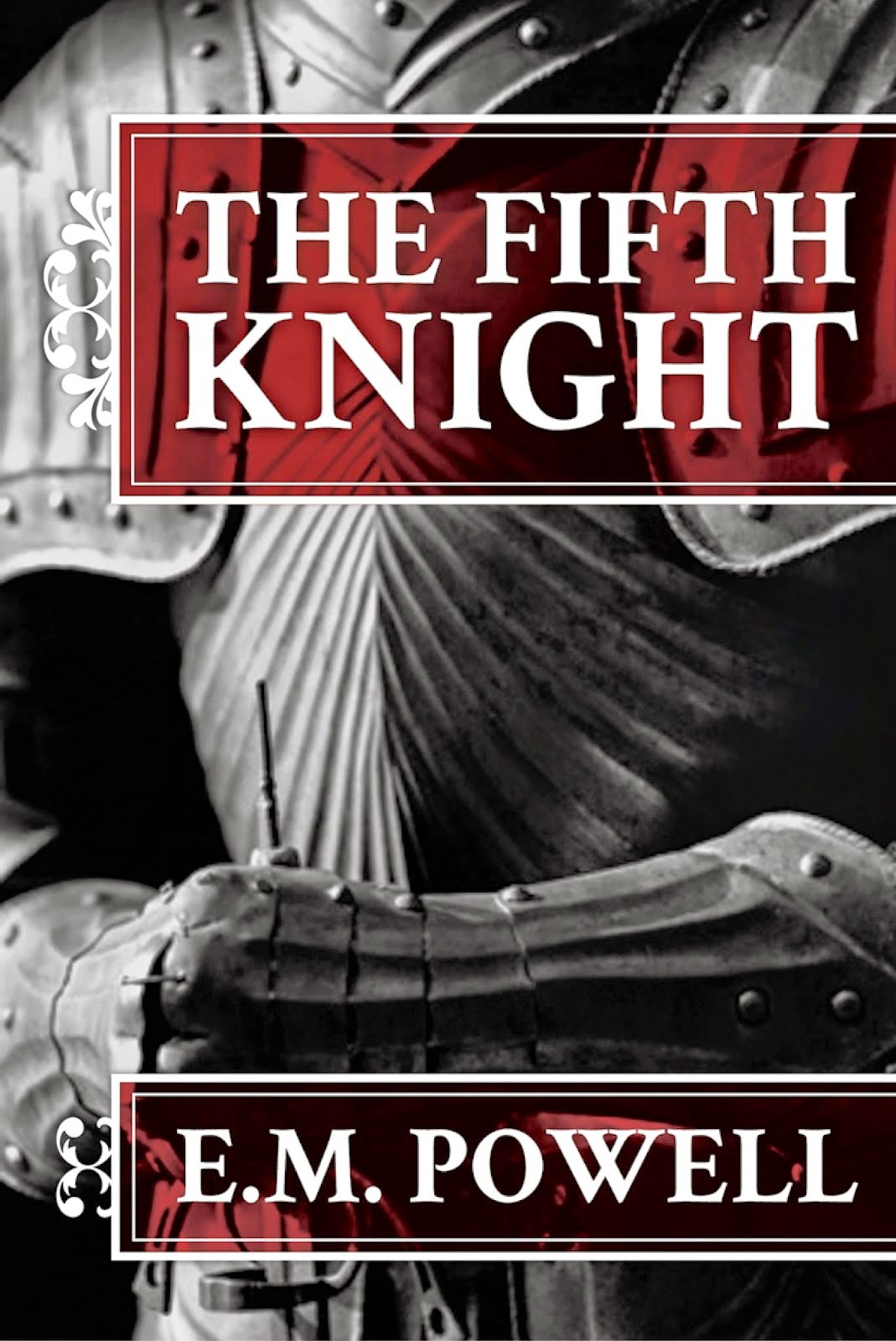
http://www.amazon.co.uk/Fifth-Knight-E-M-Powell-ebook/dp/B00A017O0I/ref=sr_1_1?ie=UTF8&qid=1400485439&sr=8-1&keywords=the+fifth+knight 

The very fabulous Elaine Powell, author of The Fifth Knight, has tagged me in the Meet My Main Character blog hop. You can read her post here. Elaine Powell's soon-to-be-published novel is the sequel to The Fifth Knight, and her hero is once again mercenary knight, Sir Benedict Palmer.  Although he is fictional, many other characters and events are not. The sequel is called The Blood of The Fifth Knight. To read more about The Fifth Knight click on the cover link.

To follow me in the blog I am tagging Nigel Williams and Gillian Hamer.


My latest Tudor novel Intractable Heart: the Story of Katheryn Parr is available on Kindle now and the paperback will follow soon. I am very pleased to talk a little about Katheryn, Henry VIII's last queen.

What is the name of your character? Is he/she fictional or a historical figure/person?
I think most people recognise the name Katheryn Parr. She was Henry VIII’s sixth and last wife. We first meet her in my novel during the Pilgimage of Grace when she is the wife of John Neville, Lord Latimer and their castle is under siege by rebels. Although Katheryn is only a young woman, she steps up to the challenge, defending the castle and her two step children John and Margaret as best she can.

When and where is the story set?
Oh dear, I’ve rather given that away already. The novel is set at the court of Henry VIII in Tudor England. The scene shifts from Yorkshire during the Pilgrimage of Grace to the royal palaces of the south of England, and also stops off at Portsmouth to witness the sinking of the Mary Rose.

What should we know about her?
Katheryn is very clever. In a world of limited female literacy she is multi-lingual and publishes religious books in support of the reformation of the church in England. Despite their religious differences the King demonstrates his high regard by setting her up as regent while he wages war on France. Once gain Katheryn accepts the challenge although she is beset by enemies.

What is her main conflict? What messes up her life?
Husbands! Poor Katheryn had four of them! Katheryn’s mother, Maud Parr was very ambitious and secured her children excellent spouses. Her eldest William was married at a young age to Anne Bouchier who embarrassed the family by taking a lover and giving birth to a string of illegitimate children. Their marriage ended in annulment but it was a long and bitter battle. Katheryn fared much better. Her first marriage to Sir Edward Borough ended with his unexpected death after just a few years and she later remarried John Neville in 1534, becoming Lady Latimer. Latimer was twice her age but the relationship seems to have been amicable and she took his children under her wing and was genuinely fond of them, particularly Margaret. He died in 1543 leaving Katheryn a wealthy widow.
As a young attractive widow she had no trouble in forming a relationship with Thomas Parr and the pair were set to marry until she caught the eye of the ageing king. It isn’t possible to refuse marriage to a monarch, especially one like Henry. Katheryn’s conflict was to put away her feelings for the brash, handsome Thomas Seymour and submit to the demands of the fat, malodorous and very dangerous king. Quite a challenge.

What is Katheryn’s personal goal?
She puts away the idea of romantic love after her marriage to Henry and turns her attention to being a good queen and mother to the king’s children. Much of her energy is spent in support of the reformation of the church
Katheryn’s strength of character helps her overcome her sorrow at losing Thomas and make the best of her life with Henry. Although his health is failing she has no idea what the future might bring but she wastes very little time wishing things are different.
Of all Henry’s wives she emerges as the capable one: the one who manages Henry the best, and the one with the intelligence and determination to be more than just a wife and fill the role of ‘consort’ in the fullest sense of the word.

Is there a working title for this novel, and can we read more about it?
Intractable Heart. The title is taken from Katheryn’s book Lamentation of a Sinner in which she laments her ‘obstinate, stony and intractable heart.’ Although she uses the words in religious terms I think they sum Katheryn’s character up rather well. Married four times, her first three marriages are all successful; it is her fourth union, the only one which is forged from love that proves to be her downfall. Seymour becomes Katheryn’s beloved nemesis.

When can we expect the book to be published?
Now! It is just out on Kindle now and the paperback will follow as soon as possible. It should be with you VERY soon – if the fates are willing. Click here to buy.

Photographs from WikimediaCommons

To view my other books click on the links below: