Saturday, 24 May 2014

Pauline Montagna Hunting in Medieval Italy


Today I have the pleasure of Pauline Montagna guesting on my website. Pauline was born into an Italian family in Melbourne, Australia. After obtaining a BA in French, Italian and History, she indulged her artistic interests through amateur theatre, while developing her accounting skills through a wide variety of workplaces culminating in the Australian film industry. In her mid-thirties, Pauline returned to university and qualified as a teacher of English as Second Language, a profession she pursued while completing a Diploma of Professional Writing and Editing. She has now retired from teaching to concentrate on her writing. As well as The Slave, she has published a short story collection, Suburban Terrors.Today Pauline talks to us about hunting in Medieval Italy


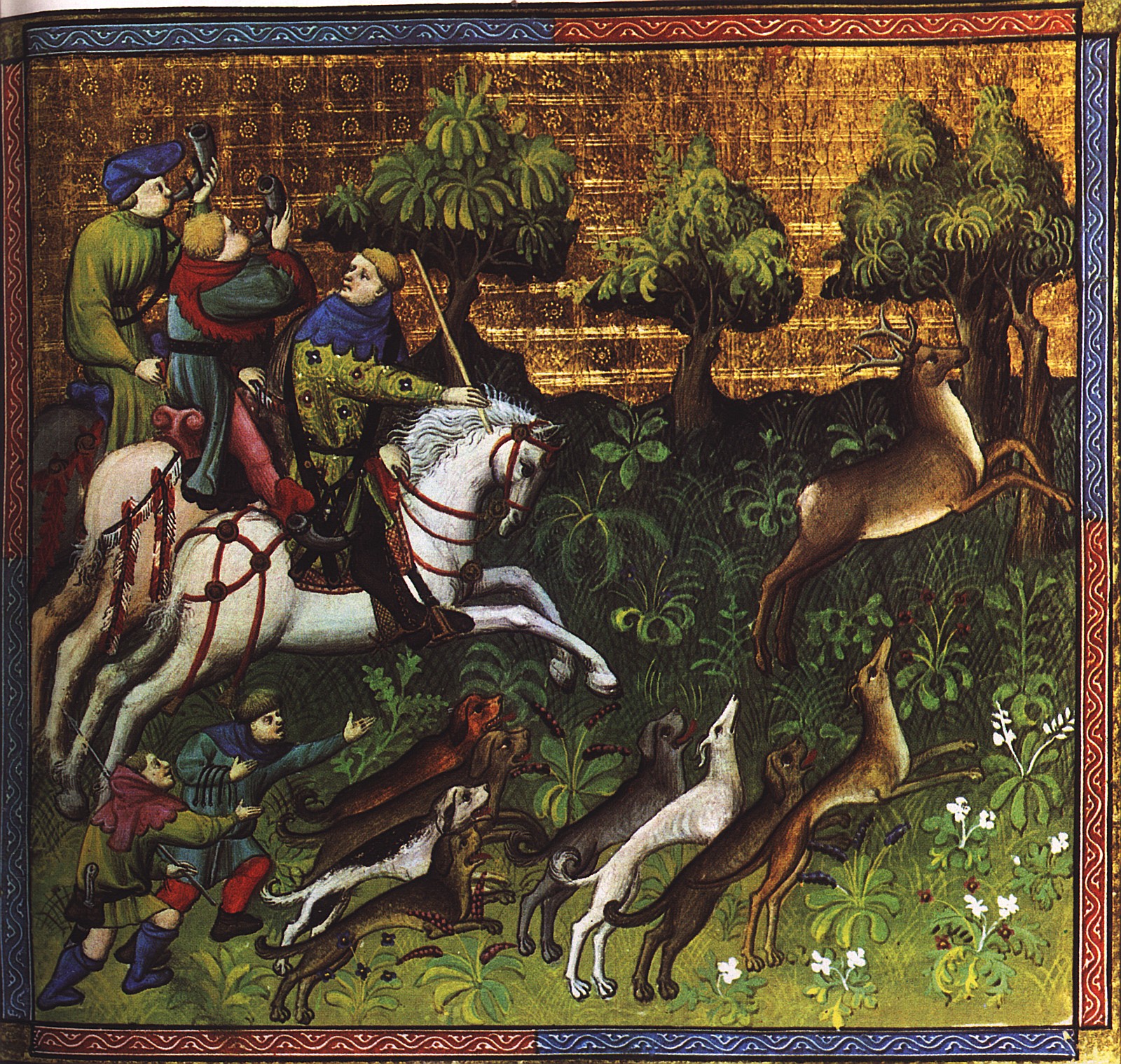
La Caccia: Hunting in Medieval Italy
Italians have always loved hunting or la caccia. It’s the reason why one sees so few birds in Italy these days apart from the ubiquitous pigeon, though there was a time when Italian hunters disdained such small fry. Their quarries of choice in the Middle Ages were the hart and the boar.
Hunting was not just about the meat, or even the sport. It was about the exercise, about keeping men in trim and in form for war. It was also a social occasion, preceded and followed by good food, wine and jollity, by boastful arguments about one’s exploits and the joyful consumption of the kill with one’s family, peers and dependents. And, with the symbolic linking of the hunt with seduction, it provided a thrilling setting for amorous dalliance.
Each type of prey had its season. The boar was hunted in winter, from September to February, the hart in summer, from June to September, the fox in spring, from March to June. The hare was also hunted in spring from March to April, though in some parts there was no closed season on this small but fast and wily animal, ideal for keeping one’s hand in during the off-season. In the remote hills, bear might be hunted when the snows had cleared, from May to December, while the wolf might be chased down all through the winter months from September to March.
The larger beasts of prey were hunted ‘par force’, with hounds and horses. A variety of hounds were used such as the swift-footed greyhound, the burly little running hound, the handsome, smooth-coated alaunt and the huge mastiff. Smaller prey and birds might be hunted with the aid of tamed falcons and hawks.
The hart, a mature male deer, was the largest prey to be hunted. This elegant animal could be gentle, timid and wily, yet with its broad spread of antlers could easily kill a hound or a man. Once the hounds had been loosed to follow the scent, the hunters would set off in pursuit, the beaters on foot, the lords in the saddle, listening for the baying of the hounds far ahead of them and the bellow of the horn that would signal when the hart was sighted, chased over field and through forest, and then held at bay by the hounds.
This was perhaps the most dangerous moment, when the great beast, worn down and desperate might use its waning strength to turn on man and dogs. Yet the hunters would hold their hounds back, for it was only the lord himself who had the privilege of killing the noble beast, bringing him down, perhaps with an arrow, before finishing him off with a sword through the heart.
Then once more the horns would be sounded to signal the kill. The lord would turn up his sleeves to ceremoniously begin butchering the hart, rewarding the hounds with offal or bread mixed with blood. The dead beast would be carried home with great fanfare, offered to the women of the family as the spoils of manly exploits.
But by far the most dangerous prey was the boar. This massive, ugly beast was generally black, with wide malevolent eyes, its mouth horrific with bristles and teeth, flanked by curved, gleaming tusks. Though not as subtle and evasive as the hart, the boar was fearless, impervious to pain, could call on boundless stamina and unrelenting ferocity and was capable of bringing down a horse as easily as a man or a hound.
A boar could be found rooting about for fruit in an orchard or acorns in a forest. More often than not it would turn on the dogs that found it, attacking them repeatedly before turning to run so hard and long that relays of fresh hounds would be needed to keep up with it. Once it was cornered, both hunter and horse would need the utmost courage and dexterity to approach it. Quick reflexes and calmness were essential as the hunter watched the boar’s eyes to predict its movements before lunging with sword or spear. Miss and the boar could kill them both.
Falconry enjoyed a revival in fourteenth century Italy. In this sport the hunter could develop a
personal relationship with his hawk, getting involved in the raptor’s taming and training, flying with it in spirit as it left his arm and soured, free and independent, swiftly and deftly bringing down its prey. Hawks were used to hunt small game such as rabbits and hares, low-flying land birds such as partridges and pheasant, as well as aquatic birds such as ducks and herons. Dogs might also be brought along to retrieve the larger game.
Falconry was one form of hunting in which ladies could indulge, carrying their own smaller raptor such as a falcon, into the field. Although it was rare, women might also participate in hunting ‘par force’, though they would be restricted to riding on the new-fangled side saddle and, of course, be expected to watch the kill from afar.
You can read a vivid description of a deer hunt in my novel, ‘The Slave’: (Join my mailing list by May 31 to get your own free complimentary e-book copy of ‘The Slave.’)

The stable yard was a confusion of noise and movement when Aurelia emerged from the house in the early morning light of a warm summer day. Restless horses stomped backwards and forwards, turning on themselves, their masters pulling at the reins to keep them in check. Dogs bayed, straining at their leashes, held in packs by their keepers who pulled them back, shouting at them to heel. Peasants conscripted as hunters and beaters stood in groups, talking and laughing, leaning on staffs or long bows. Loud voices shouted out orders and warnings. Servants ran hither and thither with flasks of wine to serve drinks to riders and huntsmen alike. Confounded, Aurelia looked around for her own horse. 

Find out more about Pauline and her books on her website http://paulinemontagna.net
 References
‘The hound and the hawk: the art of medieval hunting’ by John Cummins (1988)
Images from Wikimedia Commons


Aurelia Rubbini, the only child of a rich merchant in fourteenth century Italy, has been raised to be a dutiful daughter, wife and mother, but she longs for something more than the restricted life intended for her. Then one day, her father brings home from a buying trip an Asian slave boy, Batu, who will reshape Aurelia’s destiny.

Aurelia and Batu are inexorably drawn to each other, but their relationship is forbidden as Aurelia is destined for an arranged marriage to further her father’s political ambitions. When Aurelia marries Lorenzo de Graziano, a nobleman with a dangerous reputation, Batu insists on going with her for her protection. But Batu’s presence arouses violent passions that Aurelia, in her innocence, can never understand.

Short Description

Aurelia Rubbini, the only child of a rich merchant in fourteenth century Italy, has been raised to be a dutiful daughter, wife and mother, but she longs for something more than the restricted life intended for her. Then one day, her father brings home from a buying trip an Asian slave boy, Batu, who will reshape Aurelia’s destiny.


Wednesday, 7 May 2014

Raglan Castle - A Tudor Weekend 31th May - 1 June, 2014


By Bob McCaffrey from Rickmansworth, UK (Raglan Castle (2)) [CC-BY-SA-2.0 (http://creativecommons.org/licenses/by-sa/2.0)], via Wikimedia Commons
Most people today see Raglan Castle in a blur as they dash past it on the A40 just outside Abergavenney in Monmouthshire. The castle serves as a reminder of our heritage, a ghost of late medieval Britain that watches in bemusement as we scurry by on our frantic modern business.
But, in its heyday, Raglan Castle would have been a destination in itself. A weary traveller on the old medieval route through the village would have been overawed by the vast crenelated towers as they appeared dramatically over the brow of the hill. He would then be forced to take the path circling the castle. Constrained to ride around the Great Tower and moat, he could not help but notice the impenetrable walls, the defensive towers, the soaring gatehouse. Once inside he would have looked up at vast walls that shadowed the sun, to see fluttering pennants against the clear blue sky. He would have craned his neck at the carved stone badges and shields above the gate expressing the awesome power of the Earl. Only then would he pass through to the inner Fountain Court to discover another entrance, this time to the Great Tower and the Family’s living quarters. All this was designed to impress, put a visitor on his guard, and make any prospective enemy think again.
Philip Halling [CC-BY-SA-2.0 (http://creativecommons.org/licenses/by-sa/2.0)],
The castle we see today was begun in 1415 by William ap Thomas, a veteran of Agincourt, who purchased the manor of Raglan for one thousand marks. It was William who conceived the basic shape of the castle although much of the building work took place after his time.
William’s son dropped the ap Thomas and began to call himself William Herbert. He was active on the side of York during the Wars of the Roses and also fought in the Hundred Years War. It was William Herbert who carried out most of the medieval phase of the building and added extensive parkland, orchards and fishponds. As a Yorkist supporter Herbert’s fortunes flourished and in 1461 Edward IV made him Lord Herbert of Raglan. 

In 1461 at the Battle of Mortimer’s Cross Herbert’s half-brother, Henry Vaughn, captured the Lancastrian, Owen Tudor, father of Jasper and grandfather of Henry, and executed him in Hereford. Owen’s son Jasper was forced to flee the country, leaving his nephew, Henry Tudor, behind at Pembroke castle.
Sir William Herbert.

In 1468 Herbert became the first Welshman to be made an Earl; the Earl of Pembroke, replacing the now attainted Lancastrian, Jasper Tudor. He also became Justice and Chamberlain of South Wales and one of the King’s closest advisors and friends.
Henry VII
He was given custody of the young Lancastrian heir, Henry Tudor (later Henry VII) and the boy spent much of his childhood at Raglan while his uncle Jasper Tudor agitated for the return to a Lancastrian rule. Although held as a prisoner Henry was gently treated, receiving an education and instruction in military skills.

But William Herbert’s fortunes did not last and after the Battle of Edgecote Moor in 1469 Herbert, along with his brother Robert, was executed. His daughter Elizabeth married Charles Somerset, a natural son of Henry Beaufort, third Duke of Somerset, and with her, the castle passed into the hands of a new family. Over the course of a few generations the Somersets added Pitched Stone Court, the Hall, the Long Gallery and developed the gardens in the new Renaissance style fashion.


The architecture at Raglan marks the transition of British castles from defensive structures into homes for the rich and powerful. Raglan is distinctive in the aesthetic details like fireplaces and windows, added in the Tudor period. Fountain Court takes its name from a magnificent black marble fountain featuring a white marble horse that once took centre place; its ostentation can now only be imagined. The fabulous oriel window and the great stair which gave access to the family apartments above would have been outstanding in their day. The workmanship of the stonemasons is a clear sign that the custodians of Raglan employed only the best craftsmen.
Raglan saw little battle action until the Civil War when it was held under siege by the parliamentarians; when the castle surrendered General Fairfax ordered it to be completely destroyed under the supervision of Henry Herbert, a direct descendent of William ap Thomas, the castle’s founder.


Fortunately the castle was not easy to destroy (or perhaps Herbert didn’t have his heart in it) and the damage was comparatively slight. Although the family regained their possessions and ownership of the castle after the restoration the building continued to slide into decay until the 20th century when it was scheduled as a listed building. It is now administered by Cadw.


But life at Raglan Castle isn’t over yet. Every year Cadw hold medieval fayres that celebrate the medieval and Tudor world. On the weekend of May 31 – June 1, 2014 Cadw are holding A Tudor Weekend. As well as enjoying the splendours of the castle, you can meet Henry VII, Henry VIII, try on a Tudor costume, hear a talk by historian Emma Knight on Anne Boleyn, and also meet me.

I will be there in my Tudor kit, signing my Tudor novels, TheWinchester Goose, The Kiss of the Concubine, and Intractable Heart, and talking to fellow Tudor enthusiasts.
I look forward to meeting you there.

You can read more about me and my work on my webpage:

Pictures from Wikimedia Commons.


Thursday, 1 May 2014

Introducing The Insatiable by Ginger Myrick


I'd like to introduce you, if you haven't already met, to my good friend and author Ginger Myrick. I have read and loved her novel,  The Welsh Healer, and although I haven't yet started it, I know this one will be just as absorbing. Her new novel is called Insatiable and is an alternative look at Marie Antionette of 'Let them eat cake' fame (although I am reliably informed she never really said that).
Take it away, Ginger, tell us all about it.

INSATIABLE: A MACABRE HISTORY OF FRANCE ~ L’AMOUR: MARIE ANTOINETTE is my latest release. It is a work of alternate history and borderline horror. For the most part it is historically accurate in respect to the documentation and timeline, so much so that people who know Marie Antoinette’s story will find enough to feel a comfortable sense of familiarity … for a while!
It begins predictably enough with the birth of Archduchess Maria Antonia Josepha Johanna in the Hofburg Palace and continues on in the same historical manner, covering such events as the handover ceremony at the Rhine, where she is stripped of all vestiges of her homeland including her little pug, Mops. She enters the building on one side an Austrian archduchess and exits on French soil as Dauphine Marie Antoinette. From there I move on to her glittering wedding at Versailles where she goes through the official marriage ceremony with Dauphin Louis-Auguste. The reader is taken through the strange and uber-public customs established by the Sun King and enforced by the Comtesse de Noailles, or as Marie Antoinette dubbed her Madame Etiquette. The story references her mother’s harassing letters and the constant presence of Maria Theresa’s spy, Count Mercy. Louis XV, Madame du Barry, the Princesse de Lamballe, the Duchesse de Polignac, Axel Fersen—all make their respective appearances. It’s all there, from the masked balls in Paris and her reveling at le Petit Trianon to the expensive construction of her perfect little fairytale village le Hameau de la Reine.
Lié Louis Périn-Salbreux [Public domain]
The rest of the book is not meant to feel comfortable or predictable. I apologize. It’s just my way. Marie Antoinette is known for her extravagance with all of her gorgeous custom-made gowns, her diamond jewelry, and towering wigs, so why would I turn it into a horror story? Well, because this story screams horror. Look what came after all the fun. Her downfall was swift and brutal beginning with L’Affaire du Collier, continuing with the storming of the Bastille and Versailles, and culminating in the French Revolution in all its bloody glory. My goodness! It was bad enough before I started with it. Even just the guillotine gives me the shivers, let alone the massacres with heads on pikes and market women declaring that they wanted to carve Marie Antoinette up and make cockades out of her entrails. I’ve just given a more macabre explanation for the violence is all.
It says right in the blurb that there is “a mysterious plague causing a sinister transformation in the residents of Paris,” and it does more that just that. I attribute the origins of some of the historical events to the mysterious (and fictional) plague and its victims. There are many documented instances during the life of Marie Antoinette with undocumented causes, even unexplainable behaviors, like Louis-Auguste’s fascination with locks (a decidedly un-kingly hobby) and the overwhelming presence of dogs in the palace. As an historical novelist, it’s my job to exploit exactly these sorts of loopholes and gray areas in history to write an interesting and believable story, but I think I’ve taken that premise to new heights with this one!
I also put a spin on the propaganda against Marie Antoinette, taking the line that some of the
The Storming of the Bastille, Henry Singleton [Public domain]
assertions were true despite the fact that there was never any solid proof to back them up. (There must be something going on for people to imagine it! Right?) I stick with the assumption of Louis XVI’s impotence, although I attribute it to a fictional medical condition. There were also stories asserted by the libelles—basically the National Enquirer of the time—that Marie Antoinette and her brother-in-law, the Comte d’Artois, had an affair. This also plays a major part in the book. I adopt the assertion that she and Axel von Fersen were lovers, which although widely accepted has never been conclusively proven. I also make her enmity with Madame du Barry into something more than a simple clash of personalities.
But, I don’t want potential readers to think this book is wholly one thing or the other. I don’t want them to be put off by the horror aspect, because that is only a part of it. Some of the scenes get graphic, but hey! It was a revolution! There is so much more to the story than that. There is a sweet and touching family depiction and a passionate love story at the core. There are some scenes in it that are so touching that I cry each time I read them. My Louis XVI is valiant and decent, if indecisive, and Louis-Joseph, the first Dauphin, is as sweet and pitiable as his reputation holds. In fact, I think I’ve done a pretty good job capturing the personalities of all the main characters, at least I hope I have. I also try to give a well-rounded look at the political picture if not a detailed account. But that is where the story diverges from the path of straight historical fiction into alternate history. The result is the same, it’s just a different and slightly more twisted journey!
Not only have I put my spin on Marie Antoinette’s story, I plan to do the same with other French notables, as well! This book is part of a series. I originally thought to do only a trilogy but have since revised my opinion. I think I have enough interesting ideas to do at least four books without the premise becoming hackneyed. The next will be about Napoleon and the subsequent one about Catherine de’ Medici. I’m still debating the others. Please stay tuned.

INSATIABLE is now available for a discounted introductory price at:

Connect with Ginger at:
Facebook      Goodreads       Twitter

Photo's from WikimediaCommons

Tuesday, 15 April 2014

Meet My Main Character (or one of them) by Judith Arnopp


Thank you Paula Lofting for tagging me in the Meet My Main Character Blog hop. You can read Paula's main man here.
I had to think long and hard when asked to do this blog about my main character. Since I now have six books to choose from I decided to pick favourite main character from my first book set in Tudor England. I always imagine her to look a little like the actress Alex Kingston pictured left.


What is the name of my main character? Is she real or fictitious?

Joanie Toogood is fictitious but there are many of her ilk in history. We can only gain access to women like Joanie and her sisters via the court records for they were often in trouble but not because they were bad characters. It was a tough life, girls had to make a living and when your only means of support is unlawful you are bound to find yourself in the thick of things from time to time.


Anne of Cleves -Holbein
When and where is the story set?

The story opens in Tudor Southwark in 1540. Anne of Cleves has just arrived in England and King Henry is unhappy. It is a bloody time of unrest and uncertainty. The monasteries have fallen, religion in England is in transition, and the people don’t know if they are coming or going. Amid the turmoil two sisters, Isabella and Evelyn Bourne, join the household of the new queen. There they encounter the devious Francis Wareham and the unfolding events throw them into peril and the dangers of Joanie Toogood’s world.


What should we know about her?

In the medieval period the area of Southwark was outside the jurisdiction of the crown and owned by the Bishops of Winchester.  The prostitutes that worked the bankside paid their rent to the Bishop and became known as The Winchester Geese.  Southwark, lying just across London Bridge from the palace, is a rough place, the haunt of spies, thieves, and gentlemen in search of sexual ease. Joanie is a prostitute, a woman with a big smile and a kind, rough heart. She collects waifs and strays and mothers everyone, including one of Cromwell’s spies whom she picks up one cold dark night, and a lost girl whom she suspects of murder.

Joanie is a good, bad girl, a mass of contradictions. A tart with a heart but I don’t think she is a cliché. Here is a taster to help you know her better.

“London is teeming with visitors and most of them find their way across the bridge to the stews at some time or other, and boost business nicely indeed. I buy myself some thick bed curtains and a sturdy dresser to hold a jug and bowl. It isn’t new of course, and bears the mark of many an owner, but it’s new to me and I’m proud to own such a thing. I have a meagre store of firewood put by too, in readiness for the winter cold. These days, I am so worn out that I fall into bed at dawn and sleep the sleep of the wicked, but before I close my eyes, I make the time to pray that Francis is safe and that the French disease will pass my sisters and me by.
The sickness, that seems to come in waves, is rife in Southwark again and the King is threatening to close the brothels down. They’ve tried that before, of course, but we just lie low for a bit and offer our services beneath another name. As long as the gentlemen come, there will always be whores, there’s nothing even the King can do to change that.
Sometimes I fear I am growing old, for these days my work hangs heavy on my shoulders. Maybe it’s the lack of hunger, but I can no longer revel in the bright pennies that are pressed into my hand or find satisfaction in the ale that my customers tip down my throat.
Even when I am stone drunk I lie beneath the sweating, wine-sloshed bellies of my leman, sick at heart, wishing there was another way. But there never has been, not for women like me. When the working night is over I often lie awake and wonder what became of Francis. It goes hard with me, never knowing if he will ever come to me again, or if he has forgot his Joanie for good this time. It’s the not knowing that is worse, but only in the cover of night do I face up to my fears and admit that the joy in my life has gone with him and that life is harder now that I am no longer a merry whore.”

What is her main conflict? What messes up her life?

Her life is tough, and not one to be envied, but Joanie and her sisters are not doing too badly until she encounters the young and vulnerable Francis Wareham. She takes him under her wing and he becomes a regular customer, splitting his time between the royal court and Joanie’s bed.  Unaware that Francis has begun to act as a court spy for Thomas Cromwell, Joanie eventually falls for his naïve bravado and becomes too involved with him. Her love for him sets her on the path to near ruin.

What is Joanie’s personal goal?

Joanie’s goals are to have dinner on the table, and a pillow beneath her head at night. Her life is about survival, she has no goals other than that. She might dream of warmth and the comfort of a husband and a steady income but, to Joanie, those things are as seemingly unobtainable as the crown jewels. When she finds herself in the possession of some ‘hot’ property she risks everything and needs all her wits to emerge from the situation unscathed.

What is the book's title?

Stephen Gardiner, Bishop of Winchester
The Winchester Goose. As I mentioned earlier the Winchester Geese were prostitutes working the area of Southwark on the banks of the Thames and paying their rents to the Bishops of Winchester. Here is the blurb.

Tudor London: 1540. Each night, after dark, men flock to Bankside seeking girls of easy virtue; prostitutes known as The Winchester Geese. Joanie Toogood has worked the streets of Southwark since childhood but her path is changed forever by an encounter with Francis Wareham, a spy for the King’s secretary, Thomas Cromwell.

Meanwhile, across the River, at the glittering court of Henry VIII, Wareham also sets his cap at Evelyn and Isabella Bourne, members of the Queen’s household, drawing the girls into intrigue and the shadow of the executioner’s blade.

Set against the turmoil of Henry VIII’s middle years, The Winchester Goose provides a brand new perspective of the happenings at the royal court, offering a frank and often uncomfortable observation of life at both ends of the social spectrum.

When will the book be released?

The Winchester Goose was released in 2012 and is available at Amazon and other leading bookshops, also on Kindle. The Winchester Goose is my fourth novel but represents my first foray into the Tudor court. Since then I have written two more, The Kiss of the Concubine; a story of Anne Boleyn and Intractable Heart, about Katheryn Parr. Intractable Heart will be available soon.

Soon to introduce their man character is Karen Aminadra.
Caroline Storer,
Rachael Thomas


My other books include:
Intractable Heart - coming soon


The Kiss of the Concubine


The Song of Heledd


The Forest Dwellers


Peaceweaver


Photographs from Wikimedia commons