Showing posts with label #Tudors. Show all posts

Friday, 15 September 2023

How to Dress like a Tudor


I don't always dress like a Tudor lady but you could if you wished. My first attempt to sew  my own was laughable but luckily I made it from an old pair of curtains – curtains I quickly realised were far too small for the purpose. Undaunted, I bought more fabric and began again with better results this time, but it wasn’t until my third gown that I finally came up with a wearable and reasonable HA garment. 

By this time we were both into dressing up for Tudor events so I began to make clothes for my husband. He now has almost as many different outfits as me. Then I made a set of clothes for Henry VIII and dragged my son along to play the part of the king. Unfortunately, he can’t come out with us very often but when he does, he makes the perfect king.


Before long I’d met a fellow Tudor enthusiast who was keen to join me and we started a small group, The Fyne Companye of Cambria, and now in the summer we haunt the castles of  Wales. There are four main members now with others who come out with us when they can. We don’t take ourselves very seriously; we believe re-enactment should be fun and if our costumes are not quite right, they are close enough to convince the visitors to the castles. We enjoy adding to their experience and sometimes the caste throws in a free lunch – what could be better than that?


My first few projects were challenging, but I learned quickly and am still learning. I will never be an expert, but the most important lesson was not to be afraid of it. I now know how to construct a stiffened bodice, how to pleat miles and miles of skirt into a tiny (well, it seems tiny) waistband. My methods are not always authentic, but I manage to produce French hoods, gabled hoods, coifs, and bags for fellow re-enactors and have also sewn a couple of medieval houppelande gowns, shifts and kirtles, and several more Tudor gowns. I used to have an Etsy shop but couldnt keep up with demand and there was a danger of my hobby becoming a chore.

I do not and never will rank among the best sewers so I was surprised to be asked to write a book about my journey for Pen and Sword publishing. I did explain that there are far more accomplished historical sewers out there, but as I said before, I like a challenge. In the book I cover the history of Tudor fashion from the reign of Henry VII to Elliabeth I but mainly concentrate on  my main area of interest which is Henry VIII. I also offer tips for those considering taking the plunge an dmaking their own Tudor inspired clothing. 

I think (hope) the book, which will be published on 30th September 2023 illustrates that with research, patience, determination and sometimes a little bit of cheating, anyone can dress like a Tudor.


How to Dress like a Tudor

Judith Arnopp

Have you ever hankered to dress like a Tudor lord or lady, or perhaps you prefer the status of goodwife, or costermonger, or even a bawd? 

For beginner historical reenactors, the path to authenticity can be bewildering and sometimes intimidating. Judith Arnopp uses her own experience, both as a historian and a medieval/Tudor lady, to make your own journey a little easier.

The author traces the transition of fashion from the relatively subtle styles popular at the court of Henry VII, through the carefully constructed royal grandeur of Henry VIII, Edward VI, and Mary I to the pinnacle of majesty and splendid iconography of Elizabeth I. 

In contrast to the magnificence of court come the ordinary folk who, subject to sumptuary laws and regulations, wore garments of a simpler cut and cloth – a strata of society that formed the back bone of Tudor England.

This brief history of 16th century fashion examines clothing for both rich and poor, adult and child, and offers tips and tricks on how to begin to sew your first historically inspired garment, this book is aimed at helping the beginner learn How to Dress like a Tudor.


How to Dress like a Tudor is available for pre-order now

http://mybook.to/howtodress


Friday, 3 March 2023

New Release!! A Matter of Faith, the Days of the Phoenix. Book Two of The Henrician Chronicle!!

I have taken far too long to write A Matter of Faith: Henry VIII, the Days of the Phoenix, Book two of the Henrician Chronicle. I haven't been lazy though. The truth is that not only was I writing a  non-fiction book for Pen and Sword at the same time, I was also fighting brain fog, fatigue and the general 'erk' that follows Covid. 

I'm a little better now although still not the full ticket. I am not sure I ever will be. HOWEVER,  I have overcome it and the book is due for release on 20th March 2023. You can pre-order it now and really help give it a boost up the charts. The more I sell the longer I will be able to continue writing. Book three is already underway.

Scroll down for more on A Matter of Faith or read An excerpt from A Matter of Conscience: Henry VIII, the Aragon Years. 

January 1530

The year opens, a slow creaking door, giving way to the new and the fresh. As the festivities draw to an end, I resolve that this year I shall be merrier, my court will be joyous again. There shall be a new beginning.

I will throw off the trivial traditions that bind me to the wife I abhor. I shall play and sing and joust, for life is for living. From now on I will cease to envy the sons of other men and concentrate on begetting my own.

Ignoring a papal edict that I acknowledge her as my queen, I no longer admit Kate into my company. While she keeps her own dull court, in my part of the palace, I surround myself with young, energetic companions. 

Although I lack their youth, there is still not one that can best me on the tennis court or in the saddle. We hunt all day, dance all night and create an atmosphere that is brittle with joy. If life with Anne lacks the warmth I knew with Kate, it makes up for it with delight.

To all intent and purpose, Anne is my queen already. It is she who sits beside me at the feast, she who orders the entertainments, and she is the lady I lead onto the floor to open up the dancing. 

My advisors whisper that I should be content with that. I have the woman I love at my side, why not let matters lie? There is no need for an annulment. Let Kate rot in her apartments like some forgotten cat. There are few who will care.

But I want more than that. I want to show Anne off as my wife, my queen and besides … she continues to refuse me the pleasures of her bed. Sometimes it is not easy for her to refuse but she is strong; her will so much more determined than mine. 

I am so eager for her that I often overstep the boundaries. It is clear from the way her heart patters beneath my hand that she wants me too. When she allows me close and my lips graze her skin, she groans and writhes with wanting. But we go only so far. We both recognise the moment we must draw back for there is more at stake than the sating of our lust. We need a son, but he must be born in wedlock, there can be no question as to his legitimacy. 


Wolsey continues to fumble his way through the meeting of the privy councillors. Norfolk, who has ever looked down on him, smirks beneath his hand, shuffles his feet noisily beneath the table, coughs loudly to further interrupt the cardinal’s flow.

“What can you expect of a butcher’s boy,” I hear him remark as Thomas quits the room when the meeting is done. “It isn’t the king he works for. His paymaster sits in Rome…”

I rest my chin in my hand and tell them to go. I watch as, one by one, they take leave of me. When the room is empty, Norfolk’s words repeat in my head. His opinions of Wolsey’s low beginnings and compromised loyalty echo Anne’s. It is the only thing she and her uncle agree on.

At first, I wonder if he sowed the seed in her mind or contrariwise but then news comes from Francis Bryan whom I’ve sent to Rome on my behalf. He too believes Wolsey and his cardinals have done me a great disservice. He reports that abroad it is widely believed that had the matter been properly dealt with, I’d have been free of the queen long ago.

These findings make sense. When all is said and done, Wolsey is a Cardinal, and as such he must carry out the wishes of the pope. He also has little love for Anne and, if I am successful in ridding myself of the queen, would sooner see me wed to France. 

I am at a loss; without dependable advisors I can trust. Brandon can no longer be relied on, his hatred for Anne is surpassed only by his love for Kate. I mourn the days when our friendship was carefree, and I could confide anything to him. 

What can I do about Wolsey? 

I’ve trusted him since my youth, yet he has failed me; his loyalty is conflicted. He cannot serve both the pope and his king, that is …that is premunire – a crime against the crown. 

If I were to take him down, strip him of his titles, his positions, remove his properties, not only could I elect a more trustworthy advisor, but my coffers would be the fatter for it. 

I have long envied his palace at Hampton. It is wasted on Wolsey; it needs a woman like Anne to grace its elegant halls. It should be mine. What right has a subject to own possessions that outshine the king’s? 

I call a secret meeting with the few I trust … or perhaps, those I know who crave Wolsey’s fall.

Norfolk, scratches his long nose, addresses me without making eye contact.

“Of course, the cardinal is in pay of the pope, and so is Campeggio who is no doubt sneaking from the country as we speak with his baggage full of incriminating papers.”

I look up sharply.

“He has embarked?”

“Not as far as I know, Your Majesty.”

I snap my fingers at a scribe who stands ready with a sharpened pen. 

“Order Campeggio stopped, order his baggage searched, order that he is not to leave until every cranny of his luggage has been investigated.”

“But what of the Cardinal?” Norfolk is eager, his face wolverine. “He is a traitor, Your Majesty. He has deceived you and England by putting Rome before the good of our realm.” 

For a long moment, I stare into a corner, haunted by the wraith of my younger days, when I was newly king. I recall walking with Wolsey in the gardens, he laughed at my jokes, praised my skills, and make little of my failures. He was my friend, my mentor, the first one I’d turn to when matters of state seemed overwhelming. What happened to sway his allegiance? Was it me? Was it Anne? Or was his eye always on the higher prize? 

I remember joking once that he would be pope one day. I recall the way his laughter had faded, how he’d peered into the distance as if imagining it was so. Perhaps he has never loved me for myself, but only for what I could provide! 

And hasn’t he risen high at my expense? Without me, he’d still be gutting rabbits at his father’s butcher shop. I thump the table so hard pain shoots up my arm, then I stand up, my chair tipping to the floor. 

“Strip him of his diplomatic position,” I say before storming from the room in search of Anne.


Even as I hover on the edge of despair, she soothes me, her honeyed voice salving my pain, erasing the inner fear that I am running headlong down the wrong path. I cannot stop it now. I try not to think of him, Thomas my friend... 

Against my will, I imagine the guard approaching him. I envision how he will turn, surprise turning to horror as he realises why they have come. He will drop his bundle of papers, throw up his hands, cry out a protest and beg an audience with his king but …they will not listen. 

His day is done. His fate is sealed. 

I wonder what Kate will say when she hears of it.


“You must take Hampton for yourself,” Anne says, running her hands down my chest, tweaking the buttons on my doublet as though she intends to loosen it. “I have always thought it too grand for Wolsey. The gardens are wonderful. When you travel along the river and come upon the palace suddenly from the water, it takes one’s breath away.”

“There is no need. He has made a gift of it.” I answer distantly. 

Events are running away with me. I try to turn my mind from the enormity of what I am allowing to happen. I must concentrate on the here and now, the future with Anne. I can never go back to how things were before … even if I wanted to.

“I will need a new chancellor. I will ask Thomas More – I trust him. He is a good fellow.”

She sits up, pouting, her prettiness marred by a frown.

“He has little liking for me. He is Catherine’s man.” 

She never gives Kate the title ‘Queen’ and although I shouldn’t, I always find I resent it a little.

“He loves me. He is my man. He will always be my good servant.”

“Hmm.” 

She turns to me, her dark eyes glinting in the shadowy light. “You should speak with Thomas Cranmer. I find him very eloquent, very wise. He believes there is no need for you to beg permission for an annulment from the pope at all. He says there is no reason you cannot just put Catherine aside and marry me at once …” 

She sits up, yawns and stretches so the fabric of her gown is pulled tight to her body. I yearn to undress her. One day, one day very soon, I will do so. I will lie naked with her in my bed and I will get a son on her. Every inch of her body screams of fertility. I can smell it in her hair, in the musky sweetness of her neck. I know, the first night that we finally lie together, I will get her with child.


If you haven't read book one yet, it is on sale at the moment. You can get your copy here: mybook.to/amoc


A Matter of Faith: Henry VIII, the Days of the Phoenix

Judith Arnopp

'Superbly inventive insight into the mind of one of our most famous monarchs' -

 Deborah Swift: award winning author

Finally free of Catherine of Aragon, Henry VIII is now married to Anne Boleyn, and eagerly awaits the birth of his son. In a court still reeling from the royal divorce and amid growing resentment against church reform, Henry must negotiate widespread resentment toward Anne. But his lifelong dreams of a son to cement his Tudor bloodline are shattered when Anne is delivered of a daughter.

 Burying his disappointment, Henry focuses on getting her with child again, but their marriage is volatile and, as Henry faces personal bereavement and discord at court, Anne’s enemies are gathering. When the queen miscarries of a son, and Henry suffers a life-threatening accident, his need for an heir becomes vital. Waiting in the wings is Jane Seymour, a lady-in-waiting, who offers the king respite from Anne’s fiery passions.

 But, when Anne falls foul of her former ally, Thomas Cromwell, and the king is persuaded that Anne has made him a cuckold, Henry strikes out and the queen falls beneath the executioner’s sword, taking key players in Henry’s household with her.

 Jane Seymour, stepping up to replace the fallen queen, quickly becomes pregnant. Delighted with his dull but fertile wife, Henry’s spirits rise even further when the prince is born safely. At last, Henry has all he desires, but even as he celebrates, fate is preparing to deliver one more staggering blow.

 The virile young prince is now a damaged middle-aged man, disappointed in those around him but most of all in himself. As the king’s optimism diminishes, his intractability increases, and soon the wounded lion will begin to roar.

 The story concludes in Book Three: A Matter of Time, Henry VIII, the Dying of the Light coming in 2023.

 "Riveting. This is Henry from beyond the grave in all his passionate complexity" Elizabeth St John - author of The Godmother's Secret


PRE-ORDER YOUR COPY NOW!


Tuesday, 30 November 2021

Books at Christmas!

 Evening all, 

Several of my books will be on special deals over the Christmas period. Starting with my most recent, A Matter of Conscience; The Aragon Years which goes on countdown deal on  December 1st.


‘A king must have sons: strong, healthy sons to rule after him.’

On the unexpected death of Arthur Tudor, Prince of Wales his brother, Henry, becomes heir to the throne of England. The intensive education that follows offers Henry a model for future excellence; a model that he is doomed to fail.

On his accession, he chooses his brother’s widow, Caterina of Aragon, to be his queen. Together they plan to reinstate the glory of days of old and fill the royal nursery with boys.

But when their first-born son dies at just a few months old, and subsequent babies are born dead or perish in the womb, the king’s golden dreams are tarnished

Christendom mocks the virile prince. Caterina’s fertile years are ending yet all he has is one useless living daughter, and a baseborn son.

He needs a solution but stubborn to the end, Caterina refuses to step aside.

As their relationship founders his eye is caught by a woman newly arrived from the French court. Her name is Anne Boleyn.

A Matter of Conscience: The Aragon Years offers a unique first-person account of the ‘monster’ we love to hate and reveals a man on the edge; an amiable man made dangerous by his own impossible expectation.


The story continues in A Matter of Faith: Book Two of The Henrician Chronicle.


Read the reviews here:
 

Buy link:

If you get a redirect notice, just click the book title and you will be taken through to the correct page.

Merry Christmas! 


Monday, 15 June 2020

Henry Fitzroy – The Almost King


by Judith Arnopp
Henry Fitzroy Duke of Richmond and Somerset (1519-36)

Kings, especially Tudor kings, could have everything they wanted. Power, property, wealth, women, it was all theirs with a click of the fingers yet, for many years, Henry VIII was denied one thing – a son and heir to follow him.

In 1519, less than forty years after Bosworth, the Tudor dynasty was still young, and it was Henry’s job to ensure it continued to flourish. The responsibility weighed heavily on his shoulders and, as Catherine of Aragon suffered more and more miscarriages, and the sons she did bear died in infancy, his need became an obsession.

With just one legitimate daughter, Mary, Henry was becoming desperate. Imagine his frustration when his mistress, Elizabeth Blount, with no trouble at all produced a healthy son. The temptation to turn his bastard into something more was irresistible. They named the child Henry.

Just to ensure that no one was mistaken, the name Fitzroy which means 'the king’s son', was often given to base-born male offspring, but although it is likely there were a good few more, Henry Fitzroy is the only illegitimate child that the king acknowledged.

Shortly after he was born, Elizabeth was married to Sir George Talboys and assigned several manors in Lincolnshire and Yorkshire. A mark of favour, or perhaps gratitude, for providing the king with what his wife could not.

While the relationship between Henry and Elizabeth ceased, he continued to show Fitzroy favour. At his christening it was Cardinal Wolsey who stood as Godfather, and by the time he was six young Henry was made Knight of the Garter, and created Earl of Nottingham and Duke of Richmond and Somerset. This double dukedom ensured that he took precedence over all other dukes in the land, barring the King’s lawful issue – should he have them.

 Duke of Richmond


He was also appointed King’s Lieutenant-general north of Trent, and Keeper of the City and Castle of Carlisle.This may seem a lot for a small boy, but it didn’t stop there, and by the time of his death in 1536 he was Lord |High Admiral of England, Wales, Ireland, Normandy, Gascony, and Aquitane, with a further commission as warden general of the Scottish marches thrown in for good measure.

Throughout his life he acquired castles, land and immense fortune, making him the richest man in England after the King. With the breakdown of Henry and Catherine’s marriage, and the advent of Anne Boleyn and the failures of that union, it soon became clear that, in the absence of a legitimate son, Fitzroy would be Henry’s heir. Nothing, bar the birth of a legitimate son, could stop it.

Henry Fitzroy received an education to match his status. Although often at court, he was resident in King’s College, Cambridge and taught by Richard Croke, a pioneer of Greek Scholarship in England, and John Palsgrave, another eminent scholar. By the time he was ten young Henry was reading Caesar, Virgil, Terence, and speaking Greek.

Arms of Henry Fitzroy


Henry VIII, proud of his son, despite the stain of his birth, lost no time in proposing matrimonial alliances beneficial to England, attempting to wed him into the family of Pope Clement VII, to a Danish princess, a French princess, and a the sister of Charles V who later became Queen of France.

In spring 1532 Fitzroy spent some time at Hatfield, accompanying Henry VIII to Calais in the autumn. He moved on to Paris, staying with his friend the Earl of Surrey until September 1533. And, later that year, at the age of fourteen, possibly at the instigation of Anne Boleyn, he married Mary Howard, daughter of Thomas, the third Duke of Norfolk by his second wife. The marriage was never consummated due to their age. Thereafter plans for him to go to Ireland were abandoned, and he remained at court in the midst of the furor surrounding the reformation and the downfall of Anne Boleyn.

He is recorded as being present at the execution of the Carthusians in May 1535 and was one of the peers at Anne Boleyn’s trial, witnessing her execution as Henry’s representative in May 1536.  Fitzroy benefited both in wealth and status from Anne’s death and those that died with her.
Henry VIII


Among Anne’s detractors there were rumours of jealous rivalry between Fitzroy and the Boleyns and whispers that she and her brother, Rochford, plotted to poison him. His death was more likely to have been due to consumption or possibly plague.

Fitzroy’s death in July, just two months after his stepmother, must have proved devastating for the King who, having disinherited both his daughters by this time was left temporarily heirless. But Henry VIII had a new wife and was pinning all his hopes on Jane, who was already pregnant, perhaps with a legitimate son this time. One that would live.

Henry Fitzroy was not given a state funeral as one might expect after his royal upbringing; the arrangements were left to his father in law, the Duke of Norfolk. He is believed to be interred at Thetford Priory with other members of the Howard family. After Fitzroy’s death it was decreed that, since the marriage was not consummated, the marriage was invalid, consequently stripping his widow of her benefits.

~~~~~~~~~~~~~

Judith Arnopp is the author of twelve historical novels; three set in the medieval and nine in the Tudor period. Details can be found here.
author.to/juditharnoppbooks


Illustrations

1. Henry Fitzroy http://upload.wikimedia.org/wikipedia/commons/0/02/Lucas_Horenbout_-_Henry_Fitzroy%2C_Duke_of_Richmond_and_Somerset_%281519-36%29_-_Google_Art_Project.png

2. The Duke of Richmond sometimes thought to be Edward of Middleham. http://upload.wikimedia.org/wikipedia/commons/4/44/DukeofRichmond1.gif

3. Henry VIII by Holbein  http://upload.wikimedia.org/wikipedia/commons/0/07/Workshop_of_Hans_Holbein_the_Younger_-_Portrait_of_Henry_VIII_-_Google_Art_Project.jpg

4.http://upload.wikimedia.org/wikipedia/commons/5/50/Arms_of_Henry_FitzRoy%2C_1st_Duke_of_Richmond_and_Somerset.svg


Tuesday, 19 May 2020

Introducing Vivienne Brereton - Historical Fiction Author

Author Vivienne Brereton

Thank you so much, Judith, for inviting me onto your Blog to talk about the 1520 Field of Cloth of Gold, near Calais in France.  This event was intended to be a summit meeting between Henry VIII of England and François I of France but quickly turned into perhaps the most memorable occasion of the sixteenth century.

Field of the Cloth of Gold (Wikimedia commons)

Why did you decide to use the Field of Cloth of Gold as the backdrop for your Tudor series: ‘The House of the Red Duke’?

I first became aware of the event when I went to stay with a French family just outside Rouen, in Normandy, when I was about seventeen. I can remember being dazzled by a sculpture depicting the Field of Cloth of Gold on the outside of the sixteenth century Hôtel de Bourgtheroulde. In a touch of synchronicity, the image on my A level history book was taken from a painting of the same event. So I suppose it entered my subconscious at a fairly early age.

File:P150 Meeting of Henry VIII. and Francis I. on the Field of the Cloth of Gold.jpg
Henry VIII meeting Francis I Wikimedia Commons

Why do you think it captured the public imagination, both then and now?

It had all the right ingredients: royalty, wealth, beauty, outstanding sportsmen, music, fine dining. And the invitations were only for the chosen few. Imagine all our most famous events all piled together in one big extravaganza and you would be close to how the twelve thousand participants appeared to a sixteenth century audience. It was a combination of the red carpet at the Oscars or Cannes; the Grand National; the final of Masterchef; Paris fashion week; the Last Night of the Proms; an architectural bonanza. And a whole host of royals and celebrities thrown in for good measure.
  In 2020, the five hundred year celebrations have sadly been halted because of the pandemic but it doesn’t stop us looking back at it in awe.


Could you describe two of your favourite moments from it?

I am writing this on June 7th, the five hundredth anniversary of the meeting between François and Henry. Here were two good-looking, highly intelligent, sporty young men, of twenty-five and twenty-nine respectively, who along with the twenty-year-old Holy Roman Emperor, Charles V, dominated the stage of Europe. Three warlike young men who were used to getting their own way in everything. So the anticipation of meeting one another that year must have been almost unbearable. There were huge fears on both sides that it might turn out to be a trap or an ambush so even when the two of them rode down a hill to meet each other, everyone on both sides were collectively holding their breath. In a later novel in the series, I had great fun imagining what was going on in the two royal heads when they finally set eyes upon each other.
   The second favourite moment for me was the impromptu wrestling match between François and Henry, instigated by the latter and won by the former. The two of them were drinking in a pavilion when Henry came up with the bright idea, not realizing that François would defeat him with a ‘tour de Bretagne’, some kind of special trick that left a red-faced Henry flat on his back.
   In England, wrestlers from Cornwall and Devon were considered the best but on this day, English pride was well and truly defeated. Henry, being Henry, asked for a re-match but was turned down. I love how Joycelyne Gledhill Russell describes the English records as being ‘silent’ on the matter but points out how Robert de La Marck, Seigneur de Florange, an eyewitness, mentions it in his memoirs. Classic Henry, ha ha!

File:British - Field of the Cloth of Gold - Google Art Project.jpg
Field of the  Cloth of Gold Wikimedia Commons

After all the jousting, the preening, prancing, flirting, dancing and dining came to an end, what do you think was achieved, if anything?

    The two major sources for the Field of Gold, the 1969 version by Joycelyne Gledhill Russell and the 2013 one by Glenn Richardson, differ on this. Russell concludes that it was all a very expensive, extravagant mirage, considering Henry went off to meet Charles of Habsburg immediately afterwards. Richardson, on the other hand, sees the lasting value for England for many years to come, cementing its place on the European stage. I think it was a mixture of the two, but far more the second. It certainly didn’t do England’s image any harm. The very fact that its reputation has lasted five hundred years until 2020 is a testament of its place as one of the most wondrous, ambitious events ever staged.
   
Thank you so much for inviting me, Judith. I’ve really enjoyed answering your questions. And if anyone is interested in finding out more about the event, they’ll find it my novel. 

‘The House of the Red Duke’, Book One ‘A Phoenix Rising’ can be ordered in bookshops or as a kindle. Below is the blurb.

COME AND PARTY LIKE IT’S 1520! AT THE EXTRAORDINARY FIELD OF CLOTH OF GOLD, near Calais. A series set against the Tudor, Valois, and Stewart courts of Henry VIII, François I of France, and James IV of Scotland. MEET THOMAS. Head of the Howards. One of the most powerful families in Tudor England, known for their good looks and charms. Soldier. Statesman. Courtier. Thomas is also a keeper of secrets. From the furthermost tip of Cornwall, up to the wilds of Scotland, and across the NarrowSea to France, Book One spins a fast-paced tale of intrigue, love and action. Explosive family secrets are concealed behind the ancient walls of castles in three lands. But there are no secrets that time does not reveal.

It is also available on Amazon. Click on the link below for further details:
  
🇬🇧 https://amzn.to/2yaLmO1
🇺🇸 https://amzn.to/2N6AzwV 
🇦🇺 https://amzn.to/355ZWnM
🇨🇦 https://amzn.to/2GyFDFG

Illustrations from WikimediaCommons

Wednesday, 26 June 2019

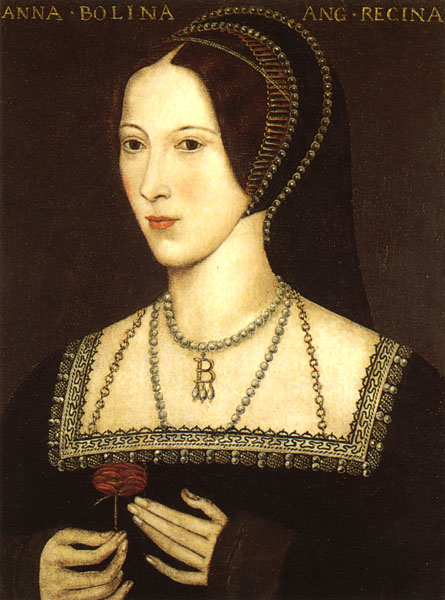
What did Anne Boleyn really look like?

Anne Boleyn, National Portrait Gallery

I am often told that readers are fed up with Tudors.  They know the stories, they’ve heard it all. The need for Tudor novels is over. But the reading public doesn’t seem to believe that. Since I first became an author of historical novels the most recurrent question has been, “Have you written any Tudor books?”

It seems to me that the reading public, both in England and especially overseas, cannot get enough of Henry and his wives. I think the reason for this is not just the glitz and the danger of Henry’s court; it is the many different interpretations we can put upon the stories and the people that inhabit them. There are more explanations for what went on than there are stars in the skies, and there are novelists enough to encompass them all. Added to that of course is that new generations are emerging all the time; a new batch of people who know nothing about the Tudors.

Anne Boleyn remains the number one favourite; the wife that everyone loves to read about. She has been depicted in many different ways; a schemer, a witch, a victim, a whore. She has been demonised by some novelists, and sanctified by others but how close to we ever come to the real Anne? We can never really know the truth about her, we can only piece little snippets together to make up a shadow of the real woman. That is what makes history, and enigmatic figures like Anne, so irresistible. Anne Boleyn was, and still is, a fascinating woman who deserves after all this time a fair reappraisal of her life and death.
  
In his nonfiction book The Life and Death of Anne Boleyn, Eric Ives,  now sadly passed on, reveals a credible figure. He has done the hard work for us, demolishing many of the myths that in the space of several centuries have solidified into fact, and illustrating that what remains is an intelligent, ambitious, but God-fearing woman who happened to win the love of a king.

It is refreshing to discover that perhaps Anne was not a scheming witch with a penchant for sleeping with half the court, (her brother included). Nor was she a woman who gave birth to a monster and plotted the death of the king. Ives’ research reveals someone more sinned against than sinning, and a woman whose mistakes were human ones. Anne was a queen who failed to produce an heir, and a woman who fell foul of the King’s most powerful advisers.  The woman that emerges from Ives’ research is the Anne Boleyn that walks the pages of my novel The Kiss of the Concubine.

To be honest, the real Anne is so obscured by myth and legend that we know much less about her than we think we do. We are not even sure what she looked like. We think of her as dark haired and thin but the familiar portraits we see of her are not contemporary; the originals were lost long ago. Experts disagree, but the oldest 17th century portrait now in the National Portrait Gallery is likely to be a copy of an original, and is favoured by Eric Ives as being the one that comes closest to a real likeness.

There are several written descriptions from her contemporaries and, while none rate her as a great beauty, none remark upon any physical failing either. The fact that she doesn’t emerge as breathtakingly beautiful is refreshing, and illustrates that Henry may have been more taken with the personality within, than with an alluring or fashionable face and figure. 


Brantome, a courtier from France, wrote in his memoirs that Anne Boleyn was ‘the fairest and most bewitching of all the lovely dames of the French court.’ (Weir, p. 151) And Lancelot de Carles stated that she was beautiful with an elegant figure and was ‘so graceful that you would never have taken her for an Englishwoman, but for a Frenchwoman born.’ (Weir, p. 151)

This is praise indeed, perhaps a little too flattering to be true, and many eyewitnesses agree that her looks were unfashionable and not to every one’s taste. As Francesco Sanuto, a Venetian diplomat, illustrates with his description of Anne as  ‘Not one of the handsomest women in the world; she is of middling stature, swarthy complexion, long neck, wide mouth, a bosom not much raised and eyes which are black and beautiful.’ (Ives, p. 40)

It is only after her death that the really detrimental reports begin to emerge. Writing in the reign of Elizabeth I, Catholic supporter, Nicholas Sander, describes Anne as, “rather tall of stature, with black hair and an oval face of sallow complexion, as if troubled with jaundice. She had a projecting tooth under the upper lip, and on her right hand, six fingers.  There was a large wen under her chin, and therefore to hide its ugliness, she wore a high dress covering her throat. In this she was followed by the ladies of the court, who also wore high dresses, having before been in the habit of leaving their necks and the upper portion of their person uncovered.” (Ives. P.39) 

 attributed to John Hoskins [Public domain]

But, although there are common factors when it comes to colouring and bone structure in all these descriptions, I think we can dismiss the idea that she was seriously disfigured in any way. The 16th century was a superstitious time and the characteristics described here all point to witchcraft. It is a clear attempt by Sander to demonise the former queen. Even had the king not been superstitious, I cannot image Henry VIII, who had the pick of the court ladies, finding a woman disfigured in this way to be even remotely attractive, let alone spend seven years of his life trying to get her into his bed. You can read a more in depth look at Anne’s appearance on an earlier blog I wrote for the English Historical Fiction Authors here.


Anne was accused of adultery, incest, high treason, and plotting to kill the King, and she died for those crimes. Yet none of these charges would stand up in a modern day courtroom. Eric Ives states that it can be proved that she was elsewhere on at least twelve of the occasions when she is supposed to have been committing adultery. The only actual ‘confession’ came from her musician Mark Smeaton, who we believe was subjected to torture in the Tower. Although Anne’s sister in law, Jane Rochford, gave evidence against Anne and her husband, George, she later retracted it in February 1542 before she herself faced execution for her involvement with Katherine Howard’s downfall.

While Anne was imprisoned in the Tower, Henry had his marriage to her annulled on the grounds of his former relationship with Anne’s sister, Mary. This made their daughter Elizabeth illegitimate. In truth, this should also have made the charge of adultery invalid, but this was Tudor England when justice was anything but just.

So, those are the bare facts. We can assume Anne was dark, and had attractive eyes and an oval face. We know she was intelligent and witty; even her detractors credit her with that. We know she was pious and refused to be Henry’s mistress, holding out until he promised marriage. That could make her a schemer, but equally it could make her chaste. During her marriage to Henry she tried and failed to produce a son, suffering several miscarriages and providing the king with just one daughter, later to become the greatest queen that has ever lived, Elizabeth. We also know that Anne worked in tandem with Cromwell and others toward church reform, and we also know that at a later stage there was a disagreement between them, and Anne’s downfall followed swiftly after.


Most novels of Anne I have read (but I confess I haven’t read them all) hold Henry alone to blame for Anne’s downfall. They show him as falling out of love with Anne, and place Jane Seymour as the sinister ‘other woman’ whose presence at court and her influence over the fickle king makes Anne’s fall inevitable. There is little evidence to suggest this and perhaps there were other reasons; perhaps another agenda came into play. Perhaps it was politics and not passion that killed her.

In writing The Kiss of the Concubine I have worked closely with the writing of Eric Ives and other prominent Tudor historians to come up with a less clichéd reason as to why Anne Boleyn had to die on that bright May morning in 1536.

The Kiss of the Concubine is now published with Sharpe Books and is available on Kindle and Audible or you can read FREE with Kindle Unlimited. mybook.to/tkoc2

Further reading

Lispcombe, Susannah, 1536: The Year that Changed Henry VIII, 2009.
Fraser, A. The Six Wives of Henry VIII, 1992.
Ives, E. The Life and Death of Anne Boleyn, 2004.
Weir, A. The Six Wives of Henry VIII, 2007.
Weir, A. Mary Boleyn, 2011.
Weir, A. The Lady in the Tower,2009.
Fox, J. Jane Boleyn, 2007.
Denny, J. Anne Boleyn, 2007.

Thursday, 12 July 2018

Raglan Castle's Tudor V weekend - 28th and 29th July 2018 - mark it in your diary.


It isn't long now until the annual Tudor event at Raglan Castle, the childhood home of Henry Tudor. (Read more about that here)  Rain or shine it is always a great weekend with a warm welcome for everyone. Raglan is a big castle with plenty to explore and refreshments and activities to suit all.


Every year the Tudor event offers something new, something fun, and surprisingly educational with living crafts, historical talks, refreshments, battles, executions!! mock jousts and archery. This year there will be a fun Tudor joust and a talk on Anne Boleyn by fellow historian Lesley Smith. Even without all that, you will not want to miss the wonders of Raglan Castle itself. 


Above is a photograph taken by a visitor to last year's event. It shows me and my trusty servant primed and ready to begin the day. My biggest fear this year is not fitting into my Tudor gown, the combined effects of middle-age spread and too much ice cream to combat the heat this summer has made it ... erm ... a little tight but I am pretty confident my French Hood will fit 😂


Bring your princes and princesses along to meet me and take a photograph outside the magnificent gatehouse. I will selling signed copies of my books at a considerable discount, including the third in The Beaufort Chronicle series that some of you have been waiting for. 


The King's Mother relates the final years in the life of Lady Margaret Beaufort, the mother of King Henry VII. There will be plenty of freebies and giveaways on hand and I am always happy to answer questions about Tudor history, writing or publishing.


Can't wait to see you there!

Raglan Castle is easy to find. Just over the Welsh/English border, on the A40 in Monmouthshire, the postcode is NP15 2BT.