Tuesday, 25 June 2019

Author interview with Walter Gunn


Walter Gunn is the author of the Billy Ruffian's Courier naval espionage series.

Hi Walter, thank you for agreeing to come on my blog. Tell us a little bit about yourself and your background.

For one reason or another, I missed much of my earlier education. Things didn't get much better at the Secondary Modern I attended: it was pretty dire - its only claim to fame was two of its ex pupils discovered a waterless lake in Australia - I kid you not.

I've had my revenge though, in my 'Billy Ruffian's Courier' series, I wrote in some pretty horrible deaths for those teachers I found particularly obnoxious. I saved till last, and most awful, that of the headmaster - this gave much pleasure and, I must say, lasting satisfaction... he should never have caned me!


Which writers inspire you?

There are so many. I live in awe of those past authors who wrote their mss long-hand. But, first and foremost they have to be capable of telling a good story. Names that quickly come to mind are; Dickens, Andy Weir (The Martian), Gabriel Garcia Marquez - A Hundred Years of Solitude and 'Chronical of a Death Foretold', Garrison Keeler for pure entertainment - 'Lake Woebegon Days'. My list could not be complete without Hilary Mantel -'Fludd', 'Every Day is Mother's Day' and of course 'Wolf Hall' and 'Bring up the Bodies'.  Apsley Cherry Garrard's 'Worst Journey in the World' made me feel chilled - now, I find I can only dip into it in the summertime. Then there're Lauried Lee, HE Bates, the list could go on and on... Good God, did I really miss out Jane Austen?


Would you tell us about your latest book?

'No Angels in San Chuan.'

Many years ago before I dreamt of moving to Aragon, we were at a dinner with a hang-gliding friend of ours and she told us of landing high up in the mountains where an old man tottered out of an even older stone barn and thought she was an angel - that charming seed lay dormant for many years.  Later I moved to the Pyrenees and met old men in their mountain huts who could have been him; the seed started to germinate.

  
Where can we buy or see it?

Buy it on Amazon worldwide - print or Kindle - mybook.to/NoAngelsinSanChuan.  And, when I sell the film rights, see it at a cinema near you.


What draws you to a genre?

My fancy at the time. 'Billy Ruffian's Courier' and 'No Angels in San Chuan' are completely different genres. They were both written from a lot of background knowledge and affection. Then there are 'The Snail Cookbook' and 'A Slice of the Pyrenees', again written from experience and affection - I live in a gastronomic area, I cook, and I love food. 'The Hoopoe' is a collection of my short stories. Most of these were ideas I didn't think would stand the strain of being fleshed out as full novels. Though, I am beginning to have second thoughts about this decision - I am being pressured to extend three of them in particular; 'Reverend Selby's Heresy', 'Hawksett & Burroughs' and 'Lucid'.

  
How much research do you do?

Not much really. I check a few dates and facts about the main characters and that's about all.

 When did you decide to become a writer?

I never made the decision, the occupation grew steadily - it crept up on me stealthily. I looked round one day and found I was a writer.  I suppose it really started when I wrote a few articles for international sporting magazines that went down well. I also wrote for corporate newsletters - this was good practice; accountancy firms, aircraft instrument manufacturers, medical equipment design and office furniture. The variety of clients meant swapping genre hats on a daily basis - all good practice for writing the novels I'm now involved with.


Do you write full-time or part-time?

I'm retired so you could say full time - things take so much longer at my age.

 Do you have a special time to write or how is your day structured?

Between 1800 and 2000 every evening - the rest of the time I'm either cooking or thinking about what I'm going to write that evening.
  
Where do your ideas come from?

A good question, and one I've asked myself often. "Where the hell did that come from?" a common outburst when I'm writing. It's a lovely process.


What is the hardest thing about writing?

Trying to get a literary agent and publisher. It's mystifying how I can get completely unsolicited reviews, posts and communcations from people who've read my books, yet agents are just not interested - I guess many 'indi' writers are in a similar position. What is particularly galling is that some of the books that do make it to the market are complete rubbish.
   
What was the hardest thing about writing your latest book?

I didn't find it difficult at all. I simply sat there and it poured out. 'No Angels in San Chuan' takes place in an area I know well. While living there in Spanish Pyrenees in Aragon, I made many friends, heard many tales and fell in love with the mountain people and their way of life. It really wasn't hard.

What is the easiest thing about writing?

Writing from experience and watching what comes out from the end of the pen... I love the way characters will sometimes barge their way into the story and make it easy for me. In'Billy Ruffian's Courier', I introduced a girl called Joss. She was only intended to be a foil for one particular conversation. Post chat. she just refused to leave and is now part of the complete trilogy.
  
Do you ever get writer’s Block?

Only when confronted with Income Tax forms.

For your own reading, do you prefer ebooks or traditional paper/hard back books?

Definitely paperback; there is something special about looking at a book on the shelf and knowing if I open it there is a complete and different world inside: this gives me the sense of other dimensions - other worlds that are real and existing between two covers.

From a commercial point of view, print books are better for marketing. When being read in public - trains, buses ect. people can witness them. This is not possible with ebooks - the author, contents and cover remain anonymous.
  
What book/s are you reading at present?

At the moment I'm not reading anything. I'm involved with writing another in the 'Billy Ruffian's Courier' series - I rarely read other works when I'm head first in my own work. I find it too damn distracting.
  

Thank you Walter Gunn for talking to us today. I hope you will come back soon.
  
Author Profile Walter Gunn

Walter Gunn is the author of the Billy Ruffian’s Courier naval espionage series. During the period the series is set, the author was, like the hero, a Royal Naval marksman, fast launch pilot and sailor.  The backdrop and substance of these books are thus based on his first hand experience.
  
On leaving the Royal Navy, he became a motor racing engineer and constructor; hang glider designer and test pilot - he competed in the 1st World Hang Gliding Championships.
   
Walter was the managing director of a leading edge sports aviation company.  His creation of the extreme sport ‘Speed Gliding’  can be viewed as a natural corollary of his passion for speed and excitement.

He has written for specialist magazines and co-written, designed, researched and produced quality corporate newsletters.  He is a capable photographer - his images have been published by national and international magazines, and his sporting video footage by television.

Walter Gunn has travelled the world extensively both as sailor and as vice president of the Fédération Aéronautique Internationale (FAI) Speed Gliding World Series.  He has lived for more than twelve years in the Pyrenees.  Walter speaks enough French and Spanish to get by.

He has written and published four Novels:  No Angels in San Chuan, Billy Ruffian’s Courier - Part one: Rites of Passage;  Billy Ruffian’s Courier - Part two: Hawkshaw; Billy Ruffian’s Courier - Part three: Baltic Exchange.
  
There is also his book of short stories: The Hoopoe.

His cookery books include: A Slice of the Pyrenees; The Well Thumbed Cookbook and The Snail Cookbook.

He is currently writing Billy Ruffian’s Courier - Part Four: Baltic Exchange.
  
Books by Walter Gunn

The Hoopoe.

No Angels in San Chuan.

Billy Ruffian's Courier - Part one - Rites of Passage.

Billy Ruffian's Courier - Part two - Hawkshaw.

Billy Ruffian's Courier - Part three - Baltic Exchange.

A Slice of the Pyrenees

The Snail Cookbook
  
All titles on Amazon


Wednesday, 19 June 2019

Interview with Edward Seymour


Image may contain: text


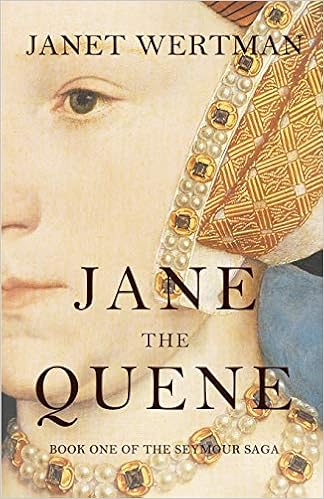
As part of the Historical Writer's Forum Interview my Character Blog Hop I have the honour of interviewing Edward Seymour, 1st Duke of Somerset, brother of  Queen Jane and uncle to Edward VI. and Protector of the Realm.  Edward is the main character in Janet Wertman's book - The Path to Somerset. Welcome my lord, please take a seat ...


Tell us about your sister Jane, what was she like? Did she set out to snare Henry?  Do you think the king really loved her best?

Sigh. Jane did not set out to snare Henry. She was a quiet, pale, plain young lady and she was as shocked as we all were that the King fell in love with her. But once his interest was piqued, she had only one choice.
And yes, of course Henry loved her best: she brought out the best in him, she gave him the son he needed – and she died before he could tire of her. The perfect woman.

       Image result for jane seymour tudor

I suppose you would say that about your sister, you were a close-knit family. There are rumours that your first wife, Catherine Filliol, had a relationship with your father. Do you believe that to be the case, are your two eldest sons actually your brothers?

The world has never stopped snickering at me over that one, or defining my life by that shame. Yes, it happened. Yes, I had to disinherit the boys I had thought of as sons.
Yet while this was the cross I had to bear in life (until my Calvary on Tower Hill), the Lord in His mercy softened the blow: those living symbols of betrayal atoned for the sin of their origin with total loyalty. They accompanied me to the Tower and almost perished with me. They were better brothers to me than Tom ever was and I loved them for it. 

It must have been dreadful in the Tower yet many ambitious men end up there. What were the problems between you and the Duke of Norfolk?

What weren’t the problems between me and Norfolk? He was Catholic while I was Protestant. He was old while I was young. He was old blood while I was a new man. And yet, as you say nowadays, all that was “just business.” We actually got along well enough and could easily have persisted forever as advisors to Henry – but we both knew that after Henry died, there would be room for only one of us.

                                     Image result for edward seymour

King Henry’s death coincided with a huge shift in power. Was this a carefully planned manoeuvre or spur of the moment? What was your part in it?

Each of Henry’s wives after Jane represented a giant political opportunity - or liability. Anne of Cleves was to have turned Henry Protestant for one and for all, but then Catherine Howard came along and pulled the King back to Catholicism. That young girl’s disgrace and bad judgment were our great good luck as they allowed us to swing the pendulum back to another Protestant, Katherine Parr. Of course, that move came close to backfiring when Gardiner attacked her. If Gardiner had succeeded, the King would surely have taken a Catholic bride (they were proposing his own son’s widow, Mary Howard, for goodness sakes).
But as much as I was part of the fight, it was the Lord’s intervention that won it for us. Only that could explain the stupidity of the conservatives who dealt themselves two death blows on the very same day. First, Surrey actually quartered the arms of Edward the Confessor on his shield, clearly asserting his claim to the throne. Then Gardiner refused to exchange lands with Henry (the same sin that had sent Nicholas Carew to the block). From that day forward, Surrey and Norfolk were imprisoned and Gardiner was banished, leaving no one to restrain me and the reformers.

I see. The imprisonment of Surrey and Norfolk gave you a clear run at taking control of the boy king. Did you and your cohorts manipulate King Henry to change his will in your favour?

Why do you call it manipulation? Henry had originally drawn up his will when Norfolk and Gardiner were in high favour; the document needed to be changed once they had shown their true colors. Admittedly, there were rich gifts in the final version, but that was to assure the personal power and loyalty of myself and the other men who would be guiding the young Edward VI and keeping him safe.


So you were motivated by family loyalty rather than riches. The king’s will did not appoint a Protector but within a very short time you were ‘elected’ as such. Do you have anything to say regarding this?

Don’t be naïve: look at society. You cannot keep power dispersed power among twelve men: one of them will come to dominate. That one ruler needed to be me in order to ensure that Edward VI would inherit his throne when he came of age.
The Council knew that when they elected me – and were reminded of it after they kicked me out in that first coup. After trying for three months to rule as a group, they realized they did need a leader after all and elected Warwick – he was not yet Northumberland then – President of the Council. Bah.

Thomas’ marriage to the Dowager Queen, Katheryn Parr, must have angered you. Was this the beginning of ill feeling between you or had you always been at odds with him?

My younger brother Tom always overrated his own abilities; he was rash instead of calculating, vain instead of humble. But we never failed to get along – until he married Katherine Parr.
The marriage made him look bad. It made her look bad. It made me look bad. It made all of England look bad. Yes I was angry he’d done it. Especially since he seemed to think it should warrant him more power than he deserved – and worked against me to seize it.

Some say that Thomas was simply attempting to speak to his nephew, the incident with the dog a regrettable accident - an accident that took him to the Tower. How did it feel to condemn your brother to death?

It was torture. Signing his death warrant was the hardest thing I’d ever done. But a signature was needed – either mine or my nine-year old nephew’s. I shouldered the burden rather than saddling the boy with it.

                                                 The Path to Somerset (The Seymour Saga Book 2) by [Wertman, Janet]

That was noble of you. When you were waiting execution in the tower did you think of the men who’d died by your order? Did you think of your brother?

How could I not think of my brother? How could I not remember his claims that he was unjustly accused? How could I not wonder what he went through?
But your question is not entirely fair.  Tom was guilty: he broke into the palace to kidnap the King - and actually killed his dog in a desperate attempt to hide his treason. I was innocent, the victim of Northumberland’s jealousy and lies. It was that innocence that sustained me, that confidence in Heaven’s certain reception.

Thank goodness for your faith. Is that what drove you? Religion? Or was it power?

It feels like you believe I was driven by power. I can’t fault you for that: most people did believe I was overly proud. And yet, I only ever sought to do God’s work...and that was my downfall.
I tried to adopt policies that would benefit the common man – but my peers were angry at the threat to their excessive wealth. I also tried to be tolerant of Mary and the others who believed differently than I did, but this allowed Warwick to call me faithless and discredit me to the King. In the end, I accepted my martyrdom and calmed the people who would have risen up to save me. As a result, I met my Maker cloaked in righteousness, and confident that He would judge me far less harshly than posterity.

I am sure posterity will be kind to you, my lord. Time has a way of tempering a man's actions. Thank you for gracing us with your presence this day. It has been an honour.

                          Janet Wertman

 If you'd like to learn more about Edward Seymour and his sister, Jane, the third wife of Henry VIII Janet Wertman's books Jane the Quene and The Path to Somerset are available on Kindle and Paperback. Click on the links below for more information.

And there’s a giveaway! Janet has kindly offered a paperback copy or a kindle copy of The Path to Somerset  to a winner in the US of A, or an ebook to a winner elsewhere in the world. To enter, simply leave a comment below. The draw will be made on 23rd June.


Next in the blog hop is on Saturday 22 June Derek Birks https://dodgingarrows.wordpress.com/ interviews the courageously defiant, Nicholaa de Haye, of Sharon Connolly’s Medieval Heroines

Monday, 10 June 2019

Interview with the lovely author Pam Lecky!


Pam is an Irish writer of historical fiction with a particular love of the late Victorian era and early 20th century. Her debut novel, The Bowes Inheritance, was awarded the B.R.A.G. Medallion; was shortlisted for the Carousel Aware Prize 2016; made 'Editor's Choice' by the Historical Novel Society; long-listed for the Historical Novel Society 2016 Indie Award; and chosen as a Discovered Diamond in February 2017.
  Pam is represented by Therese Coen at the Hardman & Swainson Literary Agency, London.
  In April 2018, she published a collection of all her short stories, entitled Past Imperfect. With settings as diverse as WW1 era Dublin and a lonely haunted lighthouse, romance, mystery and the supernatural await you.
 June 2019, will see the release of No Stone Unturned, the first book in the Lucy Lawrence Mystery series, set in the late Victorian era. Pam is looking forward to sharing Lucy's many adventures with her readers.


Hi, thank you for agreeing to this interview. Tell us a little about yourself and your background?

Hi Judith, and thanks so much for inviting me on to your blog. I am an Irish historical fiction author, writing mystery, crime and romantic suspense. I was born and raised in Dublin, Ireland. Married with three children, I work part-time and have a lot to juggle, which isn’t ideal for my writing. Last year, I signed with the Hardman & Swainson Literary Agency in London - a huge step forward in my writing career - and I’m currently working on a new project for them.

What were you like at school?

I didn’t particularly enjoy school as I was an only child and tended to be quite shy. My confidence grew during secondary school, and I started to explore writing. It was mainly poetry in those days and it was pretty awful stuff, though I did win a couple of prizes. However, it will never see the light of day again!

Which writers inspire you?

My father bought me the complete works of Jane Austen when I was eleven. My love of historical fiction was ignited by her words. As I grew older, I discovered other authors, such as Elizabeth Gaskell, Thomas Hardy, Maria Edgeworth, Wilkie Collins and Thackeray, all cementing my love for historical fiction. For those familiar with the 19thcentury world, I think I actually became a bluestocking! I munched my way through classics, dined on crime (modern and historical - Dorothy L. Sayers and P.D. James my absolute favourites – what fantastically twisty minds those women had), and supped at the feet of Georgette Heyer’s heroes and heroines.

Would you tell us about your latest book?

No Stone Unturned is the first book in the Lucy Lawrence Mystery Series which is set in the late Victorian era.

A suspicious death, stolen gems and an unclaimed reward: who will be the victor in a deadly game of cat and mouse?

Lucy Lawrence is trapped in an unhappy marriage and ripe for an adventure. But when she meets the enigmatic private investigator, Phineas Stone, over the body of her husband in the mortuary, Lucy’s life begins to fall apart. When her husband’s dirty secrets continue to spill from the grave, and Lucy’s life is threatened, she must find the strength to rise to the challenges she must face. But who can Lucy trust, and how is she to evade the murderous clutches of London’s most notorious crime gang?

The sequel, Footprints in the Sand, will be published later this year.

Where can we buy or see it?

No Stone Unturned is now live for pre-order on Amazon with the paperback to follow very shortly. Buy Link:


What genre are your books?

I have written a few contemporary short stories, but the majority of my work is historical mystery or romantic suspense.

What draws you to this genre?

There were a lot of influences in my childhood and the earliest one I can remember was television. Historical dramas in particular caught my attention, even though at that young age I didn’t really understand the stories. Ah but the costumes, the architecture and the way people behaved – something clicked. The 19th century was a time of rapid change and I am fascinating by the effect that had on people and society in general. The industrial revolution, the rapid growth of cities and all the inherent problems that generated, make this era interesting to me and the perfect backdrop for my tales.

How much research do you do?

Like all historical fiction authors I suspect I do far too much, but the problem is I love doing it. I often have to drag myself away from it to actually write. For me, research is essential - how else am I to get inside the heads of my characters and tell their stories in an authentic way? Research often throws up great ideas or sub-plots too.

When did you decide to become a writer?

I started to write seriously about sixteen years ago, but I only wrote to prove to myself I could do it - I never intended to publish. My debut novel, The Bowes Inheritance, was published when I was 50, so you could consider me a late starter.

Buy Link

Do you write full-time or part-time?

As I work part-time I can only write in my free time.

Do you have a special time to write or how is your day structured?

As my time is fairly limited, I write when I can, but it is usually on my days off and over the weekend.

Where do your ideas come from?

Everywhere and anywhere - sometimes through research or just plain daydreaming. Some of my best ideas pop into my head just as I wake or drift off to sleep.

What is the hardest thing about writing?

Besides not having enough time to devote to it, I find the marketing the most difficult part. If there were book launch and marketing fairies, I’d use them!

What was the hardest thing about writing your latest book?

Luckily for me, this was an easy book to write. However, as my female protagonist, who was originally supposed to be a supporting character, started to get louder and more demanding in my head, I had to make the difficult but right decision to rewrite the entire book from her point of view.

What is the easiest thing about writing?

I don’t think there is an easy aspect to it, but I have been lucky in that my daytime job involves editing and proofreading, which has been a considerable asset.

Do you ever get writer’s Block?

Yes, but not too often. It’s usually when the plot hits a wall and I need to come up with a solution (and I love a good twist). For me, relaxing is key. I walk away from the manuscript and listen to music. That usually gets the juices flowing again.

For your own reading, do you prefer ebooks or traditional paper/hard back books?

I love my Kindle, so most of my reading material is on it. It also means I can hide my enormous TBR pile from my husband! For research, I always buy paper or hardback.

What book/s are you reading at present?

I am currently reading The Healer by Sharon Thompson, set in 1950s rural Ireland. A great read so far.

How can readers discover more about you and you work?

I do hang-out online on various platforms and love to interact with readers and other writers. You can find me at the following:


Thank you so much for joining us Pam, I am off to pre-order my copy right now!

Friday, 24 May 2019

The New Forest - before it was New.


Judith Arnopp

Home of The Forest Dwellers
photographs property of  JudithArnopp and CherryWathall


As a child I spent many holidays in the New Forest. In those days we were permitted to camp where we chose; there were no camp sites, no shower blocks, very few other tents and certainly no caravans. I drew on those days when I wrote my novel The Forest Dwellers in 2009.

It was autumn, the forest canopy a blaze of gold with a milky mist curling about the heath. The new day smelt fresh; a hint of thyme and the tang of coming winter tickling our noses. A fox ran across our path and disappeared into the wood and, farther off, we heard the bark of rutting deer, the cry of a curlew.


I recalled playing beneath the wide green canopy of beech, wading in the amber coloured streams and breathing in the stiff Solent breeze. Even though I now live far away in Wales, the soft wildness of the New Forest stayed with me and the scent and sounds of the wood echo through the centuries to provide a back drop for Ælf and Alys, and Leo.

There is something about the forest in the late afternoon. The aromas are richer, the sounds more musical, the shadows deeper and the broken light more dazzling. I am not a man given to fancy but, as we rode through that silent glade, it was as if the wood were holding its breath, waiting for something to happen.


Recently, I had the opportunity to revisit Hampshire and rediscover that lost perfect place of my childhood. It took some looking but, a short walk away from the caravans and campers, I found it. It was concealed in the quieter, lonelier spots and as I ventured deeper into the forest I swear I could hear the song of Ælf's bowstring and the gentle laughter of the people who lived and died there so long ago.


I visited Boldre church. Not the structure where Alys and Ælf worship in my story but a newer 12th century building. The woodland around it has been cleared now but the peace remains and the birdsong is just as loud. I half-closed my eyes and imagined it as it might once have been.


A light drizzle began to fall soon after we left the camp and by the time the wooden shingles of the church roof came into sight, we were all mired to the knees. Boldre church was an ancient structure built by the first Christians ever to venture as far as Ytene. The wooden walls were full of rot and the flagstone aisle had subsided so far into the boggy soil that it drove the congregation toward the altar whether they wanted to reach it or not.
It was colder than death. I looked around at the pinched noses of my fellows and acknowledged to myself that at least hell would be warmer. Beside me, Alys clutched a warming stone beneath her cloak. Its heat must have dwindled by now but she refused to give up on the tiny remnant of comfort that lingered. Sensing me looking at her, she smiled cheerfully, a glimmer of snot at her nostril. At her side, Leo shifted from foot to foot, bored and frustrated; he wanted to leave as badly as me. I guessed he was wishing he had not been swayed by Alys’ wiles and had stayed at camp with the other men, and it wasn’t long before I felt that way too.
By the time the droning priest had reached the end of his sermon, people were stamping their feet and clapping their arms to warm their blood. But, at last, the service was at an end and we tumbled from the church door to find gentle snow had begun to fall.
 We trudged home through the darkening wood. The snow provided a muffler that made Alys’ song about a lonely seaman ring out clear across the wood. I tried to join in but my voice creaked and jarred beside her crystal notes, so I stopped and just listened instead.
The scent of snow was heavy in the air, although not much penetrated the canopy of the wood. The wind had risen and above us, the naked branches clashed together, sounding like two giant fellows fighting with staves. We wrapped our cloaks tight about our bodies, put our heads down and trod a fresh route home. None of us ever used the same way twice if we could help it, for that would lead to tracks and we needed to remain invisible.


The Forest Dwellers tells the story of the ordinary people and how they suffered when William the Conqueror and his successor, William Rufus, enforested the land for their own use. The Domesday Book tells us that in 1065, before the invasion, the villages cleared for the main part of the forest consisted of an estimated five hundred families, possibly two thousand men, women and children. This estimate does not allow for slaves, personal retainers or men working under villeins, it only represents the landowners or occupiers. Not a huge number when compared with the devastation caused elsewhere by the conquering Normans but enough, I think, to generate a considerable local resentment. Yet the atrocities that went on there are largely unremarked. F. Baring sums up the situation in his essay The Making of the New Forest:
“Apparently the evictions were not, in the opinion of the analysts, so large, compared with the devastation caused by the Conquest in other parts, as to call for mention in summing William’s reign and character; but there was more than enough for men to say that his son’s death in the forest was a judgment from a heaven …”
In other words, the local population resented the Norman rule enough to see the death of the Norman king’s sons in the forest as divine justice.


The tree whipped away from us, whistled through the air and smashed into the rider, sending him crashing from his mount. A great squawking of birds flew into the air and then everything settled again and the forest was quiet. The riderless horse galloped off into the trees.
The Norman, his fine cloak spoiled, lay broken on the woodland floor. Alys and I leaned over him. He was young, his face and chest lacerated, but he was breathing faintly, a trickle of blood at his mouth. I cursed that he was not dead.

As I delved further into the period, I became absorbed into the age-old mystery of “who killed William Rufus.” Much ink has been wasted on speculation, but it is undeniable that the truth died with the king in August 1100.
For many years, it was believed that Walter Tyrell was responsible, and that belief has become legend. Historians have reconstructed the hunting scene, investigated the main protagonists and pieced together a patchwork of evidence so faded with age as to be indecipherable.

All was still, the golden canopy quiet, the rusty waters of the river rushing over its pebbled bed. Some distance away, a stand of undergrowth seemed to tremble in the stillness. I sensed that a creature hid there but what it was, I did not know. And neither did Flān.


Today, most historians agree that the king’s brother, shortly to become King Henry I, and the man to benefit most from the king’s death, was the probable person behind the deed and I tend to agree. It is more than probable that whoever shot the arrow was just a paid assassin. That is not to say I believe it was Tyrell, for not only did he not benefit personally from the killing, but the denial that he upheld until his death was supported by Abbot Suger, who reported in his Life of Louis VI that he “had often heard Tirel, at a time when he had nothing to hope or fear, affirm on the solemnest oath that on the fateful day he neither went into that part of the wood where the king was nor even caught sight of him in the wood.” 
The Anglo Saxon chronicle states that “The King was shot by one of his men.” Geoffrey Gaimer stated, “We do not know who shot the king.” And Gerald of Wales wrote, “The King was shot by Ranulf of Aquis.”


 Clearly, it was as much a mystery at the time as it is now, possibly a mystery encouraged by the new monarch, and it will unfortunately have to remain so. However, to quote L. M. Montgomery, a mystery does provide splendid ‘scope for the imagination’.
The trigger for my story was the obvious fact that it could have been anyone; the list of grievances against Rufus was long and there were many of people in the forest that day who may have borne a grudge. We will never know the real truth of who shot the fatal arrow, but I can speculate along with the rest and have immense fun in the process. The characters, both fictional and historical merge and play out their tale against a beautiful backdrop. A sharp contrast to the attrocities that take place within it.
There is a word in the Welsh language, ‘Hireath’ which describes an intense longing for home, or the feeling that home provides. It is a sharp ache for an unattainable time or people who have gone or have changed. Each character longs for what was destroyed by the invading Normans; they know they can never reach it, or experience it again but they persist in hoping.


We forded the river and I saw again the rusty rambling stream, smelled the brackish bog where emerald grass sent up tender, springtime shoots. Further along the river, stunted oaks and aspen leaned over the bank, their twisted roots dabbling in the water. I was taken back to happier days and I’d not have been surprised had Ælf suddenly appeared with a brace of hare slung over her shoulder and a basket of fish in her hand.

 I stress again that The Forest Dwellers is a work of fiction, based on a great deal of research in an attempt to paint the lost world of the pre-conquest foresters. you can read it on Kindle, paperback or free on Kindle Unlimited. To purchase please click on the link: mybook.to/theforestdwellers


Twelve years after the Norman invasion a girl is molested in the forest by three Norman soldiers. Leo the huntsman stops the attack the only way he can ... violently. His actions trigger a chain of events that will end only with the death of a king.

The Forest Dwellers is a tale of oppression, sexual manipulation and vengeance.
 Available in paperback and kindle.


Wednesday, 27 March 2019

The inspiration for Galileo’s Revenge


Christopher Lewis

Galileo’s Revenge is based upon the life of the Italian scientist Galileo Galilei (1564-1642) when he was a young man. Eventually Galileo became the most famous scientist of his day, thanks to his revolutionary astronomical discoveries with the newly-invented telescope. But his success didn’t come easily, or early, and there are big gaps in the historical record of his early life. So Galileo’s Revenge fills in some of those gaps.
 
buy now
Galileo’s gap years
When Galileo left the university of Pisa in 1585, aged 21, he had no proper job to go to. Returning to his family home in Florence, he struggled to make a living from a portfolio of activities: part-time teaching, casting horoscopes, playing on the lute . . . and gambling. At the same time he was trying to make a name for himself at the cultured but extravagant and debauched court of the Medici Dukes who ruled Tuscany.

Grand Duke Francesco
The current head of the family was Francesco de’ Medici (1541-87): aloof, capricious and self-indulgent. Some ten years earlier, for example, upon the death of his first wife, the aristocratic Joanna of Austria, Francesco had scandalized his family and Florence by marrying his charismatic mistress, Bianca Cappello (1548-87). She was considered an unsuitable match because her parents were relatively humble merchants from Venice[CL1] . Otherwise Francesco devoted himself mainly to lavish entertainments, to hunting and alchemy (of a largely practical kind, e.g. explosives, poisons), and to collecting – coins, curiosities, antiquities . . . and gems. And therein lay an opportunity for the young Galileo.

Archimedes
At Pisa Galileo had been supposed to study the dominant Aristotelian philosophy of the day, with a view to further training to become a doctor. But he also became fascinated by mathematics, especially the mechanics of the ‘divine’ Archimedes (c.287-212 BCE). Archimedes had famously detected the fraudulent adulteration of a gold crown with silver by measuring its density – gold being heavier than silver. Now Galileo’s first published work, La bilancetta (1586), described his own invention of a neat ‘hydrostatic’ balance for quickly and accurately measuring the density of small objects. Such as gemstones.

The Medici jewels
Much of the Medici collection of jewellery had been lent to Catherine de’ Medici (1519-89) to wear at her marriage to the King of France in 1533. Catherine was a fairly distant cousin of Duke Francesco, but actually it was she who came from the senior line of the family that had made the family fortunes in the 15th century. Francesco came from a relatively minor branch. Catherine had been slow to return the jewels. When she did, could Francesco be sure that they were genuine? At this time there were no hard-and-fast criteria for identifying a ruby, say, as ‘genuine’, and not a garnet or merely cleverly coloured glass. At the end of Galileo’s Bilancetta there is a list of densities measured with his balance: specimens of gold and silver, of course, but also a lengthy list of the densities of some rather substantial gemstones. Where could Galileo have accessed such treasures to study?

Galileo lab assistant
It is my conceit (only in the old-fashioned sense, of course) that Duke Francesco engaged Galileo as his assayer, to help him identify any fakes among the family jewels. And perhaps that Galileo – very knowledgeable, ingenious and dextrous, amusing and charming if he needed to be – insinuated himself as an accomplice to the Duke in his alchemical investigations. In other words, Galileo became His Highness’ laboratorio assistant.[1] In the basement of the Medici villa at Poggio a Caiano – basically a huge hunting lodge some the miles outside Florence – the Duke maintained a small but well-equipped laboratory. So, in October 1587, Galileo might well have been summoned to attend the Duke during a lavish hunting holiday arranged by Bianca for the Duke and his brother, the Cardinal Ferdinando, and their entourages. With fatal consequences. As described in Galileo’s Revenge.


Galileo’s Revenge has a subtitle A Cure for the Itch. I am very fond of Jacobethan[2] drama, when the plays often had such subtitles – Shakespeare’s Twelfth Night, or What You Will, for example. The origins of modern crime writing may be traced to the sub-genre of ‘revenge tragedy’ hugely popular at the time, from Kyd’s Spanish Tragedy (pre-1592) through Hamlet (c.1600) to Ford’s ‘Tis Pity She’s a Whore (1633).
In the middle of that series lies Thomas Middleton’s Women Beware Women (c. 1621?). This play is based on precisely the same events as form the backdrop to Galileo’s Revenge; it is a complex and moving story, but there is scarcely a member of the cast left alive at the end. Middleton got the story from his friend, the English traveller Fynes Moryson (1566-1630), who visited Florence in the mid-1590s, and recorded the story thus:
Then seeming to make conscience to live a Concubine, at last, (his wife Joanna now being dead,) she [Bianca] had the power to make him [Francesco] to take her to wife; which done she bent all her wits to have her son legitimate, and admitted to succeed in the Dukedom. And whilst Cardinal Ferdinand, brother to Duke Francesco, opposed this her design, it happened that he came to Florence to pass some days merrily with the Duke. And they being to go out hunting early in a morning, the Duchess sent the Cardinal a marzipan for his breakfast, which he returned with due ceremony saying that he did eat nothing but that was dressed by his own cook. But the Duke by ill happ meeting the messenger, did eat a piece thereof, and when the Duchess saw it broken, she smiled and spoke some words of joy. But the messenger telling her the Cardinal’s answer, and that the Duke had eaten that piece, she with an unchanged countenance took another piece, and having eaten it, locked herself in a closet. And hereupon the Duke and she died in one hour, and the Cardinal Ferdinand succeeded in the Dukedom.[3]
Too neat by half, I say. You will find the true origins and significance of this story in Galileo’s Revenge, of course.


Galileo and me
Although theoretical physics was my first love, I subsequently became fascinated by the history of science. I especially like the medieval and early modern periods: roughly, that is, everything from the Venerable Bede (c.673-735) to the Honourable Boyle (1627-91) and a bit beyond. But Galileo was always my particular favourite: initially his work on falling bodies, projectiles, and pendulums and such, and then more broadly his character, life and the wider world in which he lived and worked.
A few years ago, therefore, I started work on a new, up-to-date biography of Galileo. Unfortunately (for me) a couple of other excellent scholars had already had the same idea. J.L.Heilbron’s brilliant Galileo, for example, came out in 2010 and I shelved my own project. But all was not lost. I have always loved crime fiction and historical fiction and above all historical crime fiction. (Yes, yes, I admit it, I adore Cadfael, even if he is the veritable white line down the middle of the road.) So I had already started working on an early draft of Galileo’s Revenge. How hard can creative writing be, I wondered? You just make it up as you go along. And I won’t have to check my references. A much older and slightly wiser man, I finally stopped writing last year.

Christopher J T Lewis

Florence, October 1587. the Duke of Tuscany drops dead unexpectedly. His brother the Cardinal starts a hunt for his assassin. Or for a suitable scapegoat? Galileo, a brilliant, impecunious - and unscrupulous - young scientist is struggling to make a name for himself at the corrupt court of the Medici. He is horrified to be arrested as the Duke's murderer: nothing burns so well as a wicked magician! His only hope is to find the real killer or at least a better scapegoat. His search takes him through the piazzas and palaces of Florence, through the barber shops and brothels, the cloisters and the taverns. Especially the taverns.


[1] Meaning of ‘laboratory’ etc.
[2] I.e. drama from the Elizabethan and Jacobean periods, 1559-1627 or thereabouts.
[3] Unpublished chapters of Fynes Moryson’s ‘Itinerary’, ed. Charles Hughes (London, 1903), p.94-5


 [CL1]Oh, yes, and she had run away from home in the arms of a feckless bank clerk from Florence, to whom she was still married when she became the Duke’s mistress.