Showing posts with label #histfic. Show all posts

Thursday, 30 April 2020

Welcoming Mercedes Rochelle to the page!


I am excited to welcome Mercedes Rochelle to my blog with news of The King’s Retribution: Book 2 of The Plantagenet Legacy. I thoroughly enjoyed A King Under Seige and The King's Retribution is on my tbr list!


If you read A KING UNDER SIEGE, you might remember that we left off just as Richard declared his majority at age 22. He was able to rise above the humiliation inflicted on him during the Merciless Parliament, but the fear that it could happen again haunted him the rest of his life. Ten years was a long time to wait before taking revenge on your enemies, but King Richard II was a patient man. Hiding his antagonism toward the Lords Appellant, once he felt strong enough to wreak his revenge he was swift and merciless. Alas for Richard, he went too far, and in his eagerness to protect his crown Richard underestimated the very man who would take it from him: Henry Bolingbroke.

Here is an excerpt to whet your appetite:

 Funeral of Robert de Vere


There was another matter weighing heavily on Richard's mind. Sparing no expense, the king had brought Robert de Vere's embalmed body back from Belgium. Exactly three years after his beloved friend had been killed in a boar hunt, Richard put him to rest in his family crypt at Colne Priory, in Essex. He staged an elaborate funeral, though many of the great lords were conspicuously absent. The Lords Appellant—with the exception of Mowbray—harbored rancor toward Robert de Vere that extended far beyond his death. Richard's uncles chose to ignore the king's eccentric loyalty toward a declared traitor. Even Thomas Arundel, his own chancellor, had sent his apologies. There was no mistaking the disrespect: the king noted the absence of every one of them. 

On a late November evening, services began just at the cusp of twilight. Church bells tolled and swirling black clouds threatened rain. Two by two the funeral procession wended its way through the narrow streets of Earl's Colne, spaced perfectly in a seemingly endless column. Each man wore a black robe with a black hood drawn forward to cover his face. Every one of them carried a torch with a tiny shield bearing de Vere's arms below each flame. The torches cast a soft glow as the mourners walked past silent citizens lining the street. Finally the Archbishop of Canterbury and six other bishops brought up the end of the cavalcade, swinging incense burners that filled the air with sweet-smelling smoke. Their appearance signaled the presence of the king, also robed in black, though instead of a hood he wore a gold crown. He was followed by five knights: his nephew Thomas Holland, Earl of Kent, his cousin Edward Earl of Rutland, his half-brother John Holland, Earl of Huntingdon, Thomas de Mowbray Earl of Nottingham, and John de Montacute Earl of Salisbury. These five supporters of the king were worthy of note; they were destined to be among his closest advisors and friends, carefully marshaled to help support his throne. Never again would Richard be accused of elevating unworthy favorites; only earls and dukes would grace his inner chamber.

The silent participants filed into the church where the cypress coffin lay on its bier next to an open grave in the floor near the altar. A row of candles on tall iron stands threw a circle of light onto the deceased. An unseen choir, placed behind a curtain, filled the space with soft tones. 

As the king entered the church the tolling ceased. He took his place in a stall topped by a crown and listened while Archbishop Courtney began the services, echoed by his bishops. The Matins for the Dead were followed by Nocturnes and Lauds. Then there was the Prayer for Absolution and the Celebration of the Mass. The candles had burnt to a nub and the air of the church was cold before Richard was finally able to approach the funeral bier. 

With an expression of tenderness, Richard looked down on his dear friend. The king had paid for the best embalmer in Brittany, and Robert seemed to be sleeping before him, his face betraying no evidence of his violent death. The king gazed at Robert for a long time, toying with a sapphire ring on his own hand. Blinking rapidly, Richard drew off the ring and lifted Robert's wrist, pushing the band gently onto his friend's finger. He bent over the coffin and whispered something for Robert's ears alone.

"Mine eyes have longed to see your face," he said. "I will never forget you, nor will I rest until we are avenged on those who drove you from my side. Fear not, dear Robert. My resolve is firm and I would have you rest in peace."

Although everyone nearby strained to hear what Richard said, no one—even his closest friends—could decipher the words. But it didn't take a great leap of faith to guess the meaning of his gestures. Richard's enemies would later dismiss the legend that had grown from Robert de Vere's funeral services, but those who witnessed it were never able to shake a sense of foreboding. 

All the king lacked was a pair of wings to complete the picture of an avenging angel.


You can find the books here: 


Mercedes Rochelle


Born in St. Louis MO with a degree from University of Missouri, Mercedes Rochelle learned about living history as a re-enactor and has been enamored with historical fiction ever since. A move to New York to do research and two careers ensued, but writing fiction remains her primary vocation. She lives in Sergeantsville, NJ with her husband in a log home they had built themselves.


If you'd like to connect with Mercedes here are her social media links: Website BlogFacebook Twitter

Wednesday, 26 June 2019

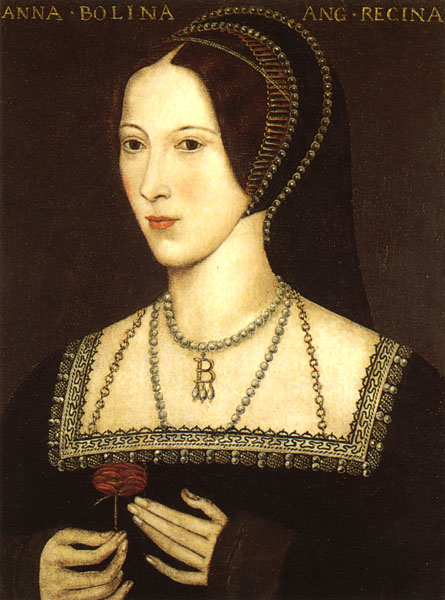
What did Anne Boleyn really look like?

Anne Boleyn, National Portrait Gallery

I am often told that readers are fed up with Tudors.  They know the stories, they’ve heard it all. The need for Tudor novels is over. But the reading public doesn’t seem to believe that. Since I first became an author of historical novels the most recurrent question has been, “Have you written any Tudor books?”

It seems to me that the reading public, both in England and especially overseas, cannot get enough of Henry and his wives. I think the reason for this is not just the glitz and the danger of Henry’s court; it is the many different interpretations we can put upon the stories and the people that inhabit them. There are more explanations for what went on than there are stars in the skies, and there are novelists enough to encompass them all. Added to that of course is that new generations are emerging all the time; a new batch of people who know nothing about the Tudors.

Anne Boleyn remains the number one favourite; the wife that everyone loves to read about. She has been depicted in many different ways; a schemer, a witch, a victim, a whore. She has been demonised by some novelists, and sanctified by others but how close to we ever come to the real Anne? We can never really know the truth about her, we can only piece little snippets together to make up a shadow of the real woman. That is what makes history, and enigmatic figures like Anne, so irresistible. Anne Boleyn was, and still is, a fascinating woman who deserves after all this time a fair reappraisal of her life and death.
  
In his nonfiction book The Life and Death of Anne Boleyn, Eric Ives,  now sadly passed on, reveals a credible figure. He has done the hard work for us, demolishing many of the myths that in the space of several centuries have solidified into fact, and illustrating that what remains is an intelligent, ambitious, but God-fearing woman who happened to win the love of a king.

It is refreshing to discover that perhaps Anne was not a scheming witch with a penchant for sleeping with half the court, (her brother included). Nor was she a woman who gave birth to a monster and plotted the death of the king. Ives’ research reveals someone more sinned against than sinning, and a woman whose mistakes were human ones. Anne was a queen who failed to produce an heir, and a woman who fell foul of the King’s most powerful advisers.  The woman that emerges from Ives’ research is the Anne Boleyn that walks the pages of my novel The Kiss of the Concubine.

To be honest, the real Anne is so obscured by myth and legend that we know much less about her than we think we do. We are not even sure what she looked like. We think of her as dark haired and thin but the familiar portraits we see of her are not contemporary; the originals were lost long ago. Experts disagree, but the oldest 17th century portrait now in the National Portrait Gallery is likely to be a copy of an original, and is favoured by Eric Ives as being the one that comes closest to a real likeness.

There are several written descriptions from her contemporaries and, while none rate her as a great beauty, none remark upon any physical failing either. The fact that she doesn’t emerge as breathtakingly beautiful is refreshing, and illustrates that Henry may have been more taken with the personality within, than with an alluring or fashionable face and figure. 


Brantome, a courtier from France, wrote in his memoirs that Anne Boleyn was ‘the fairest and most bewitching of all the lovely dames of the French court.’ (Weir, p. 151) And Lancelot de Carles stated that she was beautiful with an elegant figure and was ‘so graceful that you would never have taken her for an Englishwoman, but for a Frenchwoman born.’ (Weir, p. 151)

This is praise indeed, perhaps a little too flattering to be true, and many eyewitnesses agree that her looks were unfashionable and not to every one’s taste. As Francesco Sanuto, a Venetian diplomat, illustrates with his description of Anne as  ‘Not one of the handsomest women in the world; she is of middling stature, swarthy complexion, long neck, wide mouth, a bosom not much raised and eyes which are black and beautiful.’ (Ives, p. 40)

It is only after her death that the really detrimental reports begin to emerge. Writing in the reign of Elizabeth I, Catholic supporter, Nicholas Sander, describes Anne as, “rather tall of stature, with black hair and an oval face of sallow complexion, as if troubled with jaundice. She had a projecting tooth under the upper lip, and on her right hand, six fingers.  There was a large wen under her chin, and therefore to hide its ugliness, she wore a high dress covering her throat. In this she was followed by the ladies of the court, who also wore high dresses, having before been in the habit of leaving their necks and the upper portion of their person uncovered.” (Ives. P.39) 

 attributed to John Hoskins [Public domain]

But, although there are common factors when it comes to colouring and bone structure in all these descriptions, I think we can dismiss the idea that she was seriously disfigured in any way. The 16th century was a superstitious time and the characteristics described here all point to witchcraft. It is a clear attempt by Sander to demonise the former queen. Even had the king not been superstitious, I cannot image Henry VIII, who had the pick of the court ladies, finding a woman disfigured in this way to be even remotely attractive, let alone spend seven years of his life trying to get her into his bed. You can read a more in depth look at Anne’s appearance on an earlier blog I wrote for the English Historical Fiction Authors here.


Anne was accused of adultery, incest, high treason, and plotting to kill the King, and she died for those crimes. Yet none of these charges would stand up in a modern day courtroom. Eric Ives states that it can be proved that she was elsewhere on at least twelve of the occasions when she is supposed to have been committing adultery. The only actual ‘confession’ came from her musician Mark Smeaton, who we believe was subjected to torture in the Tower. Although Anne’s sister in law, Jane Rochford, gave evidence against Anne and her husband, George, she later retracted it in February 1542 before she herself faced execution for her involvement with Katherine Howard’s downfall.

While Anne was imprisoned in the Tower, Henry had his marriage to her annulled on the grounds of his former relationship with Anne’s sister, Mary. This made their daughter Elizabeth illegitimate. In truth, this should also have made the charge of adultery invalid, but this was Tudor England when justice was anything but just.

So, those are the bare facts. We can assume Anne was dark, and had attractive eyes and an oval face. We know she was intelligent and witty; even her detractors credit her with that. We know she was pious and refused to be Henry’s mistress, holding out until he promised marriage. That could make her a schemer, but equally it could make her chaste. During her marriage to Henry she tried and failed to produce a son, suffering several miscarriages and providing the king with just one daughter, later to become the greatest queen that has ever lived, Elizabeth. We also know that Anne worked in tandem with Cromwell and others toward church reform, and we also know that at a later stage there was a disagreement between them, and Anne’s downfall followed swiftly after.


Most novels of Anne I have read (but I confess I haven’t read them all) hold Henry alone to blame for Anne’s downfall. They show him as falling out of love with Anne, and place Jane Seymour as the sinister ‘other woman’ whose presence at court and her influence over the fickle king makes Anne’s fall inevitable. There is little evidence to suggest this and perhaps there were other reasons; perhaps another agenda came into play. Perhaps it was politics and not passion that killed her.

In writing The Kiss of the Concubine I have worked closely with the writing of Eric Ives and other prominent Tudor historians to come up with a less clichéd reason as to why Anne Boleyn had to die on that bright May morning in 1536.

The Kiss of the Concubine is now published with Sharpe Books and is available on Kindle and Audible or you can read FREE with Kindle Unlimited. mybook.to/tkoc2

Further reading

Lispcombe, Susannah, 1536: The Year that Changed Henry VIII, 2009.
Fraser, A. The Six Wives of Henry VIII, 1992.
Ives, E. The Life and Death of Anne Boleyn, 2004.
Weir, A. The Six Wives of Henry VIII, 2007.
Weir, A. Mary Boleyn, 2011.
Weir, A. The Lady in the Tower,2009.
Fox, J. Jane Boleyn, 2007.
Denny, J. Anne Boleyn, 2007.

Monday, 8 May 2017

Delighted to welcome Mary Anne Yarde to my blog today ...


When history and legend collide...


Have you ever tried to put a jigsaw together in the dark? No? Me neither. But researching The Dark Ages is a little bit like doing a jigsaw without any light. It is complicated.

The British populace finally expelled the Roman occupiers in the year AD 409. But without the might of The Roman Army, Britain found itself under attack by the Scots, Picts, Angles and the Saxons. She turned to Emperor Honorius for help. Instead of troops, Emperor Honorius sent a letter. In it, he told the people of Britain to “… look to their own defences…” Briton was alone. She would get no further help from the Empire.

What happened next was to change the course of British History forever. Britain split back into smaller kingdoms, each ruled by a powerful warlord. There was no unity, only division. How could they possibly stand up to the foreign invaders when they couldn't stop fighting each other?


They needed someone to unite them. And that someone was none other than a man called Arthur. You may have heard of him?

It was Arthur that kept the Saxons away. It was Arthur who united the kingdoms. It was Arthur that brought about peace. Fact! Well, sort of.

The Dark Ages, as you can see, is the time of myths and legends. And the most famous tale of all was about King Arthur and his Knights. Over time, the story of Arthur was expanded upon. They gave him a castle, a court. He became a Christian King, and so it went on. Each tale more elaborate than the last, until Arthur became a superhero on par with Ironman! Of course, when he died, the Saxon’s took advantage of this power vacuum. They invaded and made Britain their home. Where was the ‘Once And Future King’ while this was going on? Perhaps someone forgot to wake him up!

Researching the life and time of King Arthur is like searching for a ghost. There is nothing substantial, just theories and stories. But you would think that there would be something more tangible about the Saxon invaders?

The Dark Ages is a little short on historical documents. The chroniclers had left with the Roman Army. So all we have to go on is the damning sermon of Gildas, and the works of Bede and Nennius. It isn’t until Alfred the Great’s time when ink was finally put to parchment. This document became known as The Anglo-Saxon Chronicles.

There is one Saxon invader that I am particularly fascinated with, and that is Cerdic of Wessex. There is a rumour that Cerdic’s troops met Arthur’s at Bardon Hill — Arthur won that day. But when Cerdic learnt of Arthur’s death he gathered his troops once more. Cerdic landed in Hampshire at the end of the fifth Century. He launched a campaign that led them across the South-East of Britain and as far as the Isle of Wight. It was during this campaign that Cerdic…

“…killed a certain British King named Natanleod and five thousand men with him.”  - The Anglo-Saxon Chronicles.

Some say that Natanleod was Arthur, while others doubt his existence at all. It is said that Cerdic became the first West-Saxon King of Britain in AD 519. Bear in mind that The Anglo-Saxon Chronicles was written over 300 years after Cedric's death. It is hardly a primary source and should be treated with, maybe not suspicion, but certainly scepticism.

A lot happened between the end of the Roman occupancies and the writing of The Anglo-Saxon Chronicles. It was the bards that kept the history alive during this time. Yes, they may have changed the history a little to make for a more exciting tale, but they can be forgiven because they had to make their money somehow. So you can see the problem the chroniclers had. The Dark Ages and folklore go hand in hand. It is almost impossible to separate them. They are weaved together so tightly that to try to unpick the truth from the fiction would damage the tapestry. Ruin it. So the chroniclers could only work with what they had and what they had was folklore.

In my series, The Du Lac Chronicles, I have tried to weave together folklore and history, paying equal respect to both. It is a challenge but then so is The Dark Ages and that is why I love it!

Book Blurb

War is coming to Saxon Briton.

As one kingdom after another falls to the savage might of the High King, Cerdic of Wessex, only one family dares to stand up to him — The Du Lacs.

Budic and Alden Du Lac are barely speaking to each other, and Merton is a mercenary, fighting for the highest bidder. If Wessex hears of the brothers’ discord, then all is lost.

Fate brings Merton du Lac back to the ancestral lands of his forefathers, and he finds his country on the brink of civil war. But there is worse to come, for his father’s old enemy has infiltrated the court of Benwick. Now, more than ever, the Du Lac must come together to save the kingdom and themselves.

Can old rivalries and resentments be overcome in time to stop a war?

Links for Purchase


Author bio:

Mary Anne Yarde is the Award Winning author of the International Best Selling Series — The Du Lac Chronicles. Set a generation after the fall of King Arthur, The Du Lac Chronicles takes you on a journey through Dark Age Briton and Brittany, where you will meet new friends and terrifying foes. Based on legends and historical fact, The Du Lac Chronicles is a series not to be missed.

Useful Links

Monday, 24 April 2017

What Elizabeth Learned from Mary


By Samantha Wilcoxson

Mention the name of Elizabeth I and visions of a glorious queen with red-gold hair immediately come to mind. She shepherds her people and stands firm against the Spanish armada. Her devotion to her subjects is so complete that she cannot even bring herself to find a spouse. Long after her death, Queen Elizabeth I is adored, possibly more so than she was during her lifetime.
In contrast, her older sister, Queen Mary I is remembered as ‘Bloody Mary’ when she is remembered at all. The sisters shared the auburn hair that they inherited from their father, Henry VIII, but that is not all they had in common. A closer look reveals that Elizabeth learned much about ruling as queen regnant from the example of her sister.
The role modelling that Mary provided for Elizabeth began long before either of them became queen. The girls were often part of the same household when Elizabeth was young, beginning with Mary’s forced servitude in the infant Elizabeth’s household as part of Henry’s striving to emphasize that it was Elizabeth who, at that time, was princess while Mary was a bastard. By the time both girls were brought to court by stepmother Katherine Parr, both were bastardized princesses.
Mary’s early roles in Elizabeth’s life would have demonstrated how to be pious and submissive in the face of adversity. Elizabeth would get a different view of what positions a woman could fulfill when her father went to war in France, leaving Katherine as regent with Mary at her side. Katherine Parr was an important person in the lives of these motherless girls. She showed that a woman could order a kingdom just as well as a household, and both girls took note.
Both Katherine and Mary offered Elizabeth examples on the effects that the wrong marriage could have on a woman’s life. If she were not haunted by the fact that her mother had been executed by her father, Elizabeth need look no further than Katherine and Mary for further reasons to remain single. Thomas Seymour, Katherine’s fourth husband, gave Elizabeth an early lesson in flirtation, if not more, and was executed for treason shortly after Katherine’s death following childbirth. Mary’s marriage to Prince Philip caused an uproar of rebellion as the efforts to restore Catholicism became fused with England’s marriage to Spain in the minds of Englishmen.
However, Elizabeth took note of the finer details of Mary’s reign and used them to her advantage when her turn came. While the lack of a husband caused its own problems, not the least of which was the end of her family’s dynasty, Elizabeth had learned from her father’s marital scandals and the repercussions of her sister’s choice that it was safer to remain alone. Elizabeth is famous for stating, “I have already joined myself in marriage to a husband, namely the kingdom of England.” What is not so widely remembered, is that Mary said almost the same thing.

In 1554, with Wyatt’s Rebellion underway, Mary decided to address the people of London and encourage them to rise up in her defense. She said, in part, “What I am loving subjects, ye know your Queen, to whom, at my coronation, ye promised allegiance and obedience, I was then wedded to the realm, and to the laws of the same, the spousal ring whereof I wear here on my finger, and it never has and never shall be left off. . . . I cannot tell how naturally a mother loveth her children, for I never had any, but if the subjects may be loved as a mother doth her child, then assure yourselves that I, your sovereign lady and your Queen, do earnestly love and favour you. I cannot but think you love me in return.”
Elizabeth was a clever woman, better at reading political situations than Mary ever was. She was quick to use language and strategies that had worked for her sister, but also eager to put distance between herself and the memory of the aged, childless queen and learn from Mary’s mistakes.

Where Mary had seen herself as the spiritual leader of her people, Elizabeth understood that changing times made Head of the Church of England a difficult title to bear. Mary had believed that it was her duty to reconcile her kingdom to Rome and her people to God, but Elizabeth was careful to keep her faith more private than any previous ruler of England had. She saw, as few monarchs of her day did, that religion was becoming an issue that people were no longer united in.
Elizabeth used this difference between herself and her sister to bolster her position. In turn, Mary’s name was blackened. The harsh sobriquet ‘Bloody Mary’ was never applied to the devout queen during her lifetime, but the sister who benefitted from her example also found that she appeared more glorious if her predecessor seemed evil in comparison. Instead of receiving credit for demonstrating that a woman could reign, Mary became the enemy whom Elizabeth triumphed over. Yet, Elizabeth would not have been the success that she was without the sister who paved the way for her.
Additional Reading
Mary Tudor: Princess, Bastard, Queen by Anna Whitelock
The First Queen of England by Linda Porter
The Children of Henry VIII by Alison Weir


Samantha Wilcoxson is the author of the Plantagenet Embers Trilogy. An incurable bibliophile and sufferer of wanderlust, she lives in Michigan with her husband and three teenagers. Her most recent novel, Queen of Martyrs: The Story of Mary I was recently released and is available in paperback and on Kindle. You can connect with Samantha on her blog or on Facebook, Twitter, and Goodreads

Universal Amazon Author Link

Universal Book Links
Plantagenet Princess, Tudor Queen  myBook.to/PPTQ
Faithful Traitor  myBook.to/FaithfulTraitor
Queen of Martyrs  myBook.to/QueenOfMartyrs

Social Media Links

Blog


Sunday, 26 February 2017

Trisha Hughes talks to us about her new release

Today I welcome historical author, Trisha Hughes to the blog. Take it away, Trisha.

In history, to be an English king and to be murdered was no more than a hazard of the job and there have been a vast number of kings where this has actually been the case. The story of the kings and queens of England is a wonderful drama, far more surprising than you might think.

Times were brutal and they felt the need to take certain measures into their own hands, and trust me, there have been many extraordinary and various ways that royal family members have sought to delete relatives who were obstacles in the path of their determined progress to the throne. Many were not averse to the odd assassination or two by poisoning, starving, burning, imprisonment and an old favourite, beheading. It was hard enough to snatch the throne but it was even harder keeping it.

Many historians pass hazily over the precise methods employed to delete family members. Some choose to leave it as an insinuation of ‘died under suspicious circumstances’, because the entire truth will never be fully known. Some historians are not so coy. Neither am I.

When we speak of Britain’s monarchs, most of us would agree that early periods of time are clearly muddled. Many of the early British kings are hidden in the mists of time while some, the ones who lost crucial battles, have almost completely disappeared when the victors erased their rivals from all surviving records. There are kings who ruled for only a few months and there are some who ruled for over fifty years. There are also some who should never have ruled at all. They include, among their number, the vain, the greedy and the downright corrupt as well as adulterers, swindlers and cowards. Yet this group also shares one thing in common. In their lifetimes, they were the most powerful individuals in the land. My story, ‘Vikings to Virgin – The Hazard of being King’, spans 1500 years and is full of lust, betrayal, heroism, murder, cruelty and mysteries.

Buy your copy here
If you know anything about the British, you’ll know that among the good and the well-meaning monarchs, some of them were ruthless, not to mention greedy, murderous and totally corrupt. Their story is better than a thriller about a serial killer on the loose because this story is absolutely true. Don’t imagine a fairy story with handsome kings whisking off princesses on their white horses to the sound of trumpets and the cheers of their people. Imagine powerful individuals who were brutal and would stop at nothing to get what they wanted and who were more than happy to get rid of the odd family member or two who were standing in the way of their progress to the throne.  


My story is based on facts, but it's told as a rambling narrative and is written in a way that I hope is easy to read. It’s a story of kings who struggled to hold on to their throne, of horrendous bloody battles, of tiny boys becoming rulers, of ruthless usurpers and of queens who proved to be more powerful than anyone could have ever imagined. It’s a story of invading armies, of rival family members, of spies and conspiracies. But what these people all had in common was during their lifetimes, they were the most powerful people in the land.

‘Vikings to Virgin – The Hazards of being King’ starts when Britain was just a race of people struggling to survive. It travels in time until the Britons first glimpsed a square sail and a dragon-headed prow on the horizon, churned by oars through the waves as blue water foamed around the hull of a mighty ship. The Vikings arrived in their long boats on a cold miserable January morning while the English people were enjoying their tranquility. No one heard the muffled sounds over the water. They were still rubbing sleep out of their eyes after a savage night of arctic air had cut its way through cracks in walls.

This book is a journey through time from the Romans, the Saxons and the Vikings and moves on to the brazen usurpation by the Normans followed by the arrival of the Plantagenets.  These early years were full of savagery and cruelty but by the end of the Plantagenet dynasty, they had transformed England into a sophisticated revered kingdom. But it was a long hard struggle during which the War of the Roses emerged.

The War of the Roses was basically a terrible family squabble that ended up a bloodbath between
royal cousins where each house was eager to snatch the crown and the throne of England for themselves away from other family members. Like most families, differences and intrigue slowly emerged and it wasn’t until 1455 with the first Battle of St Albans that anyone even knew there were two sides. But as with most rebellions, it left both sides vulnerable since it usually meant that battles were fought ‘to the bitter end’, leaving fewer contenders alive after every battle.
These two royal house, the symbolic red rose of the Lancasters and the equally symbolic white rose of the Yorks, were both making a claim for the throne and it ended up being a long and bloody battle with sporadic periods of extreme violence and bloodshed and an unprecedented number of attempts to usurp the throne. It was a dangerous period full of unfathomable brutality, shifting alliances, murders, betrayals, plots and the savage elimination of other direct descendants of the Plantagenets.
It ended when Henry Tudor usurped the throne from Richard III and a different sort of battle began as he continued on the bloodbath with gusto.
Book I of my trilogy ends with a comet blazing across the London skies, half the size of the moon, streaking fire behind it as it lit up the skies in glorious shads of red, white and gold. Tudor colours. In a suspicious England, it was a sign they had been waiting for. A sign of better times to come. And heaven knows, they needed it after the reign of Bloody Mary. With Mary, they’d suffered persecution worse than any other previous generation and they welcomed Elizabeth, an intelligent 25-year-old who dazzled everyone with her clever wit as she stepped up to take the throne, promising a better world, after her half-sister Mary Tudor’s death.

The story of the kings and queens of England is a wonderful drama and far more surprising than you might think. And I’ve loved every minute of it.

ABOUT THE AUTHOR:

Trisha Hughes started her writing career with her autobiography ‘Daughters of Nazareth’ eighteen years ago. The debut novel was first published by Pan Macmillan Australia and became a bestseller in 1997 beating the current Stephen King book to the top 10 bestsellers at the time.  Since then she has discovered a thirst for writing.  She’s written crime novels but her latest book, the first in her ‘V 2 V’ trilogy, ‘Vikings to Virgin – The Hazards of being King’ is her passion and due for release on 28th February 2017. She is currently working on the second in the series ‘Virgin to Victoria – The Queen is dead. Long live the Queen.’

You can buy your copy of Vikings to Virgins here
You can connect with Trisha through:

Trisha’s Website: www.trishahughesauthor.com
                           Or: www.vikingstovirgin.com

Facebook:             Trisha Hughes Author
Twitter:                  trishahughes_
Amazon
Pinterest
Google+          

Tuesday, 12 July 2016

Raglan Castle Tudor Weekend


If you can ever get along to Raglan Castle for the Tudor Weekend be sure to do so. This is our third year and we will be going again, for sure.

We got there on Friday afternoon when it was quiet and we had to wrestle with the wind to get our gazebo up. Thankfully, someone was watching over us and we were helped by a friendly friar who must have had God's ear because things went more smoothly once he came along.
Saturday morning dawned dry but it didn't look promising. We wriggled into our Tudor clothing and prepared to meet our public. It was a slow day, the ever present threat of rain and the knowledge that it was free entry into the castle on Sunday, kept the visitors at home.


The visitors I did meet however were interesting, funny and very enthusiastic. I have never met people from so many corners of the world. America, Canada, Australia, Thailand, Essex :) Lots of them went home with one of my books tucked beneath their arm, and even more with a card so they can look me up on kindle.


Tudor clothing, particularly women's, was not designed for comfort. as the day wore on my bodice felt tighter, my knees grew weaker from so much standing and i was very very hot - thankfully it wasn't a hot day, or I would have melted for sure.

My partner in crimes against Tudor history, John, was not too hot. He is not a warm  blooded mortal at the  best of times and so relished the comforts of his thick velvet (modern day thermal vest hidden beneath) his nice worsted stockings, and the benefits of a hat.

Sunday was much busier. Early on, before we were properly attired a large coach party of Americans arrived. We were photographed, questioned and had a  thoroughly good morning chatting to them. People, particularly the women and little girls are really interested in the clothes and what it is like to wear them and this year we had a french hood for the girls to try on and have their photo taken, next year I hope to have more items for them to try. If any of you should read this I'd love to see some of the photographs. I even remembered to remove my glasses - staring blindly into the lens, blinking like a mole in the sunlight.


I had a lengthy discussion with a lady who was a big fan of Henry VII but had no idea he'd grown up at the castle. i pointed out that Margaret Beaufort visited Henry there, and later his wife, Elizabeth of York visited too. This happy lady went off determined to look at it afresh, with the knowledge she was walking in Henry's shoes.


We had a few showers of rain, nothing heavy but enough to illustrate the inadequacies of our silly modern gazebo - a medieval style canvas tent is on my shopping list before next year's event.


I sell my books at discount prices at these events so it is not for profit. it is pure fun. I love meeting readers, new and old. Meeting up with old friends, the Amicorum reenactment group, and the Beaufort Company, watching a reenactment of the Battle of Bosworth and hoping every year for a different outcome.

The Tudor Weekend is not the only event at Raglan worth visiting. The castle offers something new, something fun, and surprisingly educational with living crafts, historical talks, refreshments, battles, executions, mock jousts, archery and knight's school; not to mention the wonders of Raglan Castle itself. If you ever make it there, be sure to look for me. I am the one in the posh red gown.

www.juditharnopp.com
author.to/juditharnoppbooks
http://cadw.gov.wales/daysout/raglancastle/?lang=en