Showing posts with label Anne of Cleves. Show all posts

Wednesday, 7 May 2014

Raglan Castle - A Tudor Weekend 31th May - 1 June, 2014


By Bob McCaffrey from Rickmansworth, UK (Raglan Castle (2)) [CC-BY-SA-2.0 (http://creativecommons.org/licenses/by-sa/2.0)], via Wikimedia Commons
Most people today see Raglan Castle in a blur as they dash past it on the A40 just outside Abergavenney in Monmouthshire. The castle serves as a reminder of our heritage, a ghost of late medieval Britain that watches in bemusement as we scurry by on our frantic modern business.
But, in its heyday, Raglan Castle would have been a destination in itself. A weary traveller on the old medieval route through the village would have been overawed by the vast crenelated towers as they appeared dramatically over the brow of the hill. He would then be forced to take the path circling the castle. Constrained to ride around the Great Tower and moat, he could not help but notice the impenetrable walls, the defensive towers, the soaring gatehouse. Once inside he would have looked up at vast walls that shadowed the sun, to see fluttering pennants against the clear blue sky. He would have craned his neck at the carved stone badges and shields above the gate expressing the awesome power of the Earl. Only then would he pass through to the inner Fountain Court to discover another entrance, this time to the Great Tower and the Family’s living quarters. All this was designed to impress, put a visitor on his guard, and make any prospective enemy think again.
Philip Halling [CC-BY-SA-2.0 (http://creativecommons.org/licenses/by-sa/2.0)],
The castle we see today was begun in 1415 by William ap Thomas, a veteran of Agincourt, who purchased the manor of Raglan for one thousand marks. It was William who conceived the basic shape of the castle although much of the building work took place after his time.
William’s son dropped the ap Thomas and began to call himself William Herbert. He was active on the side of York during the Wars of the Roses and also fought in the Hundred Years War. It was William Herbert who carried out most of the medieval phase of the building and added extensive parkland, orchards and fishponds. As a Yorkist supporter Herbert’s fortunes flourished and in 1461 Edward IV made him Lord Herbert of Raglan. 

In 1461 at the Battle of Mortimer’s Cross Herbert’s half-brother, Henry Vaughn, captured the Lancastrian, Owen Tudor, father of Jasper and grandfather of Henry, and executed him in Hereford. Owen’s son Jasper was forced to flee the country, leaving his nephew, Henry Tudor, behind at Pembroke castle.
Sir William Herbert.

In 1468 Herbert became the first Welshman to be made an Earl; the Earl of Pembroke, replacing the now attainted Lancastrian, Jasper Tudor. He also became Justice and Chamberlain of South Wales and one of the King’s closest advisors and friends.
Henry VII
He was given custody of the young Lancastrian heir, Henry Tudor (later Henry VII) and the boy spent much of his childhood at Raglan while his uncle Jasper Tudor agitated for the return to a Lancastrian rule. Although held as a prisoner Henry was gently treated, receiving an education and instruction in military skills.

But William Herbert’s fortunes did not last and after the Battle of Edgecote Moor in 1469 Herbert, along with his brother Robert, was executed. His daughter Elizabeth married Charles Somerset, a natural son of Henry Beaufort, third Duke of Somerset, and with her, the castle passed into the hands of a new family. Over the course of a few generations the Somersets added Pitched Stone Court, the Hall, the Long Gallery and developed the gardens in the new Renaissance style fashion.


The architecture at Raglan marks the transition of British castles from defensive structures into homes for the rich and powerful. Raglan is distinctive in the aesthetic details like fireplaces and windows, added in the Tudor period. Fountain Court takes its name from a magnificent black marble fountain featuring a white marble horse that once took centre place; its ostentation can now only be imagined. The fabulous oriel window and the great stair which gave access to the family apartments above would have been outstanding in their day. The workmanship of the stonemasons is a clear sign that the custodians of Raglan employed only the best craftsmen.
Raglan saw little battle action until the Civil War when it was held under siege by the parliamentarians; when the castle surrendered General Fairfax ordered it to be completely destroyed under the supervision of Henry Herbert, a direct descendent of William ap Thomas, the castle’s founder.


Fortunately the castle was not easy to destroy (or perhaps Herbert didn’t have his heart in it) and the damage was comparatively slight. Although the family regained their possessions and ownership of the castle after the restoration the building continued to slide into decay until the 20th century when it was scheduled as a listed building. It is now administered by Cadw.


But life at Raglan Castle isn’t over yet. Every year Cadw hold medieval fayres that celebrate the medieval and Tudor world. On the weekend of May 31 – June 1, 2014 Cadw are holding A Tudor Weekend. As well as enjoying the splendours of the castle, you can meet Henry VII, Henry VIII, try on a Tudor costume, hear a talk by historian Emma Knight on Anne Boleyn, and also meet me.

I will be there in my Tudor kit, signing my Tudor novels, TheWinchester Goose, The Kiss of the Concubine, and Intractable Heart, and talking to fellow Tudor enthusiasts.
I look forward to meeting you there.

You can read more about me and my work on my webpage:

Pictures from Wikimedia Commons.


Sunday, 2 March 2014

My next novel: Intractable Heart: the story of Katheryn Parr


My last book The Kiss of the Concubine: a story of Anne Boleyn continues to sell well and attract lovely reviews and meanwhile I have been busy working on my next one. Intractable Heart tells the story of Katheryn Parr, Henry VIII’s last wife. She has often been regarded as rather dull; a nursemaid to three elderly husbands before falling for the charms of Thomas Seymour.
But during the course of my studies I discovered an intelligent, capable woman who not only stood as regent during Henry’s ill-advised war with France, but one who also had a voice in the reformation of the church, and was the first English queen to become a published author.

Katheryn was the daughter of Thomas Parr and Maud Green. Her mother was in the household of Catherine of Aragon and it is believed named her daughter in the queen’s honour. Katheryn's first marriage was to Thomas Borough but he died quite soon leaving the twenty year old Katheryn a widow. Her second marriage, two years later, was to John Neville, third Baron Latimer of Snape Castle in Yorkshire. Latimer had two children, Margaret and John, and during the Pilgrimage of Grace Katheryn and the children were held at Snape under siege. It is at this point in Katheryn’s life that my novel Intractable Heart begins.
Katheryn Parr wikimedia commons

Widowed for the second time Katheryn forms an attachment for Thomas Seymour, brother of Henry VIII’s third queen, but before they can cement their relationship in marriage, Katheryn catches the eye of the elderly and ailing King.

Below is an excerpt from Intractable Heart for you to enjoy.

***

Hampton court – March 1543 – Recently widowed for the second time, Katheryn Parr returns to court, joining the household of Lady Mary.

As we enter a hush settles on the room. I immediately spot Thomas lounging in the window seat watching his friend Sir Francis Bryan trying out the steps to a new dance with Lucy Somerset. After a moment Mary waves her hand and the company resume their former jollity. I summon a page to bring Mary a drink and prepare to settle beside her but she leans forward, grasps my wrist warmly.
“I wish to speak to Lady Basset. You go and make merry with the others, Katheryn. You may be a widow but you’re not dead yet.”
Our eyes meet. Like a child caught with her hand in a bowl of sweetmeats, I feel my face grow hot beneath her eloquent smile. She knows. But she says nothing. When she turns away I begin to circumnavigate the room, slowly inching my way closer to Thomas’ side.
He turns, as if he hasn’t already noticed my presence, his face breaking into smiles. “Lady Latimer.” He kisses my mouth, grasps my hand and begins to talk of everyday things. Somehow I try to behave as if the world is not dipping and swaying about me. Before he moves on he whispers in my ear, discretely reconfirming our assignation in the garden and I promise to be there.
We part, for now and the rest of the afternoon passes in an endless round of other people’s enjoyment, other people’s merriment. And all the time I am watching and tracking the sun as it journeys west outside the window.
At last my duties are done. I pause in the corridor, wondering whether I should run upstairs to check on Margaret or leave her sleeping for a short while longer. Thomas has the greater pull and I hurry toward the garden, down twisting stairs, along torch-lit corridors, my heart leaping like a rabbit in my chest.
The outer door is lit up with sunshine, casting the inner hall into almost pitch darkness. As I grow closer I can see outside to where Thomas is lurking near the entrance to the knot garden. He has removed his cloak and draped it over his shoulder. I pick up my skirts and increase my pace. He sees me coming, lifts his hand in greeting, the effect of his smile pours like warm honey over my shoulders. I laugh aloud, about to dash forward but a figure looms from the darkness, obliterating the sun.
“Lady Latimer. Well, this is well met.”
I fall to my knees before the king. The stench of his festering leg fills my head. I look at his shoes, his bulging feet pushing the velvet out of shape, his vast calves encased in tight white hose. His hand is gentle on my shoulder. “Get up, get up,” he says. “Walk with me. Let us take a turn about the garden.”
What can I say? What can I do? I rise, smile as widely as I can manage, and lay my hand on his proffered arm.
I blink in the sudden sunlight as we make halting progress. He leans heavily on my shoulder, overpowering me with his presence. “Good afternoon, Thomas.” Henry pauses, waves his stick in the air in greeting as we draw close to my love. Somehow Thomas manages to execute a perfect bow as, with my heart full of disappointed tears, the king and I walk by.
I can feel Thomas’ eyes follow me all the way around the garden. He is still watching when we pause at the fountain where water cascades, the drops dancing with the evening light on the surface. Deep in the depths, among weed and slime, fishes are undulating. The king takes my hand, raises it to his mouth and kisses my fingers, and while he is distracted I send Thomas a pulsing glance of regret.
“I am glad I bumped into you,” the king is saying. “I would like to challenge you to another game of chess. You play so well. Quite remarkable in a woman…” His voice fades away as I watch Thomas quietly slip between the yew hedges that flank the path. I give myself a little shake.
“Yes, Your majesty. Of course, that will be my pleasure.”

©JudithArnopp
 ***

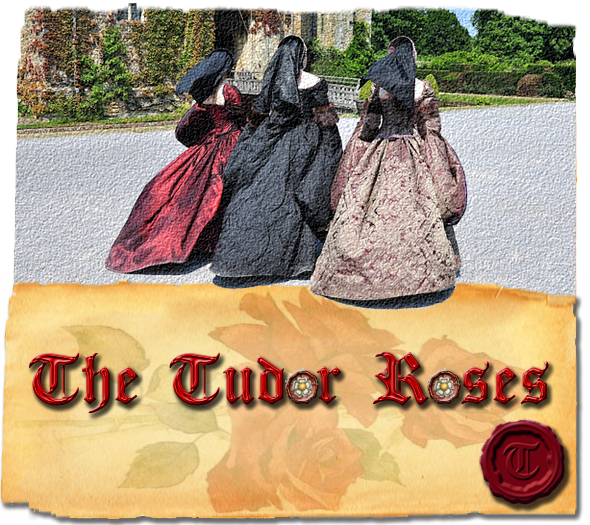
For the production of this book I am working with Darren Wilkins of The Tudor Roses fame. He is the responsible for the cover image which I fell in love with the moment I saw it. I am a great admirer of Darren's photography and hope that our work will complement each other again in the future. You can find The Tudor Roses here and also on Facebook

Intractable Heart will be available toward the end of the summer. In the meantime there are five other books in my collection for you to enjoy.


The Kiss of the Concubine tells the story of Anne Boleyn from her own perspective, treading her path from the time of her return from France to the day she ascends the scaffold steps to face her death.


The Winchester Goose is told from the perspective of a prostitute from Southwark, contrasting the glories of the royal court of Henry VIII with the offal strewn streets of the stews.


The Song of Heledd is the story of princesses, Heledd and Ffreur, a catalogue of bad decisions and disasters leads to the downfall of the royal dynasty of Pengwern.


The Forest Dwellers is set after the Norman conquest and traces the lives of Aelf and Alys as they battle for survival beneath the new regime.


Peaceweaver is the story of EAdgyth, wife of Gruffydd ap Llewelyn of Wales and Queen to Harold II of England. Her tale leads us from her first marriage in 1057 to the Battle of Hastings in 1066.

Sunday, 2 February 2014

My Writing Progress Blog


Today is "My Writing Process" blog tour day, when authors answer questions about their writing process. Last week, fellow author Debra Brown posted hers. You can check it out at: http://authordebrabrown.blogspot.com/

Debra writes Regency novels – I loved her first book TheCompanion of Lady Holmeshire:
Many thanks for the invitation, Debbie. Here goes.


So, what is my writing process?

I write four days a week, leaving the weekend free for research and leisure, or that is the plan anyway. I am often distracted  by other things. First thing in the morning I answer emails, catch up with my online readers and fellow authors. Social networking plays a huge part in book marketing so it may look like play but in actual fact is me hard at work. Then, after coffee, I settle down to write. I aim to add five thousand words a day, sometimes I manage that, sometimes not but it is a good goal to have. One of the main things an author needs, apart from being able to spell, is self-discipline. Once I have done that I usually retire to the sofa or, if the sun is shining, to the garden to plan an outline for the following day. I am lucky. I have a lovely study that looks out across a garden full of flowers and birds to the welsh countryside beyond. Sometimes the only person I see all day is the postman. I think I have the best job in the world.

What am I working on?


A historical novel called Intractable Heart which is the story of Henry VIII’s last wife, Katheryn Parr. It is my sixth full length historical novel and my third set in Tudor England. Katheryn is not as popular as Anne Boleyn whom I featured in my last release, The Kiss of the Concubine but my research is revealing a fascinating woman. Her story has conflict, war, grief, terror, as well as some 'lurve.'  Her story is so interesting that I am glad to wake up in the morning and get started.


How does my work differ from others of its genre?

Some of the most frequent recurring words in Amazon reviews on my work are ‘different’ ‘refreshing,’ and ‘new perspective.’ I write in the first person, which helps me to strip away the magnificent clothes and jewels and reveal the woman beneath. I think long and hard how it must have felt to marry a man like Henry. A man very much older than oneself (to illustrate the generation gap; Katherine was named after Henry’s first wife Katherine of Aragon), and a man who had already disposed of five wives. Henry was increasingly ill, increasingly erratic and Katheryn was in love with another man, Thomas Seymour. She must have been close to despair on her wedding day. This sort of dilemma is a re-occurring one in Tudor women’s history, and I love to write about it.

Why do I write what I do?

When I first began to write I was advised to stick to what I know and keep to a setting where I am comfortable'. I am far more at home in Tudor England than I am in the modern world. I wouldn’t have a clue what goes on in a modern office, and I am not up to date with all the gadgetry that is essential to contemporary life. I have a master’s degree in Medieval Studies so it seemed natural to write historical novels, especially as that is my genre of choice as a reader. When I first began to write seriously I set my novels in the early medieval period. It was constant requests from readers that prompted me try out a Tudor one and it was a good decision. My career has really taken off since I wrote The Winchester Goose.

How does your writing process work?

The ideas for most of my books have germinated during research for the previous one. For instance, when I was writing The Winchester Goose I came across an article about how Anne Boleyn has been seriously misrepresented by novelists – I read a few of the novels cited in the article and decided she had been maligned rather than just misrepresented. When I wrote The Kiss of the Concubine I made sure I presented her as neither a witch nor a scheming whore. She is a woman in a difficult situation, in love with a difficult man. While I was writing The Kiss of the Concubine I read an article about Katheryn Parr and was surprised to discover how interesting she was. Katheryn was a devout, intelligent and educated woman, the first English queen to become a published author. That is how Intractable Heart was conceived.

Next week the following three authors will be telling you about their writing process:

All my books are available in paperback and on Kindle. My amazon page is here.
For more information please visit my webpage: www.juditharnopp.com