Showing posts with label Katherine parr. Show all posts

Monday, 29 February 2016

Sudeley Castle and Katherine Parr

As the spring approaches and we all begin to think about day trips and picnics I thought I'd reblog this piece I wrote about Sudeley.

 Sudeley Castle is a comparatively small place in the scheme of things, set against the backdrop of the Cotswolds. Sudeley is, and has been, many things; today it is a family home, a beautiful garden, a historic jewel, and the last resting place of an English queen. The Castle is steeped in history and was first mentioned in a 10th century charter. King Ethelred hunted deer in the park and later, when the castle passed to Goda, her distant relationship to William the Conqueror, saved it from Norman take over.

Sudeley remained in the hands of Goda’s family until the reign of Henry V when the castle was gifted to Thomas Boteler in way of repayment for his action in the war with France. It was Boteler who began to transform Sudeley into an enviable home, enlarging and updating the existing fabric of the building to create a place fit for royalty.

When the Lancastrians were defeated and Edward IV took the throne the Boteler family were forced out and Sudeley’s new owner was no other than the king’s brother, Richard of Gloucester, later King Richard III of car park fame.

When the tables turned again and Richard was defeated at Bosworth, Henry VII took it over, bestowing it on his loyal uncle Jasper Tudor. After Jasper’s death Sudeley once more became crown property.

Henry VIII visited once with Anne Boleyn. They met with Thomas Cromwell there to discuss the reformation of the monasteries and took a keen interest in the Blood of Christ housed at nearby Winchcombe Abbey. At this time the castle was run down and unoccupied for much of the time.

On his accession to the throne Edward VI made his uncle, Thomas Seymour, Lord of Sudeley and after his marriage to Katheryn Parr, Seymour and his new wife made their home there.
 The Seymours implemented many improvements and Katheryn took great care in choosing the décor of the nursery for their expected child. Unfortunately, to Thomas Seymour’s sorrow, Katheryn died scarcely a year later, having given birth to a healthy daughter, whom they named Mary.

With Thomas’ ward, Lady Jane Grey, acting chief mourner Katheryn was laid to rest in St Mary’s church adjacent to the castle. Today visitors to Sudeley can view a love letter and portrait gifted to the queen by her husband.

Katheryn’s step daughter and friend, Elizabeth Tudor, later Queen Elizabeth I, visited Sudelely on three occasions during her reign. It is easy to imagine her walking in the garden, remembering her stepmother, recalling conversations, small personal details of their shared life that are now lost to history.
Sudeley’s history doesn’t stop with the Tudors. During the civil war Prince Rupert made the castle his headquarters, and Charles I stayed there for a time during the campaign to take Gloucester.

During the course of the war Sudelely passed back and forth between Royalist and Parliamentarian hands until Parliament ordered the ‘slighting’ of Sudeley making the house indefensible. The roof was removed, and the rest of the building fell swiftly into decay. The fine worked stone was quarried by locals until the grand castle became nothing more than an attractive romantic ruin. For the next two hundred years it was left to the mercy of the elements, a trysting place for lovers, or a hideaway for thieves.

In 1782, Katheryn Parr’s grave was rediscovered. The lead casket was opened the body found within reported to be 'uncorrupted'. She was reinterred in 1817 by the Rector of Sudeley and a plaque copied from the original inscription on the lead coffin placed upon it. Today there is an effigy on the tomb but this was made in Victorian times.

Sudeley remained in elegant decay until the nineteenth century when it was bought by two brothers, John and William Dent, who embarked upon a restoration project. They employed architect Sir Gilbert Scott to restore the chapel. The walls and large parts of the castle were restored. Finally Lady Emma Dent spent almost fifty years putting the finishing touches, filling Sudeley with fine art and historical artefacts.

Yet, of all the people mentioned in this potted history; the Lords, the ladies, the kings, the politicians; it is Katheryn’s memory that lingers. Visitors flock there, not just to see a splendid house and a magnificent garden; they go there because of Henry VIII’s last queen, Katheryn Parr.

The Tudor style parterre is only a reconstruction but, although Katheryn may have gone it is easy to imagine her there, inhaling the scent of the flowers, the kiss of summer rain on blush pink petals.

While you move quietly between the roses, or pass through the old yew hedge, you can imagine a footstep on the gravel behind you, the sweeping red skirts of her kirtle as she joins you. And as she follows you around the flowerbeds, you may feel the brush of her hanging sleeves.

Judith is the author of seven historical novels and is currently working on a trilogy tracing the life of Margaret Beaufort. Book one of The Beaufort Chronicles, The Beaufort Bride will be out soon.


For more information about Judith's work please click here

Pictures of Sudeley Castle and of the church at the castle are both licensed under the Creative Commons Attribution 2.0 Generic license, the former to Gordon Robertson, the latter to Jason Ballard.  The picture of Katheryn Parr's tomb is licensed to TudorQueen6 via the Creative Commons Attribution-Share Alike 3.0 Unported license.  The portraits of Thomas Seymour and Katheryn Parr are in the public domain due to expiration of copyright.

Wednesday, 28 January 2015

On the anniversary of the death of Henry VIII, an excerpt from Intractable Heart: the story of Katheryn Parr


Judith Arnopp


27th January 1547


I wake suddenly in the early hours, certain that something is wrong. It is as if something has shifted, irreversibly altered, and my sense of danger increases. Sliding from the bed, I tread carefully across the floor, making as little noise as I can to avoid waking my woman. Carefully I open the shutter and the moonlight floods into the room.
The moon floats benignly in the night sky, leavening the dark, painting the slumbering, snow-laced garden, a silvery blue. I shiver, hug myself and turn away. A jug of wine stands on the night table and I fill a cup, the liquid cool from the chilly nocturnal air. As I grope my way back to bed, my woman stirs and yawns, her long bare arms pale in the moonlight.
“Are you all right, Your Majesty? Can I get you anything?”
“Not unless you can bring me peace of mind.” It is a poor attempt at a joke. She stumbles from her truckle bed and helps me settle, tucking the sheets tightly around me.
“I am sure the king will recover, Your Majesty. He always has before.”
She is young; so young that she has never yet been wed, let alone known the trials of widowhood or the vulnerability of being a woman alone.
Obediently, I relax on the pillow and appease her with a hollow smile. “You get some sleep,” she says and, forgetting that she is here to do my bidding, I close my eyes.
Her bed creaks as she climbs back in. She turns over, thumps her pillow a few times and within moments is snoring again. Wide awake in the darkness, I listen to her laboured breathing and think of Henry’s passing. What will his death mean to me, and where will life take me next?
As soon as I am dressed in the morning I hurry along to Henry’s apartment but, once more they halt me at the door.
“I need to see my husband,” I demand with as much authority as I can muster. But I am met with a steely refusal. I press my lips together, suppressing my fury. “Then send Denny out. I will speak with him.”
After being kept waiting for too long the door opens a crack and Denny slips out. Reluctantly he pulls off his cap and makes a sketchy bow. I have always hated people who refuse to look me squarely in the eye.
“This is outrageous, Denny. I would speak to my husband. If he is likely to die then I want to say goodbye. Surely, I can just sit quietly and hold his hand?”
“He is too sick for visitors, Your Majesty. His physicians have advised against it.”
We draw aside as a troop of servants appear bearing trays of food, the King’s taster comes hurrying along behind.
I watch them disappear unchallenged into the chamber.
“I see he is well enough to eat, so why is he too sick to see me?”
Denny inclines his head, infuriatingly calm in the face of my simmering rage. I bury the urge to slap him.
“The king must keep his strength up. I shall send for you the moment he asks to see you.”
“You will send for me the moment he wakes up.”
Denny closes his eyes and bows his head in silent agreement. I swallow the snub, turn on my heel and march back to my own apartments where, safe in the company of friends, I give way to a storm of weeping.
For three days I continue in a sort of void. My household continues much as usual but I am detached from it. I cannot join in with the dancing, nor laugh at the antics of the fools. I curl in the window seat with Homer and Rig, let my fingers travel through their warm coats and look out across the frigid garden. There is nowhere warm in the world, my very existence lacks comfort. I will find no security or safety in this world. Not without Henry.
Through green distorted glass I see the fountain where Henry and I walked so often. It is stilled now, the water frozen in a thick wave at the rim; the usually rippled surface solidified. Stopped.
 Flanking the path, naked shrubs cast skeletal fingers to heaven and birds forage fruitlessly in the fallen leaves beneath the bare hedge. With a heavy sigh I turn back to my book which is open on the sill beside me but it does not hold my interest. Nothing does.
My ladies are sorting silks on the table ready for a new project.  Respecting my mood, even if they do not understand it, they keep their voices low. Rig wakes and stretches, shows me his pink tongue and sharp white teeth. He stands up and stretches, his entire body stiff, then he shakes himself, scattering me in hair, before sitting down and proceeding to lick his nethers.
Homer growls suddenly.
Footsteps, voices at the door, and Cranmer is announced. My face begins to relax into a smile as he inches toward me, but then I notice his face is white, his eyes are pink-rimmed.
“Your Majesty.” He bows formally low and I know his tidings before he speaks of it.
“He is dead, isn’t he? The king is dead!” My words end in a sob, born of fear and a huge sense of loss.
“Yes, Your Majesty. Three days hence.”
Shock and anger replaces the burgeoning of my grief.
“Three days? But …but, he can’t have been dead that long. He was alive when I tried to see him yesterday. Denny said he would summon me when he woke … I-I have been deceived, haven’t I, Thomas? They lied to me.”
The realisation of their deceit sickens me as Cranmer regretfully closes his eyes, slowly inclines his head.
“But …why?”
“The council thought it best, Your Majesty, to get things in order …”
“Council? What are you talking about? Why wasn’t I summoned at once? As Edward’s guardian, I am to be regent. Henry told me so.”
“Alas, Your Majesty, during the last days of his life the late king made certain changes to his will. Instead of a regent or a protector he elected a council.”
So that is what they were doing. That is why they kept me from him. I look into Cranmer’s eyes. They are full of regret, sorrow that he has to speak words that will injure me.
“What other changes did he make?” My lips are tight. I know the answer already; he has no need to give voice to it. I am dismissed. My regency and my step-son are stolen from me. I am powerless and, if this newly-formed council have anything to do with it, probably destitute.


16th February 1547


I am dressed in a blue velvet gown, a widow’s ring is pushed onto my finger and my head is covered in a veil. It is cold; so very cold in the Queen’s closet from where I observe the internment of Henry’s body in St George’s Chapel at Windsor, beside his third wife, Jane.
It is not easy to listen to the droning Latin rites of the old religion. It is as if Henry never questioned the old faith, never moved away from Rome and all its heresy. My heavy heart is full of anger as I hear but do not engage with the ceremony.
The people cannot see me. I am not part of the rite. It is as if I no longer exist. As Queen Jane steps from the dark to reclaim her husband I am rejected. Yet Henry loved me. I eased him through his last years; distracted him from his pain, and did my best to bear his child. He would not want me to be so meanly treated.
The court has become a friendless place. Hertford’s wife, Anne Stanhope, who has ever hated me, snubs me at every turn. No longer constrained to pretend to love me she promises to be trouble in the future. Her new powers, or those of her husband who has claimed the protection of the new king, will ensure that others follow her lead. My future looks very bleak.
Henry has not left me penniless. I still have many houses and could retire from court altogether. Perhaps I will repair to Chelsea or Hanworth, and hold a small court there, inviting only those who love me. But I am still queen and will remain so until my death, if only I can persuade someone to acknowledge that fact. I begin to observe those around me and count my real friends on my fingers.
Once the service is done with a heavy heart I take a private way back to my apartments. I am glad to reach the solitude of my own rooms. Full of sorrow and lacking any hope for a bright future, I pull off my veil and throw my prayer book on the bed.
As Anne and Dorothy help me from the heavy clothes and into a loose gown I stand dejected. I have no idea what to do, or where life will lead me now. The women are hovering by the door. “Leave me for a while,” I say. “I would like to be alone.”
Anne frowns. “It isn’t good for you to be on your own. Shall I sit with you? I promise not to talk.”
“No. no, thank you.” I try to soothe the rejection with a smile and reluctantly she backs away, follows the other women from the room and closes the door.
I sink onto the floor before the fire and click my fingers for the dogs but they are nowhere to be seen. I suspect one of the women has taken them into the garden but even so I feel Homer and Rig have deserted me too.
With a ragged sigh, I rest my cheek on my palm and gaze into the fire. There are dragons and sprites in the flames. It is another world; a world I visited as a child. A realm without rules, or kings, or queens.
A rush of wind as the door opens and swiftly closes again, a footstep sounds behind me. I raise my head.
“Kate?”
I scramble to my feet and stand in disbelief that he has been so bold as to come. My voice is unfriendly and defensive.
“How did you get in here?”
“Anne let me in.”
He hesitates, uncertain of his welcome. We regard each other for a long moment, both unsure of what this meeting means. Uncertainty does not sit well on him but on the outside at least, he has not altered. He is still tall and strong, still handsome. As he draws nearer I catch the remembered fragrance, and the years tumble away, as if they have never been.
I try to fight it but grief and loneliness make me weak. I should send him away at once, call the guard and have him thrown from my presence.  But he is a friend, in a friendless world. I fumble to remind myself I am queen and he is far beneath me.
“I gave orders I was not to be disturbed…”
“Perhaps your sister knows you better than you know yourself.”
At the glimmer of his old bravado, I step away, increasing the gap between us, and turn toward the fire. But he catches my wrist, takes my hand to his mouth and kisses my fingers … and at his touch my toes curl.


Copyright © JudithArnopp2014 


Katherine Parr - the sixth queen
To read more of Intractable Heart click on this link. if you are in the UK

Monday, 26 May 2014

Meet My Main Character Blog hop - Katheryn Parr, Henry VIII's sixth and last queen.


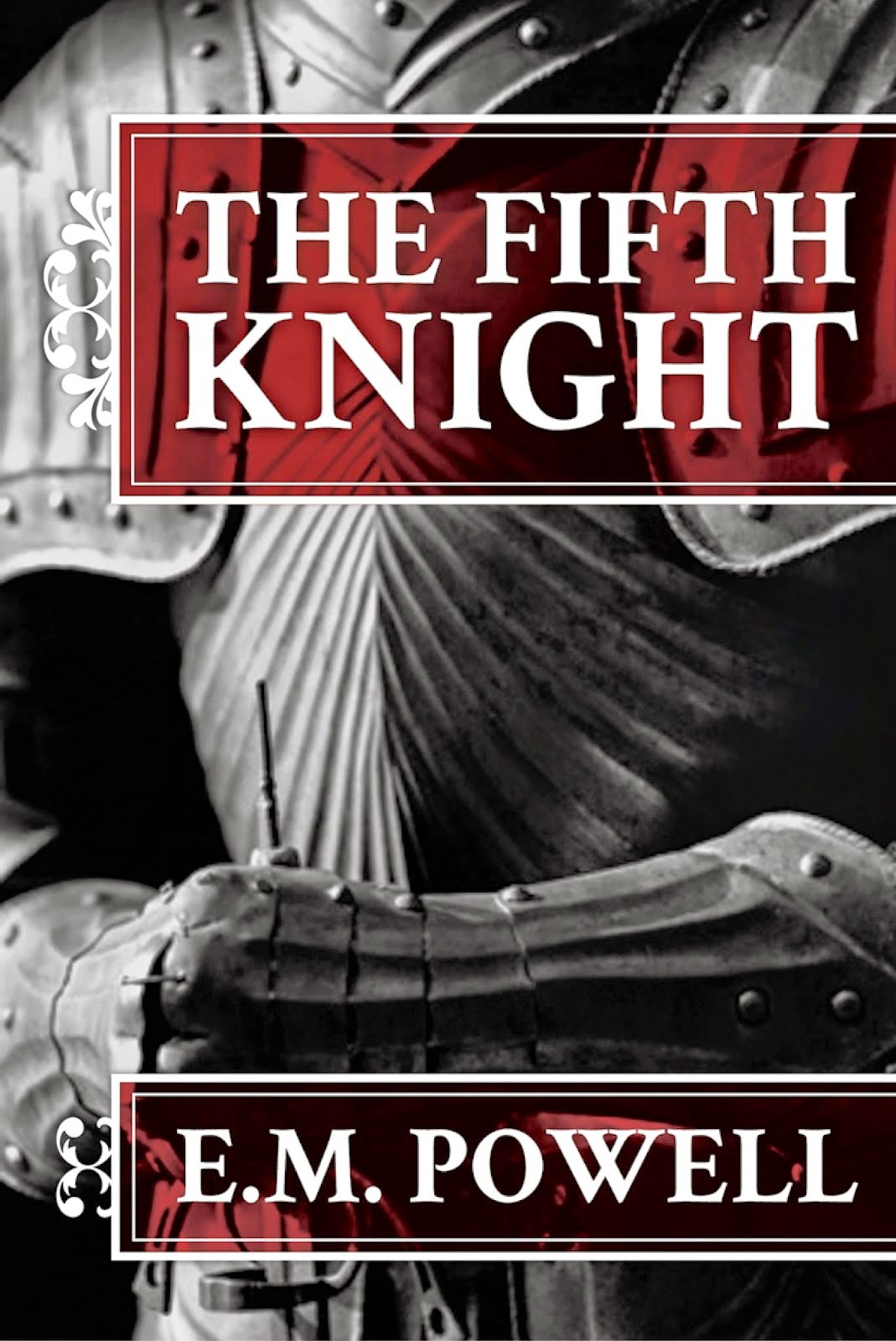
http://www.amazon.co.uk/Fifth-Knight-E-M-Powell-ebook/dp/B00A017O0I/ref=sr_1_1?ie=UTF8&qid=1400485439&sr=8-1&keywords=the+fifth+knight 

The very fabulous Elaine Powell, author of The Fifth Knight, has tagged me in the Meet My Main Character blog hop. You can read her post here. Elaine Powell's soon-to-be-published novel is the sequel to The Fifth Knight, and her hero is once again mercenary knight, Sir Benedict Palmer.  Although he is fictional, many other characters and events are not. The sequel is called The Blood of The Fifth Knight. To read more about The Fifth Knight click on the cover link.

To follow me in the blog I am tagging Nigel Williams and Gillian Hamer.


My latest Tudor novel Intractable Heart: the Story of Katheryn Parr is available on Kindle now and the paperback will follow soon. I am very pleased to talk a little about Katheryn, Henry VIII's last queen.

What is the name of your character? Is he/she fictional or a historical figure/person?
I think most people recognise the name Katheryn Parr. She was Henry VIII’s sixth and last wife. We first meet her in my novel during the Pilgimage of Grace when she is the wife of John Neville, Lord Latimer and their castle is under siege by rebels. Although Katheryn is only a young woman, she steps up to the challenge, defending the castle and her two step children John and Margaret as best she can.

When and where is the story set?
Oh dear, I’ve rather given that away already. The novel is set at the court of Henry VIII in Tudor England. The scene shifts from Yorkshire during the Pilgrimage of Grace to the royal palaces of the south of England, and also stops off at Portsmouth to witness the sinking of the Mary Rose.

What should we know about her?
Katheryn is very clever. In a world of limited female literacy she is multi-lingual and publishes religious books in support of the reformation of the church in England. Despite their religious differences the King demonstrates his high regard by setting her up as regent while he wages war on France. Once gain Katheryn accepts the challenge although she is beset by enemies.

What is her main conflict? What messes up her life?
Husbands! Poor Katheryn had four of them! Katheryn’s mother, Maud Parr was very ambitious and secured her children excellent spouses. Her eldest William was married at a young age to Anne Bouchier who embarrassed the family by taking a lover and giving birth to a string of illegitimate children. Their marriage ended in annulment but it was a long and bitter battle. Katheryn fared much better. Her first marriage to Sir Edward Borough ended with his unexpected death after just a few years and she later remarried John Neville in 1534, becoming Lady Latimer. Latimer was twice her age but the relationship seems to have been amicable and she took his children under her wing and was genuinely fond of them, particularly Margaret. He died in 1543 leaving Katheryn a wealthy widow.
As a young attractive widow she had no trouble in forming a relationship with Thomas Parr and the pair were set to marry until she caught the eye of the ageing king. It isn’t possible to refuse marriage to a monarch, especially one like Henry. Katheryn’s conflict was to put away her feelings for the brash, handsome Thomas Seymour and submit to the demands of the fat, malodorous and very dangerous king. Quite a challenge.

What is Katheryn’s personal goal?
She puts away the idea of romantic love after her marriage to Henry and turns her attention to being a good queen and mother to the king’s children. Much of her energy is spent in support of the reformation of the church
Katheryn’s strength of character helps her overcome her sorrow at losing Thomas and make the best of her life with Henry. Although his health is failing she has no idea what the future might bring but she wastes very little time wishing things are different.
Of all Henry’s wives she emerges as the capable one: the one who manages Henry the best, and the one with the intelligence and determination to be more than just a wife and fill the role of ‘consort’ in the fullest sense of the word.

Is there a working title for this novel, and can we read more about it?
Intractable Heart. The title is taken from Katheryn’s book Lamentation of a Sinner in which she laments her ‘obstinate, stony and intractable heart.’ Although she uses the words in religious terms I think they sum Katheryn’s character up rather well. Married four times, her first three marriages are all successful; it is her fourth union, the only one which is forged from love that proves to be her downfall. Seymour becomes Katheryn’s beloved nemesis.

When can we expect the book to be published?
Now! It is just out on Kindle now and the paperback will follow as soon as possible. It should be with you VERY soon – if the fates are willing. Click here to buy.

Photographs from WikimediaCommons

To view my other books click on the links below: