Showing posts with label six wives of Henry VIII. Show all posts

Monday, 29 February 2016

Sudeley Castle and Katherine Parr

As the spring approaches and we all begin to think about day trips and picnics I thought I'd reblog this piece I wrote about Sudeley.

 Sudeley Castle is a comparatively small place in the scheme of things, set against the backdrop of the Cotswolds. Sudeley is, and has been, many things; today it is a family home, a beautiful garden, a historic jewel, and the last resting place of an English queen. The Castle is steeped in history and was first mentioned in a 10th century charter. King Ethelred hunted deer in the park and later, when the castle passed to Goda, her distant relationship to William the Conqueror, saved it from Norman take over.

Sudeley remained in the hands of Goda’s family until the reign of Henry V when the castle was gifted to Thomas Boteler in way of repayment for his action in the war with France. It was Boteler who began to transform Sudeley into an enviable home, enlarging and updating the existing fabric of the building to create a place fit for royalty.

When the Lancastrians were defeated and Edward IV took the throne the Boteler family were forced out and Sudeley’s new owner was no other than the king’s brother, Richard of Gloucester, later King Richard III of car park fame.

When the tables turned again and Richard was defeated at Bosworth, Henry VII took it over, bestowing it on his loyal uncle Jasper Tudor. After Jasper’s death Sudeley once more became crown property.

Henry VIII visited once with Anne Boleyn. They met with Thomas Cromwell there to discuss the reformation of the monasteries and took a keen interest in the Blood of Christ housed at nearby Winchcombe Abbey. At this time the castle was run down and unoccupied for much of the time.

On his accession to the throne Edward VI made his uncle, Thomas Seymour, Lord of Sudeley and after his marriage to Katheryn Parr, Seymour and his new wife made their home there.
 The Seymours implemented many improvements and Katheryn took great care in choosing the décor of the nursery for their expected child. Unfortunately, to Thomas Seymour’s sorrow, Katheryn died scarcely a year later, having given birth to a healthy daughter, whom they named Mary.

With Thomas’ ward, Lady Jane Grey, acting chief mourner Katheryn was laid to rest in St Mary’s church adjacent to the castle. Today visitors to Sudeley can view a love letter and portrait gifted to the queen by her husband.

Katheryn’s step daughter and friend, Elizabeth Tudor, later Queen Elizabeth I, visited Sudelely on three occasions during her reign. It is easy to imagine her walking in the garden, remembering her stepmother, recalling conversations, small personal details of their shared life that are now lost to history.
Sudeley’s history doesn’t stop with the Tudors. During the civil war Prince Rupert made the castle his headquarters, and Charles I stayed there for a time during the campaign to take Gloucester.

During the course of the war Sudelely passed back and forth between Royalist and Parliamentarian hands until Parliament ordered the ‘slighting’ of Sudeley making the house indefensible. The roof was removed, and the rest of the building fell swiftly into decay. The fine worked stone was quarried by locals until the grand castle became nothing more than an attractive romantic ruin. For the next two hundred years it was left to the mercy of the elements, a trysting place for lovers, or a hideaway for thieves.

In 1782, Katheryn Parr’s grave was rediscovered. The lead casket was opened the body found within reported to be 'uncorrupted'. She was reinterred in 1817 by the Rector of Sudeley and a plaque copied from the original inscription on the lead coffin placed upon it. Today there is an effigy on the tomb but this was made in Victorian times.

Sudeley remained in elegant decay until the nineteenth century when it was bought by two brothers, John and William Dent, who embarked upon a restoration project. They employed architect Sir Gilbert Scott to restore the chapel. The walls and large parts of the castle were restored. Finally Lady Emma Dent spent almost fifty years putting the finishing touches, filling Sudeley with fine art and historical artefacts.

Yet, of all the people mentioned in this potted history; the Lords, the ladies, the kings, the politicians; it is Katheryn’s memory that lingers. Visitors flock there, not just to see a splendid house and a magnificent garden; they go there because of Henry VIII’s last queen, Katheryn Parr.

The Tudor style parterre is only a reconstruction but, although Katheryn may have gone it is easy to imagine her there, inhaling the scent of the flowers, the kiss of summer rain on blush pink petals.

While you move quietly between the roses, or pass through the old yew hedge, you can imagine a footstep on the gravel behind you, the sweeping red skirts of her kirtle as she joins you. And as she follows you around the flowerbeds, you may feel the brush of her hanging sleeves.

Judith is the author of seven historical novels and is currently working on a trilogy tracing the life of Margaret Beaufort. Book one of The Beaufort Chronicles, The Beaufort Bride will be out soon.


For more information about Judith's work please click here

Pictures of Sudeley Castle and of the church at the castle are both licensed under the Creative Commons Attribution 2.0 Generic license, the former to Gordon Robertson, the latter to Jason Ballard.  The picture of Katheryn Parr's tomb is licensed to TudorQueen6 via the Creative Commons Attribution-Share Alike 3.0 Unported license.  The portraits of Thomas Seymour and Katheryn Parr are in the public domain due to expiration of copyright.

Tuesday, 23 September 2014

Margaret Beaufort - The King's Mother


Judith Arnopp
Henry Tudor Tower Pembroke Castle


During a recent visit to Pembroke castle I was struck by the warren of rooms where, so history tells us, the birth of Henry Tudor took place. A long, low dimly lit corridor leads to a circular chamber with a great fireplace and thick stone walls. The room was cold even in September and, even with the benefit of a large fire, tapestries and cushions to exclude drafts, I could imagine the unenviable discomfort of a child confronted with the terror of giving birth there on the bleakest of mid-winter nights.

28 January 1457 – Pembroke Castle

 A maid hurries along a dark passageway, the chilblains on her fingers smarting from the cold jug she carries. When she opens the door to the chamber, the draught hurtles along the frigid corridor behind her, lifts her petticoats and hastens her entry into the room. The door slams behind her, the torches flicker, plunging the company into gloom.
The ill-lit chamber stinks of sweat and wood smoke, lightened only by the fragrance of tangy aromatic herbs said to aid a birthing. As the maid approaches the bed and places the jug on a table, the girl on the mattress flings out a hand and grabs at the midwife’s arm.
The light from the fire accentuates her shadowed eyes, the drained white face. There is blood on her chin where she has bitten through her lip in her efforts to stem her screams.
“She is too young,” the maid whispers to the midwife. “She cannot survive.”
As the older woman stands up to press a hand to her aching back she casts a warning glare in the maid’s direction.
“Rubbish,” she says loudly for the benefit of the girl on the bed. “She is young and strong; I’ve seen weaker women than this survive it.”
Her words are for the benefit of the patient. The maid has assisted in many births and knows that this one has little chance of success. Lady Margaret is only just turned thirteen, she has the build of a child; her great pregnant belly is obscene against her stick thin limbs and undeveloped chest. If the mother survives the child won’t; and if the child does manage to breathe at all, it will undoubtedly be motherless.
The maid turns away and pours a cup of wine, leans over the bed to try to coax the girl to drink.
“Try just a sip, my lady. It will fortify you.”
The cup moves closer to Lady Margaret’s mouth but, before she can drink, another
Pembroke Castle photo- Judith Arnopp
spasm takes her. She grabs the maid’s wrist, making her drop the cup, slopping wine that soaks and spreads as fast as a plague across her shift.
Bulging eyes fix upon the maid, sweat emerges on the noble brow as her childish mouth opens in a grimace of furious pain. The maid tries not to mind the nails that bite like tiny knives into her skin.
“It’s all right, my lady. You are doing fine; women are built for childbirth.”
A turn of her head reveals the midwife burrowing beneath the girl’s shift, her deft hands palpating her great distended belly. At another assault Lady Margaret jerks up her knees and, with a twist of pity, the maid notices they are knobbly as a child’s and patterned with small blue bruises.
“That’s it, my lady, you can push now.” She speaks loudly, fighting to sound authoritative.
Margaret ducks her chin into her chest, the veins on her forehead standing out like blue rope as she grits her teeth and growls like a wild animal. The maid’s eyes sweep across the scene. Blood is smeared upon her ladyship’s thigh and there is more on the sheets, a steady flow puddling on to the floor.
From her seat between Lady Margaret’s knees the midwife runs her forearm across her brow, leaving a crimson streak. Her eyes meet the maid’s and with a brief shake of her head she admits the cause is lost.
The maid swallows, sends up a prayer before bending over her mistress again.
“Come on, my lady, you are a fighter. Fight now for your son.” She shifts on the mattress, looking up into Margaret’s face, forcing her to maintain eye contact. “I will tell you when; I will push with you.”
For another hour they battle on, only strength of will keeping Margaret from giving up, from letting go. Each time she begins to drift away she is dragged relentlessly back to the nightmare that her life has become. Pain washes in, receding too briefly before it floods back in again but then, just when she feels she can push no more, something shifts, and a light appears in her darkness.
“Get on the floor and squat.” At a signal from the midwife the maid thrusts her hands beneath Margaret’s armpits, supports her as she slides from the mattress to squat on the floor. When the next pain comes, oblivious of the blood and the birth fluid that soaks the rushes around her, Margaret bears down with what strength she has left.
This time something happens and with each effort her son makes progress, thrusting and slashing his way into the world.
©Juditharnopp2014
Pembroke Castle - photo-Judith Arnopp

***

Rowland Lockey [Public domain], via Wikimedia Commons
Margaret Beaufort was just thirteen when she gave birth to her only child, Henry, later to become the father of the Royal Tudor dynasty. Margaret, a wealthy heiress and valuable asset to the Lancastrian cause, was married as an infant to John de la Pole. That marriage was dissolved and later, aged just twelve, she became the wife of the twenty two year old Edmund Tudor. When he succumbed to plague and died in Carmarthen just six months later, Margaret was already heavily pregnant.
In the middle ages it was normal for marriage to take place at a very young age but consummation did not usually take place until the wife was physically fully developed. Margaret’s body was underdeveloped even for a twelve year old and the immediate consummation caused some indignation among their contemporaries. Edmund’s eagerness to bed his wife was due, not to passion, but rather to his impatience to get his hands on her vast estates which would only be his on the birth of their first child.

Henry Tudor Michael Sittow (circa 1469-1525) [Public domain], via Wikimedia Commons
In her widowhood Margaret turned for support to Edmund’s brother, Jasper, and took up residence at Pembroke Castle where she gave birth to Henry. The physical damage caused by his birth made it impossible for Margaret to bear any further children but that did not stop her from marrying again. Margaret, despite setbacks, ultimately triumphed. Married four times for political gain she proved herself to be a wise and politically astute woman. She is often labelled as being overly pious and domineering but her devotion to her son is unquestioned.
Raglan Castle -photo Judith Arnopp
While York was in power Margaret and Henry were separated. While she, with little hope, doggedly and quietly worked on his behalf he spent his early years in the custody of Yorkist adherents, the Herberts at Raglan Castle.
Henry’s youth was spent in exile in the courts of Europe. But Margaret never lost hope and worked untiringly for her son’s cause; her determined and single mined battle for what she saw as Henry’s birth right can only be admired.


***

I am the author of seven historical novels, the three most recent being set in the Tudor period. Although the Tudor family have been written of time and time again I find them endlessly fascinating. I like to burrow beneath their ostentatious clothes and jewels to try to access the minds beneath – How did it feel? How did it smell? What did they think?

The Kiss of the Concubine US Link UK Link
 Intractable Heart US Link.
                                    UK Link

 The Winchester Goose US Link UK Link

 The Forest Dwellers US Link UK Link


 The Song of Heledd US Link UK Link

 Peaceweaver US Link UK Link


You can find more information on my webpage: www.juditharnopp.com
And my Amazon page: http://www.amazon.com/Judith-Arnopp/e/B003CGLWLA/ref=sr_ntt_srch_lnk_1?qid=1411465196&sr=1-1

Monday, 26 May 2014

Meet My Main Character Blog hop - Katheryn Parr, Henry VIII's sixth and last queen.


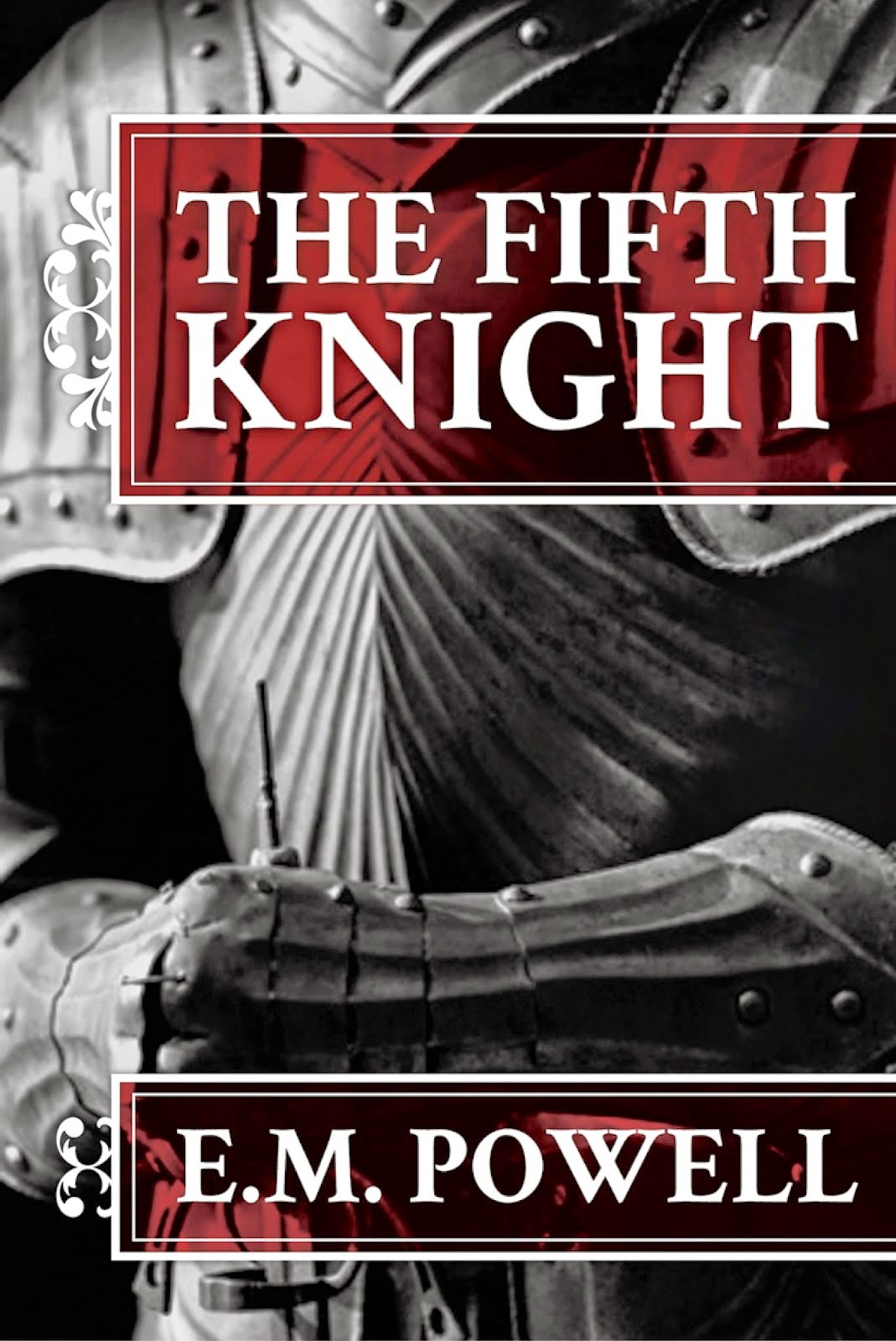
http://www.amazon.co.uk/Fifth-Knight-E-M-Powell-ebook/dp/B00A017O0I/ref=sr_1_1?ie=UTF8&qid=1400485439&sr=8-1&keywords=the+fifth+knight 

The very fabulous Elaine Powell, author of The Fifth Knight, has tagged me in the Meet My Main Character blog hop. You can read her post here. Elaine Powell's soon-to-be-published novel is the sequel to The Fifth Knight, and her hero is once again mercenary knight, Sir Benedict Palmer.  Although he is fictional, many other characters and events are not. The sequel is called The Blood of The Fifth Knight. To read more about The Fifth Knight click on the cover link.

To follow me in the blog I am tagging Nigel Williams and Gillian Hamer.


My latest Tudor novel Intractable Heart: the Story of Katheryn Parr is available on Kindle now and the paperback will follow soon. I am very pleased to talk a little about Katheryn, Henry VIII's last queen.

What is the name of your character? Is he/she fictional or a historical figure/person?
I think most people recognise the name Katheryn Parr. She was Henry VIII’s sixth and last wife. We first meet her in my novel during the Pilgimage of Grace when she is the wife of John Neville, Lord Latimer and their castle is under siege by rebels. Although Katheryn is only a young woman, she steps up to the challenge, defending the castle and her two step children John and Margaret as best she can.

When and where is the story set?
Oh dear, I’ve rather given that away already. The novel is set at the court of Henry VIII in Tudor England. The scene shifts from Yorkshire during the Pilgrimage of Grace to the royal palaces of the south of England, and also stops off at Portsmouth to witness the sinking of the Mary Rose.

What should we know about her?
Katheryn is very clever. In a world of limited female literacy she is multi-lingual and publishes religious books in support of the reformation of the church in England. Despite their religious differences the King demonstrates his high regard by setting her up as regent while he wages war on France. Once gain Katheryn accepts the challenge although she is beset by enemies.

What is her main conflict? What messes up her life?
Husbands! Poor Katheryn had four of them! Katheryn’s mother, Maud Parr was very ambitious and secured her children excellent spouses. Her eldest William was married at a young age to Anne Bouchier who embarrassed the family by taking a lover and giving birth to a string of illegitimate children. Their marriage ended in annulment but it was a long and bitter battle. Katheryn fared much better. Her first marriage to Sir Edward Borough ended with his unexpected death after just a few years and she later remarried John Neville in 1534, becoming Lady Latimer. Latimer was twice her age but the relationship seems to have been amicable and she took his children under her wing and was genuinely fond of them, particularly Margaret. He died in 1543 leaving Katheryn a wealthy widow.
As a young attractive widow she had no trouble in forming a relationship with Thomas Parr and the pair were set to marry until she caught the eye of the ageing king. It isn’t possible to refuse marriage to a monarch, especially one like Henry. Katheryn’s conflict was to put away her feelings for the brash, handsome Thomas Seymour and submit to the demands of the fat, malodorous and very dangerous king. Quite a challenge.

What is Katheryn’s personal goal?
She puts away the idea of romantic love after her marriage to Henry and turns her attention to being a good queen and mother to the king’s children. Much of her energy is spent in support of the reformation of the church
Katheryn’s strength of character helps her overcome her sorrow at losing Thomas and make the best of her life with Henry. Although his health is failing she has no idea what the future might bring but she wastes very little time wishing things are different.
Of all Henry’s wives she emerges as the capable one: the one who manages Henry the best, and the one with the intelligence and determination to be more than just a wife and fill the role of ‘consort’ in the fullest sense of the word.

Is there a working title for this novel, and can we read more about it?
Intractable Heart. The title is taken from Katheryn’s book Lamentation of a Sinner in which she laments her ‘obstinate, stony and intractable heart.’ Although she uses the words in religious terms I think they sum Katheryn’s character up rather well. Married four times, her first three marriages are all successful; it is her fourth union, the only one which is forged from love that proves to be her downfall. Seymour becomes Katheryn’s beloved nemesis.

When can we expect the book to be published?
Now! It is just out on Kindle now and the paperback will follow as soon as possible. It should be with you VERY soon – if the fates are willing. Click here to buy.

Photographs from WikimediaCommons

To view my other books click on the links below: