

My last book The Kiss of the Concubine: a story of Anne
Boleyn continues to sell well and attract lovely reviews and meanwhile
I have been busy working on my next one. Intractable Heart tells the story of
Katheryn Parr, Henry VIII’s last wife. She has often been regarded as rather
dull; a nursemaid to three elderly husbands before falling for the charms of
Thomas Seymour.
But during the course of my studies I discovered an intelligent, capable woman who not only stood as regent during Henry’s ill-advised war with France,
but one who also had a voice in the reformation of the church, and was the
first English queen to become a published author.
Katheryn was the daughter of Thomas Parr and Maud Green. Her
mother was in the household of Catherine of Aragon and it is believed named her
daughter in the queen’s honour. Katheryn's first marriage was to Thomas Borough
but he died quite soon leaving the twenty year old Katheryn a widow. Her second
marriage, two years later, was to John Neville, third Baron Latimer of Snape
Castle in Yorkshire. Latimer had two children, Margaret and John, and during
the Pilgrimage of Grace Katheryn and the children were held at Snape under
siege. It is at this point in Katheryn’s life that my novel Intractable
Heart begins.
 |
| Katheryn Parr wikimedia commons |
Widowed for the second time Katheryn forms an attachment for
Thomas Seymour, brother of Henry VIII’s third queen, but before they can cement
their relationship in marriage, Katheryn catches the eye of the elderly and
ailing King.
Below is an excerpt from Intractable Heart for you to enjoy.
***
Hampton court – March 1543 – Recently widowed for the second
time, Katheryn Parr returns to court, joining the household of Lady Mary.
As we enter a hush settles on the room. I immediately spot Thomas
lounging in the window seat watching his friend Sir Francis Bryan trying out
the steps to a new dance with Lucy Somerset. After a moment Mary waves her hand
and the company resume their former jollity. I summon a page to bring Mary a
drink and prepare to settle beside her but she leans forward, grasps my wrist
warmly.
“I wish to speak to Lady Basset. You go and make merry with the
others, Katheryn. You may be a widow but you’re not dead yet.”
Our eyes meet. Like a child caught with her hand in a bowl of
sweetmeats, I feel my face grow hot beneath her eloquent smile. She knows. But
she says nothing. When she turns away I begin to circumnavigate the room,
slowly inching my way closer to Thomas’ side.
He turns, as if he hasn’t already noticed my presence, his face
breaking into smiles. “Lady Latimer.” He kisses my mouth, grasps my hand and
begins to talk of everyday things. Somehow I try to behave as if the world is
not dipping and swaying about me. Before he moves on he whispers in my ear,
discretely reconfirming our assignation in the garden and I promise to be
there.
We part, for now and the rest of the afternoon passes in an
endless round of other people’s enjoyment, other people’s merriment. And all
the time I am watching and tracking the sun as it journeys west outside the
window.
At last my duties are done. I pause in the corridor, wondering
whether I should run upstairs to check on Margaret or leave her sleeping for a
short while longer. Thomas has the greater pull and I hurry toward the garden,
down twisting stairs, along torch-lit corridors, my heart leaping like a rabbit
in my chest.
The outer door is lit up with sunshine, casting the inner hall
into almost pitch darkness. As I grow closer I can see outside to where Thomas
is lurking near the entrance to the knot garden. He has removed his cloak and
draped it over his shoulder. I pick up my skirts and increase my pace. He sees
me coming, lifts his hand in greeting, the effect of his smile pours like warm
honey over my shoulders. I laugh aloud, about to dash forward but a figure
looms from the darkness, obliterating the sun.
“Lady Latimer. Well, this is well met.”
I fall to my knees before the king. The stench of his festering
leg fills my head. I look at his shoes, his bulging feet pushing the velvet out
of shape, his vast calves encased in tight white hose. His hand is gentle on my
shoulder. “Get up, get up,” he says. “Walk with me. Let us take a turn about
the garden.”
What can I say? What can I do? I rise, smile as widely as I can
manage, and lay my hand on his proffered arm.
I blink in the sudden sunlight as we make halting progress. He
leans heavily on my shoulder, overpowering me with his presence. “Good
afternoon, Thomas.” Henry pauses, waves his stick in the air in greeting as we
draw close to my love. Somehow Thomas manages to execute a perfect bow as, with
my heart full of disappointed tears, the king and I walk by.
I can feel Thomas’ eyes follow me all the way around the garden.
He is still watching when we pause at the fountain where water cascades, the
drops dancing with the evening light on the surface. Deep in the depths, among
weed and slime, fishes are undulating. The king takes my hand, raises it to his
mouth and kisses my fingers, and while he is distracted I send Thomas a pulsing
glance of regret.
“I am glad I bumped into you,” the king is saying. “I would like
to challenge you to another game of chess. You play so well. Quite remarkable
in a woman…” His voice fades away as I watch Thomas quietly slip between the
yew hedges that flank the path. I give myself a little shake.
“Yes, Your majesty. Of course, that will be my pleasure.”
***
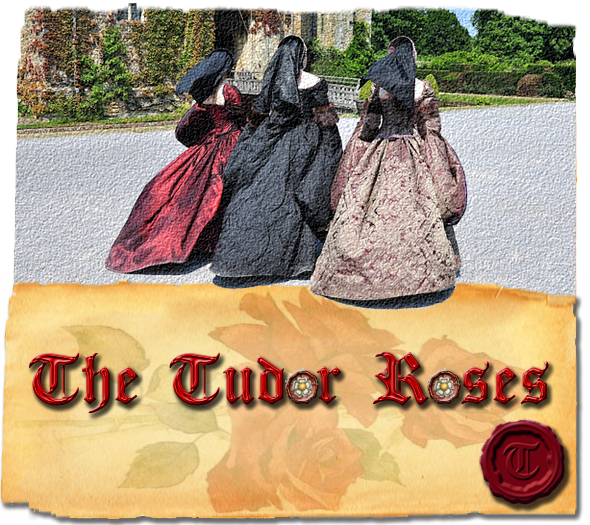
For the production of this book I am working with Darren Wilkins of The Tudor Roses fame. He is the responsible for the cover image which I fell in love with the moment I saw it. I am a great admirer of Darren's photography and hope that our work will complement each other again in the future. You can find The Tudor Roses here and also on Facebook
Intractable Heart will be available toward the end of the summer. In the meantime
there are five other books in my collection for you to enjoy.

The Kiss of the Concubine tells the story of Anne Boleyn from her own
perspective, treading her path from the time of her return from France to the day
she ascends the scaffold steps to face her death.

The Winchester Goose is told from the perspective of a prostitute from Southwark,
contrasting the glories of the royal court of Henry VIII with the offal strewn
streets of the stews.

The Song of Heledd is the story of princesses, Heledd and Ffreur, a catalogue of bad
decisions and disasters leads to the downfall of the royal dynasty of Pengwern.

The Forest Dwellers is set after the Norman conquest and traces the lives of Aelf and
Alys as they battle for survival beneath the new regime.

Peaceweaver is the story of EAdgyth, wife of Gruffydd ap Llewelyn of Wales and
Queen to Harold II of England. Her tale leads us from her first marriage in 1057 to the
Battle of Hastings in 1066.


